
Drone Laws in Delaware
Your complete 2026 guide to flying drones legally in Delaware.
This page is for informational purposes only and should not be considered legal advice. Always consult with a legal professional for any specific legal questions you may have.
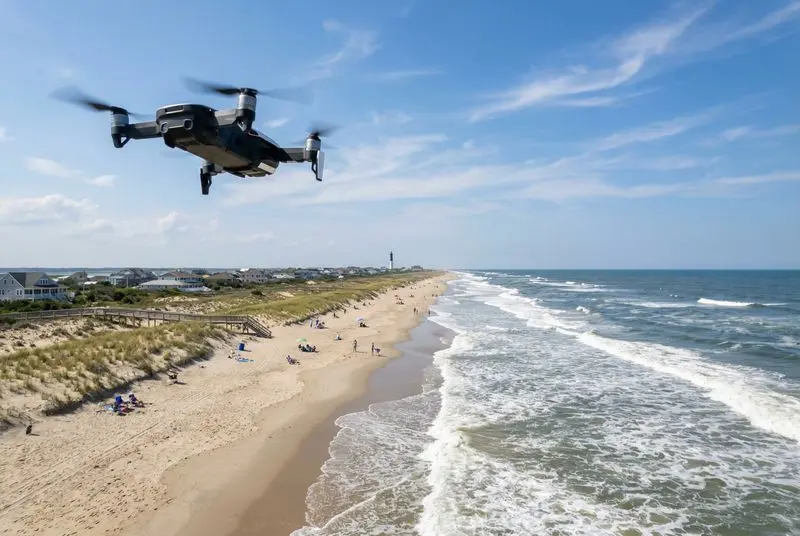
Welcome to your comprehensive guide to the drone laws in Delaware for 2026. As the first state to ratify the U.S. Constitution, Delaware has a rich history and a diverse landscape, from the bustling city of Wilmington to the serene beaches along the Atlantic coast. This unique geography makes it a popular destination for drone pilots, whether they are capturing notable aerial photography for commercial purposes or simply enjoying a recreational flight. However, before you launch your drone into the skies of Delaware, You should have a thorough understanding of the legal framework that governs drone operations.
The drone laws in Delaware are a combination of federal regulations established by the Federal Aviation Administration (FAA) and state-specific statutes passed by the Delaware General Assembly.We will cover the requirements for both commercial and recreational pilots, including registration, certification, and operational limitations. We will also explore the specific locations where you can and cannot fly your drone in Delaware, as well as the penalties for violating the law. Our goal is to provide you with a one-stop resource for all of your questions about flying a drone in Delaware, so you can focus on what you do best: capturing impressive aerial views of this beautiful state.
Federal Drone Laws That Apply in Delaware
All drone pilots operating in Delaware, whether for commercial or recreational purposes, are subject to federal regulations established by the Federal Aviation Administration (FAA). These rules provide a national standard for the safe operation of unmanned aircraft systems (UAS) and form the foundation of drone law in the United States. Understanding and adhering to these federal regulations is the first and most important step for any drone pilot in Delaware.
One of the most fundamental FAA requirements is drone registration. Any drone weighing more than 0.55 pounds (250 grams) must be registered with the FAA. This can be done online through the FAA DroneZone website. The registration fee is $5 and is valid for three years. Once registered, you will receive a unique registration number that must be displayed on the exterior of your drone.
Another critical federal regulation is Remote ID. As of September 16, 2023, all registered drones are required to broadcast Remote ID information. This technology acts as a digital license plate for your drone, allowing the FAA, law enforcement, and other federal agencies to identify drones in flight. This rule is a key component of the FAA’s efforts to ensure the safety and security of the national airspace.
For those flying drones for commercial purposes, the FAA has established the Part 107 regulations. A commercial operation is any flight that is conducted for business purposes, including aerial photography, real estate videography, or infrastructure inspection. To operate a drone commercially, you must obtain a Remote Pilot Certificate by passing the FAA’s Part 107 exam. This exam tests your knowledge of drone regulations, operating procedures, and airspace classifications.
Recreational flyers, on the other hand, are required to take The Recreational UAS Safety Test (TRUST). This is a free online test that provides a basic understanding of drone safety and regulations. Once you have passed the test, you will receive a certificate that you must carry with you whenever you are flying your drone.
In addition to these certification requirements, there are also operational rules that all drone pilots must follow. One of the most important is the altitude and airspace restrictions. Drones must not be flown above 400 feet in uncontrolled (Class G) airspace. To fly in controlled airspace (Class B, C, D, and E), which surrounds most airports, you must obtain authorization through the Low Altitude Authorization and Notification Capability (LAANC) system or the FAA DroneZone.
Another key operational rule is the visual line of sight requirement. You must be able to see your drone with your own eyes at all times during flight. This means that you cannot fly your drone beyond the range of your vision or rely solely on a camera or other technology to monitor its location.
To help pilots comply with these regulations, the FAA has developed the B4UFLY app. This app provides real-time information about airspace restrictions, temporary flight restrictions (TFRs), and other important safety information. It is an essential tool for all drone pilots and should be consulted before every flight.
Delaware-Specific Drone Laws
In addition to the federal regulations set forth by the FAA, the state of Delaware has enacted its own laws to address specific concerns related to the use of unmanned aircraft systems. The primary piece of legislation governing drone operations in Delaware is House Bill 195, which was signed into law in 2016 and is now codified as § 1480 of Title 11 of the Delaware Code. This law was created to address the potential security risks and public safety hazards associated with the increasing number of drones in the sky.
The main focus of HB 195 is to prohibit the use of drones in a manner that could endanger people or property. The law specifically makes it illegal to knowingly operate, direct, or program a drone to fly over certain sensitive locations. These prohibited areas include:
- Critical Infrastructure: This is a broad category that encompasses a wide range of facilities that are essential to the functioning of the state. The law provides a detailed list of what is considered critical infrastructure, including petroleum refineries, power plants, chemical manufacturing facilities, military facilities, commercial ports, and public safety buildings. The purpose of this provision is to protect these vital facilities from potential threats posed by drones, such as espionage, terrorism, or accidental damage.
- Sporting Events and Large Gatherings: The law also prohibits the flying of drones over any sporting event, concert, automobile race, festival, or other open-air event where more than 1,500 people are in attendance. This provision is designed to protect the safety and privacy of large crowds of people and to prevent drones from causing a disturbance or a hazard at public events.
The penalties for violating this law are significant. A first offense is an unclassified misdemeanor, while a second or subsequent offense is a class B misdemeanor. However, if a violation of the law results in physical injury to a person or damage to property, the offense is elevated to a class A misdemeanor. This demonstrates the seriousness with which the state of Delaware views the potential dangers of irresponsible drone use.
Local and City Regulations
One of the most significant aspects of Delaware’s drone law is the inclusion of a state preemption clause. This clause, found in § 1480(e) of Title 11 of the Delaware Code, explicitly states that only the state has the authority to enact laws or regulations concerning the operation of unmanned aircraft systems. This means that counties, cities, and other municipalities are prohibited from creating their own drone ordinances. The purpose of this preemption law is to create a uniform and consistent legal framework for drone pilots throughout the state, preventing a confusing patchwork of local rules.
While the state preemption law provides a great deal of clarity for drone operators, it is important to understand that it does not mean that there are no local restrictions whatsoever. The preemption law applies to the operation of drones, but it does not necessarily prevent local entities from regulating the launching and landing of drones on their own property. For example, a city may be able to prohibit the launching of drones from a city park, even if it cannot regulate the airspace above the park.
One notable example of a local regulation in Delaware is the ordinance in the Town of Bethany Beach. This popular coastal town has a local ordinance that prohibits the operation of drones on the beach and boardwalk. This is an important rule to be aware of if you are planning to fly your drone in this area. Additionally, the Delaware Department of Natural Resources and Environmental Control (DNREC) requires a special use permit to fly a drone in any of the state parks. This permit is required for both commercial and recreational flights and is designed to protect the natural resources and wildlife of the parks.
Given these nuances, it is always a good practice to check for any local rules or regulations before you fly, even with the state preemption law in place. The best way to do this is to check the website of the city or county where you plan to fly, or to contact the local authorities directly. By taking this extra step, you can ensure that you are flying your drone in a safe and legal manner.
Where You Can and Can’t Fly in Delaware
Knowing where you can and cannot fly your drone is one of the most important aspects of being a responsible pilot. In Delaware, there are a number of locations where drone use is restricted or prohibited. It is crucial to be aware of these areas to avoid breaking the law and to ensure the safety of others.
National Parks: The National Park Service (NPS) has a nationwide ban on the use of drones in all national parks. This ban was put in place to protect the natural and cultural resources of the parks and to ensure a positive experience for all visitors. In Delaware, this ban applies to any sites that are managed by the NPS, such as Delaware National Historical Park.
Delaware State Parks: The use of drones in Delaware’s state parks is also restricted. The Delaware Department of Natural Resources and Environmental Control (DNREC) requires a special use permit for all drone flights in state parks. This permit is required for both commercial and recreational pilots and is designed to protect the parks’ natural resources and wildlife. To obtain a permit, you will need to contact the specific park you wish to fly in and submit an application. even with a permit, there may be additional restrictions on where and when you can fly.
Airports and Controlled Airspace: As in all states, there are strict regulations regarding the operation of drones near airports. You must not fly your drone within five miles of an airport without first obtaining authorization from the airport operator and air traffic control. The easiest way to do this is by using the Low Altitude Authorization and Notification Capability (LAANC) system, which is available through a number of FAA-approved service suppliers. The B4UFLY app is also an essential tool for checking for airspace restrictions near airports.
Military Installations: Delaware is home to Dover Air Force Base, a major military installation. It is strictly prohibited to fly a drone over or near any military base without explicit permission from the Department of Defense. This is a matter of national security, and any violation of this rule will be taken very seriously.
Stadiums and Sporting Events: As mentioned earlier, Delaware state law prohibits the flying of drones over any stadium or other sporting event with more than 1,500 people in attendance. This rule is in place to protect the safety of the spectators and participants and to prevent any disruption to the event.
Bethany Beach: The popular resort town of Bethany Beach has a local ordinance that prohibits the use of drones on the beach and boardwalk. This is a good example of a local rule that you need to be aware of, even with the state preemption law in place.
Critical Infrastructure: Finally, it is important to remember that state law prohibits the flying of drones over any critical infrastructure. This includes a wide range of facilities, such as power plants, refineries, and government buildings. The purpose of this rule is to protect these vital facilities from any potential threats.
Penalties and Enforcement
Failure to comply with federal, state, and local drone laws can result in significant penalties. In Delaware, the enforcement of these laws is taken seriously, and pilots should be aware of the potential consequences. Both the state of Delaware and the federal government have the authority to penalize drone operators who violate the law, and these penalties can range from fines to imprisonment.
State-Level Penalties:
Under Delaware state law, the penalties for the unlawful use of an unmanned aircraft system are clearly defined. A first offense is considered an unclassified misdemeanor, which can result in a fine of up to $575 and up to 30 days in jail. A second or subsequent offense is a class B misdemeanor, which carries a potential fine of up to $1,150 and up to 6 months in jail. If a violation of the law results in physical injury to a person or damage to property, the offense is elevated to a class A misdemeanor, which is punishable by a fine of up to $2,300 and up to 1 year in jail. These penalties demonstrate that the state of Delaware is committed to ensuring the safe and responsible operation of drones.
Federal Penalties:
The Federal Aviation Administration (FAA) also has the authority to issue substantial fines for violations of its regulations. These fines can be even more severe than the state-level penalties. For example, the FAA can impose a fine of up to $1,771 for failing to register a drone, and up to $36,770 for operating a drone in a reckless manner. In addition to these civil penalties, the FAA can also pursue criminal charges against drone operators who knowingly and willfully violate the law. These charges can result in even larger fines and, in some cases, imprisonment. It is also important to note that the FAA can revoke a pilot’s Part 107 certificate for serious or repeated violations of the regulations.
Tips for Staying Compliant
Staying compliant with drone laws is the responsibility of every pilot. Here are some tips to help you fly safely and legally in Delaware:
- Check the B4UFLY App: Before every flight, use the FAA’s B4UFLY app to check for any airspace restrictions or temporary flight restrictions (TFRs) in your area.
- Register Your Drone: If your drone weighs more than 0.55 pounds, make sure it is registered with the FAA and that the registration number is clearly marked on the outside of the drone.
- Get Certified: If you are flying for recreational purposes, you must have a TRUST certificate. For commercial operations, a Part 107 certificate is required.
- Respect Privacy: Do not fly your drone over private property without permission, and be mindful of the privacy of others.
- Check Local Rules: While Delaware has a state preemption law, it is always a good idea to check for any local rules or regulations that may apply, especially in parks or other public areas.
- Maintain Visual Line of Sight: Always keep your drone within your visual line of sight. If you are using a first-person view (FPV) system, you must have a visual observer who can see the drone with their own eyes.