
Drone Laws in Massachusetts
Your complete 2026 guide to flying drones legally in Massachusetts.
Massachusetts, a state celebrated for its pivotal role in American history and its notable natural beauty, from the sandy shores of Cape Cod to the rolling hills of the Berkshires, presents a dynamic and exciting environment for drone pilots. The increasing popularity of unmanned aircraft systems (UAS) for both recreational and commercial purposes has made it more important than ever for pilots to have a thorough understanding of the legal landscape. Flying a drone in Massachusetts is not merely about navigating the physical environment; it also requires careful navigation through a multi-layered system of federal, and potentially state and local, regulations. This guide is designed to serve as your resource for understanding and complying with the drone laws in Massachusetts, ensuring that your aerial pursuits are not only enjoyable but also fully compliant with all applicable rules. A failure to adhere to these regulations can lead to significant penalties, making it essential for every pilot to be well-informed before taking to the skies.
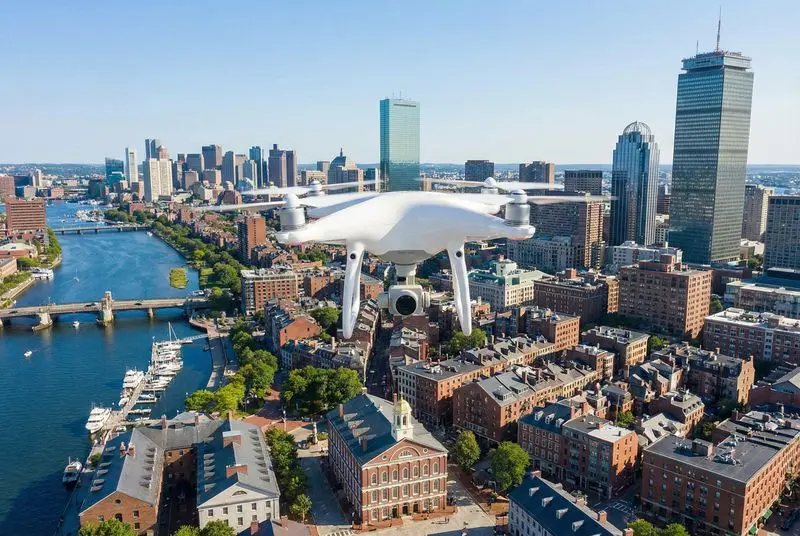
For both seasoned aviators and newcomers to the world of drones, a clear comprehension of the rules of the sky is non-negotiable.We will then transition to a focused analysis of the legislative environment in Massachusetts, including a review of proposed bills that could shape the future of drone operation in the state. Furthermore, we will investigate the existing local ordinances in key cities, offer guidance on identifying permissible and restricted flying locations, and provide a clear overview of the enforcement actions and penalties that pilots may face for non-compliance. By the end of this guide, you will have the essential information to operate your drone with confidence and legal assurance throughout the Commonwealth of Massachusetts.
Federal Drone Laws That Apply in Massachusetts
The legal framework for drone operation in Massachusetts begins at the federal level. The Federal Aviation Administration (FAA) is the primary governing body for all aviation activities in the United States, and this includes the operation of unmanned aircraft systems (UAS), or drones. The FAA’s regulations are designed to ensure the safety and security of the national airspace, and they apply to all drone pilots, regardless of whether they are flying for recreational or commercial purposes. A thorough understanding of these federal rules is the first and most critical step for any drone pilot operating in Massachusetts. These regulations provide the baseline for safe and legal operation, and they are vigorously enforced with significant penalties for violations.
All drones weighing more than 0.55 pounds (250 grams) must be registered with the FAA through their DroneZone website 1. This registration is valid for three years and the assigned number must be clearly marked on the exterior of the aircraft. Furthermore, as of September 16, 2023, the FAA requires most drones to broadcast Remote ID information. This technology functions as a digital license plate, enhancing airspace safety and security by allowing authorities to identify drones in flight 2.
For those flying for business or any form of compensation, the FAA requires a Remote Pilot Certificate, which is obtained by passing the Part 107 exam. This certification ensures that commercial operators have a thorough understanding of airspace rules and safe drone operation 3. Recreational flyers, on the other hand, must pass The Recreational UAS Safety Test (TRUST), a brief online test designed to educate hobbyists on fundamental safety guidelines 4.
Regardless of Flights must be conducted at or below 400 feet in uncontrolled (Class G) airspace, and the drone must remain within the pilot’s visual line of sight (VLOS) at all times. To fly in controlled airspace (Class B, C, D, and E), which surrounds most airports, pilots must obtain authorization through the Low Altitude Authorization and Notification Capability (LAANC) system 5. For the most current information, always consult the official FAA website and use tools like the B4UFLY app to check for airspace restrictions before every flight 6.
Massachusetts-Specific Drone Laws
As of early 2026, Massachusetts has not yet enacted a comprehensive state-wide law specifically regulating the operation of drones. While several bills have been introduced in the state legislature, none have been passed into law. This means that, for the most part, drone operations in Massachusetts fall under the jurisdiction of federal FAA regulations. However, it is important for all drone pilots to be aware of the proposed legislation as it indicates the direction that state-level regulations may take in the future.
Several bills have been proposed in the Massachusetts General Court that could impact drone operations. For instance, S.2438 and H.3749, titled “An Act relative to unmanned aerial systems,” seek to standardize the definition of drones and UAS and, most notably, to preempt local municipalities from creating their own drone ordinances 7. This would create a more uniform regulatory landscape across the state, preventing a patchwork of different rules from one town to the next. Other proposals, like H.4546, focus on safety and security by prohibiting the arming of drones and their use in interfering with public safety operations 9. Bill H.3663 aims to restrict drone flights near critical infrastructure and large public gatherings to prevent potential threats 10.
It is crucial to reiterate that these are proposed bills and do not currently have the force of law. They represent an ongoing conversation in the state legislature about how to best manage the rise of drone technology. Pilots in Massachusetts should stay informed about the progress of these bills by checking the Massachusetts General Court website, as their potential enactment would significantly shape the legal environment for flying drones in the state 11.
Local and City Drone Regulations in Massachusetts
In the absence of a state-wide preemption law, several municipalities and local authorities in Massachusetts have implemented their own drone regulations. It is vital to check for local rules before flying in any specific location.
In the city of Boston, drone pilots must be particularly cautious. The airspace around Boston Logan International Airport is strictly off-limits, designated as a “No Drone Zone.” To enforce this, Massport has placed numerous signs in surrounding parks and public areas, making it clear that drone flights are not permitted 12. In Worcester, local organizations have taken steps to manage drone use. The Greater Worcester Land Trust, for example, requires pilots to obtain a specific permit before flying over its properties. The city itself has also developed a formal UAS program for municipal operations, signaling a move towards more structured drone management 13. For those looking to fly in the state’s natural areas, You should check the rules for State Parks and Forests. The Massachusetts Department of Conservation and Recreation (DCR) manages these lands and may have specific restrictions on drone takeoffs, landings, and flights. It is always best to contact the DCR or the individual park office directly for the most current regulations before planning a flight.
Where You Can and Can’t Fly in Massachusetts
Determining where you can legally fly your drone in Massachusetts involves understanding airspace classifications and local restrictions. Here are some general guidelines:
Identifying where you can and cannot fly is one of the most critical responsibilities for a drone pilot. In Massachusetts, as in the rest of the country, National Parks are off-limits to drones, a rule enforced by the National Park Service to protect wildlife and preserve the natural experience for visitors. As previously noted, State Parks have their own set of rules, and pilots must verify the regulations with the DCR before any flight. Proximity to airports is a major concern; while the general guideline is to avoid flying within a five-mile radius, the B4UFLY app provides the most accurate and up-to-date airspace information. It is also imperative to avoid flying over or near military installations due to national security concerns. Finally, be aware of stadiums and sporting events, as the FAA frequently issues Temporary Flight Restrictions (TFRs) over these venues. Flying within a TFR is a serious offense and can lead to severe penalties.
Penalties and Enforcement
Violating drone laws in Massachusetts can result in significant penalties from both the FAA and local law enforcement.
The consequences for violating drone regulations can be severe. At the federal level, the FAA has the authority to levy substantial fines, which, as of 2025, can range from $1,771 for minor infractions to as much as $36,770 for more serious violations. In cases where a drone operation endangers a manned aircraft, criminal charges can also be pursued 14. While Massachusetts has not yet established a specific schedule of state-level penalties for drone-related offenses, pilots can still face legal trouble. Violating local ordinances can lead to fines and other municipal sanctions. Furthermore, reckless drone use could potentially fall under existing laws related to public nuisance or endangerment.
Tips for Staying Compliant
Staying compliant with drone laws is an ongoing responsibility. The most important habit to develop is checking the B4UFLY app before every single flight to ensure the airspace is clear and legal for drone operations. Ensure your drone is properly registered with the FAA and that you have obtained the necessary certification for your type of flying—the TRUST certificate for recreational pilots and the Part 107 license for commercial operators. Beyond the official regulations, it is crucial to be a good neighbor and respect the privacy of others by avoiding flights over private property without explicit permission. Always be diligent in researching and complying with any local ordinances that may be in effect in your flight area. Finally, never lose sight of your drone; maintaining a direct visual line of sight is a fundamental rule of safe and legal flying.
Helpful Resources
Drone Laws in New Hampshire
Drone Laws in Rhode Island
Drone Laws in Connecticut
Drone Laws in New York
Drone Laws in Vermont
← Back to Drone Laws by State Directory
Disclaimer: Drone laws are constantly evolving. While we strive to keep this guide updated, you should always verify local ordinances and check the FAA B4UFLY app before flying. This page is for educational purposes and does not constitute legal advice.
Sources: FAA UAS | NCSL State Drone Law Landscape | FAA Remote ID | FAA Part 107