
Drone Laws in Missouri
Your complete 2026 guide to flying drones legally in Missouri.
Drone Laws in Missouri: What You Need to Know (2026 Guide)
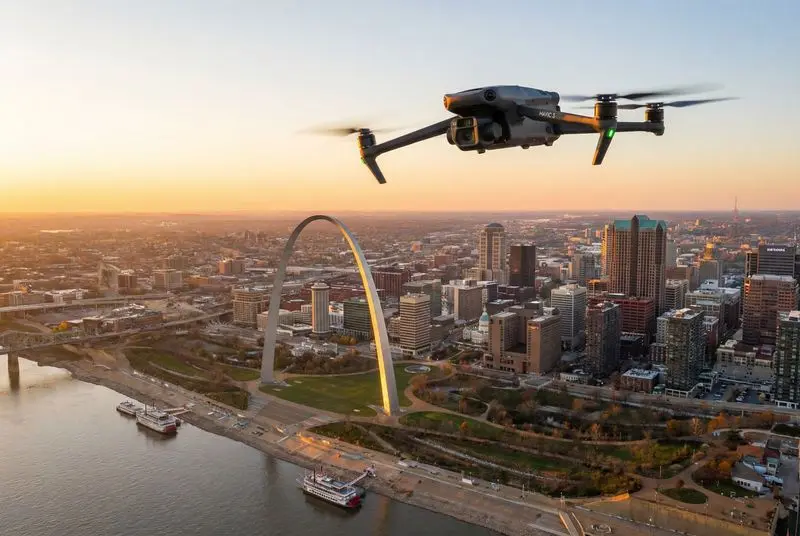
Flying a drone in the “Show-Me State” offers incredible opportunities for notable aerial photography and videography, from the Gateway Arch in St. Louis to the rolling Ozark Mountains. However, before you launch your drone into Missouri’s skies, it’s crucial to understand the rules and regulations that govern its use.
This guide provides an overview of the drone laws in Missouri. We will cover the federal regulations set by the FAA, which apply in all states, as well as the specific statutes enacted by the Missouri legislature. Understanding these rules will not only keep you out of trouble but also ensure the safety of the airspace for everyone. From registration and certification to no-fly zones and penalties, we’ll break down everything you need to know to fly your drone legally and responsibly in Missouri.
Federal Drone Laws That Apply in Missouri
First and foremost, all drone operations in Missouri are subject to the regulations set forth by the Federal Aviation Administration (FAA). These rules form the foundation of drone safety and apply nationwide. They distinguish between two main types of drone pilots: recreational flyers and commercial operators (Part 107 certified).
For Recreational Flyers:
If you are flying your drone purely for fun and personal enjoyment, you are considered a recreational flyer. The key federal rules you must follow include passing The Recreational UAS Safety Test (TRUST) and carrying proof of completion with you when flying [1]. If your drone weighs more than 0.55 pounds (250 grams), you must register it with the FAA through the DroneZone portal for a $5 fee, which is valid for three years. Your registration number must be marked on the exterior of your drone [2]. When flying, you must keep the drone within your visual line of sight (VLOS) and fly at or below 400 feet in uncontrolled airspace (Class G). You are not permitted to fly in controlled airspace (Class B, C, D, and E) without prior authorization, which can be obtained through the Low Altitude Authorization and Notification Capability (LAANC) system. Always give way to manned aircraft, and be aware that as of September 16, 2023, most registered drones must broadcast Remote ID signals, which act as a digital license plate [3].
For Commercial Pilots (Part 107):
If you are operating a drone for any business or commercial purpose, you must be certified under the FAA’s Part 107 rules. This includes activities like real estate photography, inspections, or selling your aerial photos. To become a certified commercial pilot, you must be at least 16 years old and pass the FAA’s Aeronautical Knowledge Test to earn a Remote Pilot Certificate. All commercial drones must be registered with the FAA, regardless of weight. Part 107 rules also govern operational limitations such as maximum altitude (400 feet), flying over people, and night operations, some of which can be waived with specific FAA authorization. Whether flying for fun or for work, all drone pilots in Missouri should use the FAA’s B4UFLY app to check for airspace restrictions and other advisories before every flight [4].
Missouri-Specific Drone Laws
While the FAA governs the airspace, the state of Missouri has enacted its own laws that place specific restrictions on where and how drones can be operated. These laws primarily focus on privacy and safety around critical infrastructure.
HB 1963 (2020) – Restrictions on Flying Over Certain Facilities
In 2020, Missouri passed House Bill 1963, which created two key statutes regulating drone use over correctional centers and large open-air facilities [5].
RSMo 577.800: Unlawful Use of Unmanned Aircraft Over an Open-Air Facility
This law makes it illegal to operate a drone within a vertical distance of 400 feet from the ground and within the property line of an “open-air facility.” An open-air facility is defined as any sports, theater, music, or other entertainment venue that has a seating capacity of 5,000 or more people and is not fully enclosed by a roof [6]. A standard violation is an infraction. However, the penalties are much more severe if the drone is used to deliver a weapon (Class B felony) or a controlled substance (Class D felony). The law does not apply to law enforcement, facility employees acting under the direction of the CEO, or those with written consent.
RSMo 217.850: Unlawful Use of Unmanned Aircraft Over a Correctional Center
This statute prohibits flying a drone within a vertical distance of 400 feet over a correctional center’s secure perimeter fence or allowing a drone to make contact with the facility. This applies to state correctional centers, private jails, and county or municipal jails [7]. A standard violation is an infraction. The offense becomes a Class B felony if used to deliver a weapon, a Class C felony if used to facilitate an escape, and a Class D felony if used to deliver a controlled substance. Similar to the open-air facility law, exceptions are made for law enforcement, facility employees, and those with written permission.
Local and City Drone Regulations in Missouri
While Missouri has not passed a statewide preemption law that would block local governments from creating their own drone rules, only a few municipalities have done so. It is important to always check for local ordinances in the specific area you plan to fly.
City of St. Louis
In March 2024, the City of St. Louis passed Ordinance 71813, which established new regulations for drone use within the city. The ordinance requires commercial drone operators to have a federal Part 107 license and a city-issued business license. It also includes restrictions on where drones can operate, such as over parades, festivals, and near critical infrastructure [8].
Missouri Department of Conservation
The Missouri Department of Conservation (MDC) requires drone pilots to obtain a Special Use Permit to launch, land, or operate a drone on any MDC conservation area. This rule is in place to protect wildlife and ensure the enjoyment of these areas for all visitors [9].
Missouri State Parks
According to Missouri State Parks, there are no specific laws prohibiting drone use in state parks. However, they ask that pilots be respectful of other visitors and keep their drones to the main, open day-use areas. It is always a good practice to check with the specific park office before flying [10].
Where You Can and Can’t Fly in Missouri
Understanding where you are prohibited from flying is just as important as knowing the rules of the air. In Missouri, several areas are off-limits to drones. As detailed in RSMo 577.800, you cannot fly a drone within 400 feet of large, open-air venues like stadiums (e.g., Arrowhead Stadium in Kansas City, Busch Stadium in St. Louis) during events. Flying over state prisons, county jails, or private jails is strictly prohibited under RSMo 217.850. The National Park Service has banned the use of drones in all national parks nationwide, including the Gateway Arch National Park in St. Louis. You must have authorization (usually through LAANC) to fly in the controlled airspace surrounding airports. Always maintain a safe distance from any aircraft operations. Flying over military bases, such as Whiteman Air Force Base, is restricted, and these areas are often designated as no-fly zones. Be cautious when flying near sensitive sites like power plants, water treatment facilities, and government buildings.
Penalties and Enforcement
Violating drone laws in Missouri can lead to significant penalties from both the FAA and state authorities. The FAA can impose civil penalties for unsafe drone operations, with fines ranging from a few hundred dollars for minor infractions to over $30,000 for more serious violations. Operating a drone in a manner that endangers aircraft can also lead to criminal charges. As outlined in state law, flying a drone over a correctional facility or open-air stadium is an infraction for a basic violation. However, if the drone is used to deliver weapons or drugs, the charges escalate to serious felonies, carrying the potential for significant prison time and fines.
Tips for Staying Compliant
Navigating the various federal, state, and local regulations can seem daunting, but following a few simple best practices can help ensure your drone flights in Missouri are always safe and legal. The FAA’s B4UFLY app is an important tool for every drone pilot, providing real-time information on airspace restrictions, temporary flight restrictions (TFRs), and other critical safety advisories for your specific location. If your drone weighs over 250 grams, make sure your FAA registration is current and the number is clearly marked on the outside of the aircraft. If you are flying for any reason other than pure recreation, you must have a Part 107 Remote Pilot Certificate. For hobbyists, completing the TRUST test is mandatory. Do not fly over private property without permission, and avoid capturing images or videos of people where they have a reasonable expectation of privacy. Before flying in a new area, especially within city limits or parks, take a few minutes to check the local government’s website for any specific drone ordinances. Finally, never fly your drone beyond the point where you can clearly see it with your own eyes. This is a critical rule for avoiding collisions and ensuring you remain in control of your aircraft.
Helpful Resources
For more information and to ensure you are always flying legally, here are some helpful resources:
- FAA DroneZone: The official portal for registering your drone and managing your FAA certifications. [2]
- B4UFLY App: The essential FAA app for checking airspace restrictions and flight advisories. [4]
- Missouri Revisor of Statutes: The official source for Missouri state laws. [5]
- Drone Launch Academy Part 107 Course: A comprehensive course to help you pass the Part 107 exam and become a certified commercial drone pilot.
References
[1] The Recreational UAS Safety Test (TRUST), Federal Aviation Administration
[2] FAA DroneZone, Federal Aviation Administration
[3] Remote ID, Federal Aviation Administration
[4] B4UFLY, Federal Aviation Administration
[5] HB 1963, Missouri House of Representatives
[6] Section 577.800, Missouri Revisor of Statutes
[7] Section 217.850, Missouri Revisor of Statutes
[8] Ordinance 71813, City of St. Louis
[9] Recreational Drone Flying, Missouri Department of Conservation
[10] Laws and Regulations, Missouri State Parks
← Back to Drone Laws by State Directory
Disclaimer: Drone laws are constantly evolving. While we strive to keep this guide updated, you should always verify local ordinances and check the FAA B4UFLY app before flying. This page is for educational purposes and does not constitute legal advice.
Sources: FAA UAS | NCSL State Drone Law Landscape | FAA Remote ID | FAA Part 107