
Drone Laws in Nebraska
Your complete 2026 guide to flying drones legally in Nebraska.
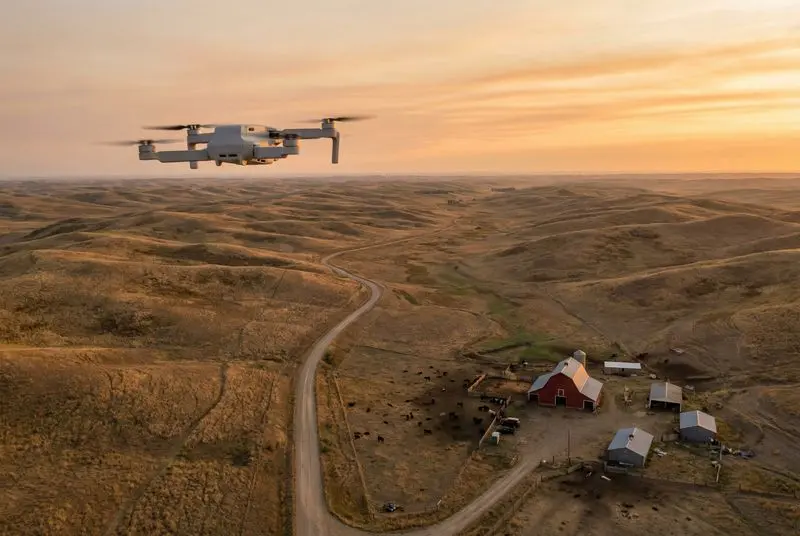
Flying a drone in Nebraska offers incredible opportunities to capture the state’s notable landscapes, from the Sandhills to the Platte River. However, before you launch your drone, it’s crucial to understand the regulations that govern its use.This guide provides an overview of federal, state, and local rules to ensure you stay compliant while enjoying the skies over Nebraska.We will explore where you can and cannot fly, potential penalties for violations, and provide helpful resources to make every flight a successful one. Our goal is to provide a clear and accessible resource for all drone operators in Nebraska.
Federal Drone Laws That Apply in Nebraska
Even though you are flying in Nebraska, you must adhere to the federal regulations established by the Federal Aviation Administration (FAA). These rules apply to all drone pilots in the United States, regardless of the state.
Registration
All drones weighing more than 0.55 pounds (250 grams) must be registered with the FAA. The registration costs $5 and is valid for three years. You can register your drone on the official FAA DroneZone website. Once registered, you must label your drone with the registration number.
Remote ID
As of September 16, 2023, all registered drones are required to broadcast Remote ID information. This technology allows the FAA, law enforcement, and other federal agencies to identify drones in flight. The only exception is for drones flown within an FAA-Recognized Identification Area (FRIA).
Recreational vs. Commercial Use
The FAA has different requirements for recreational and commercial drone pilots. If you are flying purely for personal enjoyment, you are considered a recreational flyer. In this case, you must pass The Recreational UAS Safety Test (TRUST) and be prepared to show proof of completion. Additionally, you should adhere to the safety guidelines of an FAA-recognized Community-Based Organization (CBO).
For any flight that is not for recreational purposes, you are considered a commercial pilot. This includes activities like taking photos for a real estate listing, conducting inspections for a fee, or even creating content for a monetized YouTube channel. Commercial pilots must obtain a Remote Pilot Certificate by passing the FAA’s Part 107 aeronautical knowledge test.
General Flight Rules
Several general flight rules apply to all drone operations. First and foremost, you must always keep your drone within your visual line of sight (VLOS). You are also required to fly at or below 400 feet in uncontrolled (Class G) airspace. If you need to fly in controlled airspace, such as near an airport, you must first receive authorization through the FAA’s LAANC or DroneZone systems. Finally, it is your responsibility to always give way to manned aircraft.
For the most current information, always check the FAA’s official website and use the B4UFLY app to check airspace restrictions before you fly.
Nebraska-Specific Drone Laws
While Nebraska has fewer state-level drone regulations than many other states, there are several important laws that pilots must be aware of. These statutes primarily address privacy, wildlife protection, and government use of drones.
Harassment of Wildlife (Neb. Rev. Stat. § 37-509)
Nebraska law explicitly prohibits the use of any aircraft, which includes drones, to harass, disturb, or shoot at any wildlife. This is particularly relevant given Nebraska’s diverse ecosystems and migratory bird populations.
(1) It shall be unlawful for any person (a) while airborne in any aircraft to shoot or attempt to shoot for the purpose of killing any bird, fish, or other animal… or (b) to intentionally harass any bird, fish, or other animal.
This means that drone pilots must maintain a safe distance from all wildlife and are forbidden from using their drone to chase, flush out, or otherwise bother animals. This law is strictly enforced by the Nebraska Game and Parks Commission.
Source: Nebraska Revised Statute § 37-509
Criminal Trespass (Neb. Rev. Stat. § 28-521)
While this statute does not explicitly mention drones, its language regarding trespass can be interpreted to apply to UAS flying over private property without permission. A person commits second-degree criminal trespass if they enter or remain in a place where they are not licensed or privileged to be.
Flying a drone at a low altitude over private property could be considered a form of trespass in Nebraska. It is always recommended to respect private property and obtain permission before flying over someone else’s land.
Source: Nebraska Revised Statute § 28-521
State Agency Drone Acquisition (Neb. Rev. Stat. § 73-1004)
This law regulates the purchase and use of drones by state agencies in Nebraska. Effective January 1, 2027, it mandates that any drone purchased by a state agency must be from a list of approved, secure drones cleared by the state’s Materiel Division. While this law does not directly impact recreational or commercial pilots, it reflects the state’s focus on security regarding drone technology.
Source: Nebraska Revised Statute § 73-1004
Local and City Regulations
As of early 2026, Nebraska does not have any known specific drone ordinances at the city or county level. The state has not enacted any preemption laws, which means local governments have the authority to create their own drone regulations in the future. However, the current landscape is notable for its lack of local restrictions.
Nebraska State Capitol Building
The Office of the Capitol Commission has established specific guidelines for operating drones around the Nebraska State Capitol in Lincoln. Key rules include:
- The use of a drone inside the Nebraska State Capitol is strictly prohibited.
- The Capitol is within 5 miles of Lincoln Airport (LNK), meaning flights require LAANC authorization.
- All drone operators must comply with FAA regulations and are liable for any damage caused.
Pilots wishing to fly near the Capitol should review the complete UAV Guidelines before their flight.
It is always a best practice to check with local municipalities or parks departments for any new or unlisted rules before flying in a specific area.
Where You Can and Can’t Fly in Nebraska
Understanding where you are allowed to fly is just as important as knowing the rules of the sky. In Nebraska, your ability to fly is determined by a combination of federal, state, and local rules.
Permitted Flying Areas
In Nebraska, you can generally fly your drone in Class G (uncontrolled) airspace without needing special authorization, as long as you stay at or below 400 feet. A significant portion of rural Nebraska is classified as Class G airspace. Flying is also permitted within Nebraska’s state parks, but you must adhere to all FAA regulations and the state’s prohibition on harassing wildlife. It is always a good idea to check with the specific park for any posted restrictions before you fly. Furthermore, you are free to operate your drone on your own private property or on private land where you have obtained the owner’s explicit permission.
Restricted Flying Areas
Several areas in Nebraska are off-limits or require special authorization for drone flights. All areas managed by the National Park Service (NPS) are no-fly zones for drones; this includes the Niobrara National Scenic River and Scotts Bluff National Monument. Flying in the controlled airspace surrounding airports, such as Omaha’s Eppley Airfield (OMA) and Lincoln Airport (LNK), is prohibited without prior authorization from the FAA’s LAANC system. It is also critical to avoid flying near military installations like Offutt Air Force Base, as these are restricted areas. Federal law also creates temporary flight restrictions (TFRs) over stadiums during major sporting events, which includes Memorial Stadium in Lincoln during University of Nebraska football games. Finally, you should never fly over critical infrastructure or near emergency response situations, as this can interfere with important operations and pose a safety risk.
Penalties and Enforcement
Violating federal, state, or local drone laws can result in significant penalties. Both the FAA and Nebraska state authorities have the power to enforce these regulations.
Federal Penalties
The FAA has a strict enforcement policy for drone violations. Penalties can be severe and are assessed based on the nature of the infraction:
- Fines: Civil penalties can range from $1,771 for minor infractions to as much as $36,770 per violation for more serious offenses.
- Criminal Penalties: Knowingly or willfully endangering the national airspace system can lead to criminal prosecution, fines, and even imprisonment.
These penalties apply to both recreational and commercial pilots who operate a drone in a careless or reckless manner.
State-Level Penalties
In Nebraska, violating the state statute against harassing wildlife with a drone is a misdemeanor offense. Penalties can include fines and the potential seizure of the equipment used in the offense. Similarly, criminal trespass charges could be pursued for flying over private property without permission, which may also result in fines.
Tips for Staying Compliant
Staying compliant with drone laws in Nebraska is straightforward if you follow a consistent pre-flight routine. Before every flight, use the FAA’s B4UFLY app to check for any airspace restrictions or TFRs in your area. Ensure your drone is registered if it weighs over 250 grams and that the registration number is visible. Depending on your flight’s purpose, you’ll need either a TRUST certificate for recreational flying or a Part 107 certificate for commercial work. Always respect the privacy of others by not flying over private property without permission, and be mindful of local rules, which can change. Most importantly, always keep your drone within your visual line of sight to ensure safety and control.
Helpful Resources
- FAA DroneZone: The official portal for registering your drone, obtaining authorizations, and managing your pilot certifications.
- https://faadronezone.faa.gov
- B4UFLY App: The definitive FAA app for checking airspace restrictions and advisories before you fly.
- https://www.faa.gov/uas/getting_started/b4ufly
- Nebraska Legislature: Search for and read the full text of Nebraska’s state statutes.
- https://nebraskalegislature.gov/laws/statutes.php
- Nebraska Game and Parks Commission: Information on state parks and wildlife regulations.
- http://outdoornebraska.gov/
- Drone Launch Academy Part 107 Course: A comprehensive course to help you pass the Part 107 exam and become a certified commercial drone pilot.
- https://dronelaunchacademy.com/drone-exam-study-course/