
Drone Laws in New Hampshire
Your complete 2026 guide to flying drones legally in New Hampshire.
New Hampshire, with its scenic landscapes ranging from the White Mountains to its charming coastline, offers incredible opportunities for drone pilots.This guide provides an overview of the drone laws in New Hampshire, covering everything from federal FAA regulations to state-specific statutes. We’ll explore where you can fly, what rules you need to follow, and the penalties for non-compliance, ensuring you have all the information you need to fly with confidence in New Hampshire.
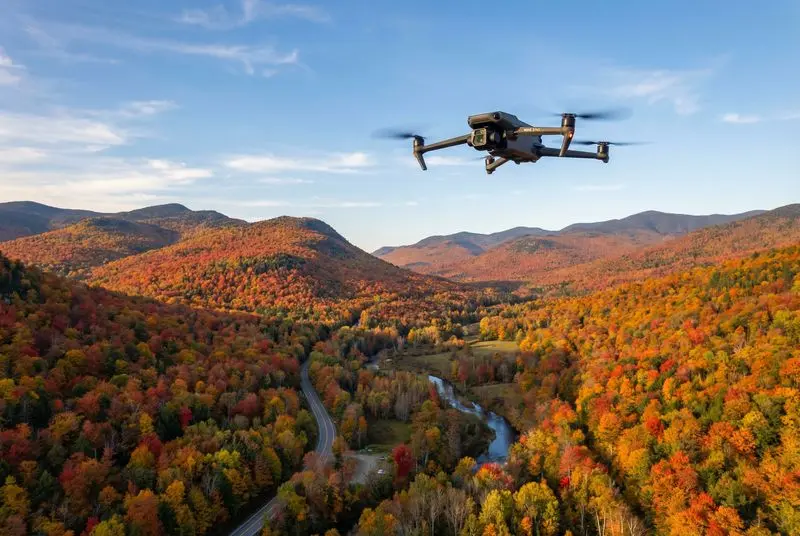
The drone laws in New Hampshire are a combination of federal regulations established by the Federal Aviation Administration (FAA) and specific state laws passed by the New Hampshire General Court. While the FAA governs the majority of drone operations, the state has enacted its own legislation addressing particular concerns like privacy, hunting, and law enforcement use.
Federal Drone Laws That Apply in New Hampshire
The foundation of drone regulation in the United States is federal law, which applies in all 50 states, including New Hampshire. The Federal Aviation Administration (FAA) is the primary governing body for all unmanned aircraft systems (UAS). Both recreational and commercial drone operators in New Hampshire must adhere to these federal rules.
All drones weighing more than 0.55 pounds (250 grams) must be registered with the FAA through the FAA DroneZone website [1]. This registration is valid for three years, and the registration number must be clearly marked on the exterior of the drone. As of September 16, 2023, all registered drones are also required to broadcast Remote ID information, which functions as a digital license plate, allowing authorities to identify the aircraft in flight. The only exception to this rule is for drones flown within an FAA-Recognized Identification Area (FRIA) [2].
For commercial pilots, flying a drone for any business-related purpose requires a Remote Pilot Certificate, which is obtained by passing the FAA’s Part 107 knowledge test. This certification ensures that commercial operators have a thorough understanding of drone regulations, operating requirements, and safety procedures [3]. Recreational flyers, on the other hand, are required to take and pass The Recreational UAS Safety Test (TRUST), a free online test that covers essential drone safety and regulatory knowledge. Proof of passing this test must be carried by the pilot during all flights [4].
Operational rules set by the FAA include a maximum flight altitude of 400 feet above ground level (AGL). Flying in controlled airspace (Class B, C, D, and E) requires prior authorization, which can be obtained through the Low Altitude Authorization and Notification Capability (LAANC) system or the FAA DroneZone. Pilots must also maintain a visual line of sight (VLOS) with their drone at all times, meaning the aircraft should be visible to the naked eye without the use of binoculars or other visual aids. To assist with flight planning and situational awareness, the FAA recommends using the B4UFLY app to check for airspace restrictions and other advisories before every flight [5].
New Hampshire-Specific Drone Laws
While the FAA has broad authority over drone operations, New Hampshire has enacted its own laws to address specific concerns. These state laws complement federal regulations and focus on areas such as privacy, hunting, and the use of drones by law enforcement.
One of the most significant state laws is RSA 207:57, also known as SB 222 (2015), which prohibits the use of drones for hunting, fishing, or trapping. This statute makes it illegal to use a drone to aid in the taking of any game or fur-bearing animal, to harass or worry any wildlife, or to conduct video surveillance of private citizens who are lawfully hunting, fishing, or trapping without their written consent. A violation of this law is considered a violation-level offense [6].
Another important statute is RSA 644:23, which addresses the issue of armed drones. This law makes it a class B felony for a person to knowingly possess or operate a small unmanned aircraft system equipped with a device capable of firing a projectile or any other dangerous weapon. This legislation is designed to prevent the weaponization of drones and ensure public safety [7].
It is also important for drone operators to stay informed about proposed legislation that could impact drone operations in New Hampshire. For example, HB 1444 (2026) proposed to prohibit any county, city, town, or other political subdivision from purchasing or acquiring a drone or unmanned aircraft system from any entity that is included on the Consolidated Screening List (CSL) or is domiciled in a country of concern, effective January 1, 2028 [8]. Another bill, HB 468 (2025), sought to make it illegal to use a drone in a manner that interferes with law enforcement, firefighting, or emergency medical services. While this bill did not pass in its original form, it highlights the ongoing legislative interest in regulating drone use in the state.
Local and City Regulations
As of early 2026, there are no known local or city-specific drone ordinances in New Hampshire. The state has not enacted any preemption laws, which means that municipalities could potentially create their own drone regulations in the future. However, the current landscape is that drone operations are primarily governed by federal and state law. It is always a good practice to check with local authorities before flying, especially in more populated areas, to ensure that no new local rules have been enacted.
Where You Can and Can’t Fly in New Hampshire
Knowing can you fly a drone in New Hampshire is a common question, and the answer depends on the specific location. Flying a drone in any National Park is strictly prohibited by the National Park Service (NPS). This ban includes the Appalachian National Scenic Trail, which runs through New Hampshire. In contrast, the New Hampshire Division of Parks and Recreation has not issued a statewide ban on drones in state parks. However, individual parks may have their own rules, so it is highly recommended to contact the specific park you plan to visit to inquire about their drone policy.
Flying a drone near airports and in controlled airspace is also heavily regulated. You must not fly your drone within five miles of an airport without proper authorization. The B4UFLY app can be used to identify controlled airspace and obtain the necessary authorization through LAANC. Flying a drone near military installations is also restricted, and these areas should be avoided. Additionally, the FAA prohibits drone flights over stadiums and sporting events, and Temporary Flight Restrictions (TFRs) are often in place during these events. Finally, the U.S. Forest Service prohibits the use of motorized equipment, including drones, in designated wilderness areas, which includes parts of the White Mountain National Forest.
Penalties and Enforcement
Violating drone laws in New Hampshire can result in significant penalties from both the FAA and state authorities. The FAA can impose fines ranging from $1,771 to $36,770 per violation for unsafe drone operations. In more serious cases, criminal penalties, including imprisonment, are also possible for endangering aircraft [9]. At the state level, violations of New Hampshire’s drone laws can result in various penalties, from violation-level offenses for using a drone in hunting to a class B felony for possessing an armed drone.
Tips for Staying Compliant
To ensure safe and legal drone flights in New Hampshire, You should follow a few key best practices. First, always check the B4UFLY app before every flight to be aware of any airspace restrictions or advisories. Second, if your drone weighs over 0.55 lbs, make sure it is registered with the FAA and that the registration number is clearly displayed on the drone. Third, all pilots must be properly certified. Commercial pilots must obtain a Part 107 certificate, while recreational flyers must complete the TRUST test.
Respecting privacy is another critical aspect of responsible drone operation. Do not fly your drone over private property without permission, and avoid capturing images or videos of people without their consent. While there are currently no local drone ordinances in New Hampshire, it is always a good idea to check with local authorities before flying to ensure no new rules have been put in place. Finally, always maintain a visual line of sight with your drone to ensure you can react to any potential hazards.
Helpful Resources
- FAA DroneZone
- B4UFLY App
- New Hampshire Department of Transportation – Aeronautics
- New Hampshire General Court
- Drone Launch Academy Part 107 Course
References
[1] FAA. “UAS Registration.” https://faadronezone.faa.gov
[2] FAA. “Remote ID.” https://www.faa.gov/uas/getting_started/remote_id
[3] FAA. “Part 107.” https://www.faa.gov/uas/commercial_operators
[4] FAA. “The Recreational UAS Safety Test (TRUST).” https://www.faa.gov/uas/recreational_flyers/trust
[5] FAA. “B4UFLY.” https://www.faa.gov/uas/getting_started/b4ufly
[6] New Hampshire General Court. “RSA 207:57.” http://www.gencourt.state.nh.us/rsa/html/XX/207/207-57.htm
[7] New Hampshire General Court. “RSA 644:23.” http://www.gencourt.state.nh.us/rsa/html/LXII/644/644-23.htm
[8] LegiScan. “New Hampshire House Bill 1444.” https://legiscan.com/NH/text/HB1444/id/3288625
[9] FAA. “FAA Enforcement.” https://www.faa.gov/newsroom/faa-steps-drone-enforcement-2025
← Back to Drone Laws by State Directory
Disclaimer: Drone laws are constantly evolving. While we strive to keep this guide updated, you should always verify local ordinances and check the FAA B4UFLY app before flying. This page is for educational purposes and does not constitute legal advice.
Sources: FAA UAS | NCSL State Drone Law Landscape | FAA Remote ID | FAA Part 107