
Drone Laws in Oregon
Your complete 2026 guide to flying drones legally in Oregon.
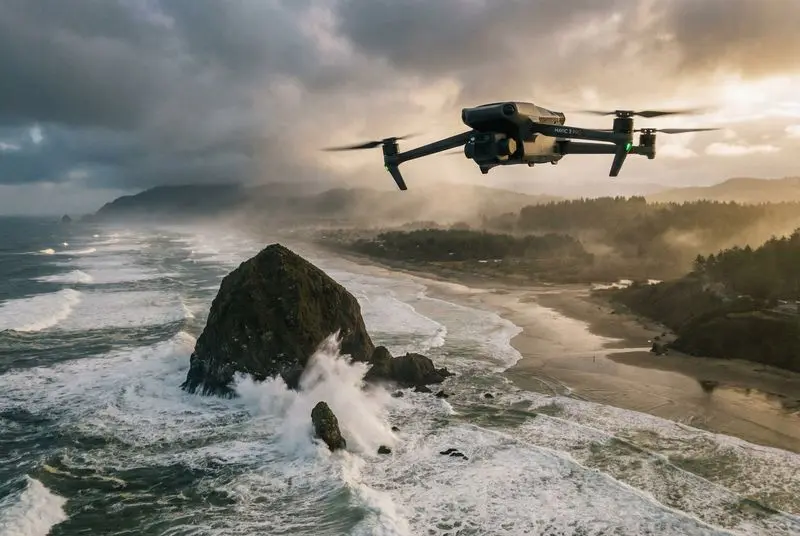
Drone Laws in Oregon: What You Need to Know (2026 Guide)
Welcome to your complete guide to understanding drone laws in Oregon.The world of drone regulation can seem complex, with rules set by federal, state, and sometimes even local authorities. This guide is designed to provide a clear and comprehensive overview of the drone laws in Oregon, helping you fly safely.
Oregon’s legal landscape for unmanned aircraft systems (UAS) has some unique features, particularly concerning privacy, law enforcement use, and state preemption of local ordinances.We will explore where you can and can’t fly, what penalties you could face for violations, and provide helpful resources to ensure you’re always compliant. Our goal is to make the drone laws in Oregon easy to understand, so you can focus on flying safely and responsibly.
Federal Drone Laws That Apply in Oregon
It is important to understand that even when flying in Oregon, you are operating in the National Airspace System, which is governed by the Federal Aviation Administration (FAA). All drone pilots, whether recreational or commercial, must adhere to these federal regulations. These rules provide the foundation for safe drone operations across the entire United States.
For Recreational Flyers
If you are flying your drone purely for fun and personal enjoyment, you are considered a recreational flyer. The FAA has a specific set of rules for you to follow:
- Take The Recreational UAS Safety Test (TRUST): All recreational flyers must pass this short online test and be able to provide proof of passing if asked by law enforcement or FAA personnel. [1]
- Register Your Drone: If your drone weighs more than 0.55 pounds (250 grams), you must register it with the FAA through the DroneZone portal. The registration costs $5 and is valid for three years. Your registration number must be visible on the exterior of the drone. [2]
- Fly at or Below 400 Feet: In uncontrolled airspace (Class G), you must keep your drone at or below 400 feet above the ground.
- Maintain Visual Line of Sight (VLOS): You must be able to see your drone with your own eyes at all times. Using a visual observer to assist you is permitted.
- Get Authorization for Controlled Airspace: You may not fly in controlled airspace (Class B, C, D, and E) without prior authorization. This is typically obtained through the Low Altitude Authorization and Notification Capability (LAANC) system, often accessible via drone flying apps.
- Follow Safety Guidelines: Adhere to the safety guidelines of an FAA-recognized Community-Based Organization (CBO).
- Do Not Interfere with Manned Aircraft: Always give way to airplanes, helicopters, and other manned aircraft.
For Commercial Pilots (Part 107)
If you are flying your drone for any business or commercial purpose—including work, compensation, or in furtherance of a business—you must operate under the FAA’s Part 107 rules. This is the standard for all non-recreational drone operations.
- Obtain a Remote Pilot Certificate: You must pass the FAA’s Part 107 Aeronautical Knowledge Test to earn a Remote Pilot Certificate. You must be at least 16 years old to obtain this certificate.
- Register Your Drone: All commercial drones must be registered with the FAA, regardless of weight.
- Follow Operational Rules: Part 107 includes a comprehensive set of operational rules, including altitude and airspace restrictions similar to recreational flyers, but with additional permissions and waiver options for things like flying over people or at night, provided certain conditions are met.
Remote ID Requirement
As of September 16, 2023, most drones required to be registered must broadcast Remote ID information. This acts as a digital license plate for your drone, broadcasting identification and location information. This rule applies to both recreational and commercial pilots. You can comply by using a drone with built-in Remote ID capabilities or by attaching a Remote ID broadcast module to your existing drone. [3]
For the most current and detailed information, always refer to the official FAA website and resources like the B4UFLY app before you fly. [4]
Oregon-Specific Drone Laws
While the FAA governs the skies, the state of Oregon has passed several laws that regulate how drones can be used within its borders, with a strong focus on privacy and the operation of drones by public bodies. A key piece of legislation is House Bill 4066 (2016), which established a clear framework for drone use in the state.
One of the most significant aspects of Oregon’s drone legislation is the concept of state preemption. Under ORS 837.385, the state legislature has largely prevented local cities and counties from creating their own drone ordinances. This means that drone operators in Oregon generally only need to be concerned with state and federal laws, not a patchwork of local rules. However, there is an exception: local governments can still regulate the launching and landing of drones on property that they own.
Here are the key state-level drone laws in Oregon:
-
Public Body Drone Registration (OAR 738-080-0045): Any public body in Oregon, such as a state agency or law enforcement, must register its drones with the Oregon Department of Aviation before operation. This rule does not apply to educational institutions. [5]
-
Restrictions on Law Enforcement Use (ORS 837.310): Oregon law places strict limits on how law enforcement can use drones. Generally, police cannot operate a drone or use information from a drone without a warrant. Any evidence gathered in violation of this statute is inadmissible in court. [6]
-
Weaponized Drones Prohibited (ORS 837.365): It is a felony in Oregon to operate a drone equipped with any kind of dangerous weapon. [7]
-
Interference with Public Drones: It is illegal to interfere with or gain unauthorized access to a drone operated by a public body.
-
Flying Over Critical Infrastructure (ORS 837.372): Flying a drone over critical infrastructure, such as correctional facilities, fuel storage facilities, or railroad yards, at an altitude of 400 feet or less is prohibited without the owner’s consent. A violation of this law is a Class A misdemeanor. [8]
-
Interference with Wildfire and Emergency Operations: Using a drone in a way that interferes with wildfire suppression, law enforcement, or other emergency services is a serious offense in Oregon.
Local and City Regulations
Thanks to Oregon’s state preemption law (ORS 837.385), the landscape of local drone regulation is much simpler than in many other states. Cities and counties are generally prohibited from creating their own specific drone ordinances. This prevents a confusing patchwork of rules and ensures that the state and federal laws are the primary authority.
However, there is a key exception to this preemption. Local governments can regulate the launching and landing of drones on property that they own. This most commonly applies to city and county parks.
For example, Oregon Metro, which manages parks and natural areas in the Portland metropolitan area, has a rule that bans the use of drones within its park boundaries. This includes flying drones under 400 feet above parklands and water. [9] Similarly, the city of Portland has an ordinance that prohibits the launching or landing of drones in city parks without a permit.
Because of this, it is always a good practice to check the rules for the specific park or public land you intend to fly in. Look for posted signs or check the official website for the managing agency (e.g., city parks department, county parks) before you fly.
Where You Can and Can’t Fly in Oregon
Knowing where you are allowed to fly is just as important as knowing the rules of operation. While Oregon has vast, beautiful landscapes that are tempting for drone pilots, there are several types of locations with restrictions.
Oregon State Parks
Oregon’s state park system has a nuanced approach to drones. While not an outright ban, there are specific guidelines you must follow. According to the Oregon Parks and Recreation Department (OPRD), drones are considered “motorized equipment” and can only be launched and landed from designated areas. The OPRD encourages pilots to check the specific drone map for each park to see where operation is permitted. The preference is for drones to be operated within these designated take-off and landing zones to protect natural resources. [10]
Key rules for flying in Oregon State Parks include:
- Always fly below 400 feet.
- Keep the drone within your visual line of sight.
- Do not fly over or near wildlife. It is illegal to disturb animals during critical life functions like breeding or nesting.
- Do not approach wildlife closer than 300 feet.
National Parks and Wilderness Areas
Flying a drone is prohibited in all lands administered by the National Park Service. This includes Oregon’s famous Crater Lake National Park. Launching, landing, or operating a drone within national park boundaries is illegal. [11]
Additionally, drones may not be operated from congressionally designated wilderness areas or national wildlife refuges, such as the Oregon Islands National Wildlife Refuge.
Other Restricted Areas
- Airports: You cannot fly in the controlled airspace around airports without receiving prior authorization through LAANC.
- Military Installations: Flying over military bases is restricted. Always check your drone map for any specific restrictions.
- Stadiums and Sporting Events: The FAA implements Temporary Flight Restrictions (TFRs) over stadiums during major sporting events. It is illegal to fly a drone within the area of a TFR.
- Wildfires: Never fly a drone near a wildfire. Doing so can interfere with firefighting aircraft and is illegal. TFRs are always active over wildfires.
Penalties and Enforcement
Violating drone laws in Oregon can lead to significant penalties from both the FAA and state authorities. It is crucial to understand the potential consequences to ensure you are flying safely and legally.
Federal Penalties
The FAA has the authority to enforce its regulations with substantial fines. As of 2026, these fines can range from $1,771 for minor infractions to as high as $36,770 per violation for more serious offenses. The FAA can also pursue criminal charges for actions that recklessly endanger the National Airspace System. [12]
State-Level Penalties
Oregon has its own set of penalties for violations of its state-specific drone laws:
- Flying over Critical Infrastructure: Illegally flying a drone over critical infrastructure is a Class A misdemeanor. [8]
- Weaponizing a Drone: Knowingly operating a drone with a dangerous weapon attached is a felony. [7]
- Interference with Public Safety: Interfering with firefighting, law enforcement, or emergency services with a drone can lead to severe penalties.
law enforcement in Oregon can investigate and enforce these state-level laws, in addition to any action the FAA might take.
Tips for Staying Compliant
Navigating the rules for flying a drone in Oregon is straightforward if you follow a few key best practices. Here are some tips to ensure every flight you take is safe and compliant:
-
Check B4UFLY Before Every Flight: The B4UFLY app is an essential tool for every drone pilot. It provides real-time information on airspace restrictions and is the best way to know if you are cleared to fly at your chosen location.
-
Register Your Drone: If your drone weighs over 250 grams, make sure its registration is current with the FAA and that the registration number is clearly marked on the outside of the aircraft.
-
Get Certified: If you are flying for any non-recreational purpose, you must have a Part 107 Remote Pilot Certificate. For recreational flyers, you must have your TRUST certificate with you when you fly.
-
Respect Privacy: While flying, be mindful of the privacy of others. Avoid flying over private property without permission, and do not hover or record in a way that could be perceived as intrusive.
-
Check Local Park Rules: Since local governments in Oregon can regulate drone take-offs and landings on their property, always check the rules for the specific park or public land you plan to visit.
-
Keep Your Drone in Sight: Always maintain a direct visual line of sight with your drone. This is a core safety rule that helps prevent collisions and ensures you are aware of your drone’s orientation and location.
Helpful Resources
- FAA DroneZone: The official portal for registering your drone and managing your FAA certifications. https://faadronezone.faa.gov
- B4UFLY App: The FAA’s mobile app for checking airspace restrictions. https://www.faa.gov/uas/getting_started/b4ufly
- Oregon Department of Aviation: The state authority for aviation matters, including public drone registration. https://www.oregon.gov/aviation/
- Oregon State Legislature: The official source for Oregon’s state laws and statutes. https://www.oregonlegislature.gov/
- Drone Launch Academy Part 107 Course: If you’re looking to become a certified commercial drone pilot, our in-depth course is the best way to prepare for the Part 107 exam. [Link to DLA course]
References
[1] The Recreational UAS Safety Test (TRUST) – https://www.faa.gov/uas/recreational_flyers/trust
[2] FAA Drone Registration – https://faadronezone.faa.gov
[3] Remote ID for Recreational Flyers – https://www.faa.gov/uas/getting_started/remote_id
[4] B4UFLY – https://www.faa.gov/uas/getting_started/b4ufly
[5] OAR 738-080-0045 – Public Body Registration of Unmanned Aircraft Systems – https://oregon.public.law/rules/oar_738-080-0045
[6] ORS 837.310 – Restrictions; exceptions – https://oregon.public.law/statutes/ors_837.310
[7] ORS 837.365 – Weaponized unmanned aircraft systems – https://oregon.public.law/statutes/ors_837.365
[8] ORS 837.372 – Operation over critical infrastructure facility – https://oregon.public.law/statutes/ors_837.372
[9] Drones in Metro Parks – https://www.oregonmetro.gov/parks/drones-metro-parks
[10] Recreational Drone Best Practices – https://www.oregon.gov/oprd/PRP/Documents/Drone-best-practices-20231023.pdf
[11] Unmanned Aircraft in the National Parks – https://www.nps.gov/articles/unmanned-aircraft-in-the-national-parks.htm
[12] FAA Enforcement – https://www.faa.gov/about/office_org/headquarters_offices/agc/practice_areas/enforcement
← Back to Drone Laws by State Directory
Disclaimer: Drone laws are constantly evolving. While we strive to keep this guide updated, you should always verify local ordinances and check the FAA B4UFLY app before flying. This page is for educational purposes and does not constitute legal advice.
Sources: FAA UAS | NCSL State Drone Law Landscape | FAA Remote ID | FAA Part 107