
Drone Laws in Rhode Island
Your complete 2026 guide to flying drones legally in Rhode Island.
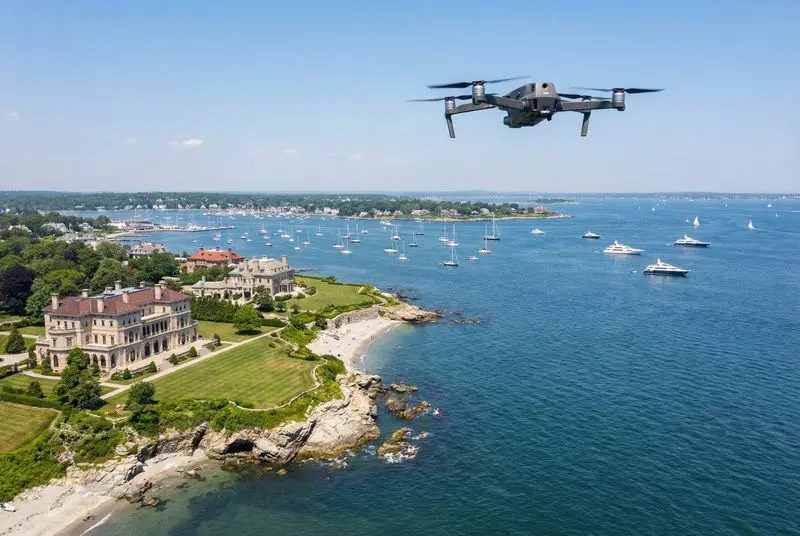
Navigating the skies of Rhode Island with a drone requires an understanding of both federal and state regulations.This guide provides an overview of the regulations that every drone pilot in Rhode Island needs to know, from FAA mandates to state-specific rules.
As a drone operator in Rhode Island, you are part of a dynamic and growing community. The state has taken a clear stance on drone regulation, aiming to create a straightforward legal framework for all pilots. This approach simplifies compliance, but it also places the responsibility on you to be aware of the rules.
Federal Drone Laws That Apply in Rhode Island
The Federal Aviation Administration (FAA) has established a set of regulations that apply to all drone operations in the United States, including Rhode Island. These rules are designed to ensure the safety of the national airspace and to provide a consistent framework for drone pilots. It is essential for every operator, whether flying for fun or for work, to be familiar with these federal requirements.
All drones weighing more than 0.55 pounds (250 grams) must be registered with the FAA. The registration number must be displayed on the exterior of the drone. For recreational flyers, The Recreational UAS Safety Test (TRUST) is a mandatory online test that provides education and testing on safety and regulatory information. Commercial pilots, on the other hand, must obtain a Remote Pilot Certificate by passing the FAA’s Part 107 exam. All drones must also comply with the Remote ID rule, which requires them to broadcast identification and location information.
Key federal regulations include maintaining a visual line of sight with your drone at all times, flying at or below 400 feet in uncontrolled airspace, and obtaining authorization to fly in controlled airspace through LAANC or DroneZone. It is also prohibited to fly over people or moving vehicles without a waiver, or to operate a drone in a reckless manner. For more detailed information, pilots should consult the FAA’s official website and use the B4UFLY app to check for airspace restrictions before every flight.
Rhode Island-Specific Drone Laws
Rhode Island has taken a streamlined approach to drone regulation by establishing a state-wide law that preempts local ordinances. This means that the state government has the primary authority to regulate drone operations, creating a more consistent legal environment for pilots across Rhode Island. The key piece of legislation is Rhode Island General Law § 1-8-1.2, which outlines the state’s approach to drone regulation.
According to this law, all drone operations in Rhode Island must comply with FAA regulations. The state law also explicitly prohibits municipalities from enacting or enforcing their own ordinances regarding the operation of unmanned aircraft systems (UAS). This preemption is a significant aspect of Rhode Island’s drone laws, as it prevents a patchwork of different rules from one town to the next. Pilots can fly with the assurance that they are subject to a single, consistent set of state and federal regulations.
While the state has preempted local laws, there are still state-level regulations to be aware of, particularly concerning state parks and other state-managed lands. The Rhode Island Department of Environmental Management (DEM) has established a policy that requires a special use permit for drone operations in state parks and management areas. This permit is typically restricted to commercial use, and recreational drone flights in these areas are generally not permitted without official written permission. This rule is in place to protect wildlife, natural resources, and the enjoyment of these areas by other visitors.
§ 1-8-1.2. Regulation of unpiloted aircraft systems.
(a) Any operation of a UAV or UAS in the state shall comply with all applicable Federal Aviation Administration (“FAA”) requirements. Any UAV or UAS operating under the authority of the Armed Forces of the United States, Department of Homeland Security or any other federal agency having authority shall be exempt from this law.
(b) Any person who operates a UAV or UAS in violation of this chapter shall be subject to penalty in accordance with § 1-4-19.
(c) No municipality shall enact or enforce any ordinance regulating the operation of UAVs or UASs except as otherwise authorized by regulation or guideline promulgated by the Federal Aviation Administration or the Rhode Island general laws.
This statute makes it clear that Rhode Island’s drone regulations are closely tied to federal law, while also establishing the state’s authority over local governments in this area. It is crucial for all drone pilots in Rhode Island to understand and comply with these state-level provisions.
Local and City Regulations
As a result of Rhode Island General Law § 1-8-1.2, which grants the state exclusive authority to regulate drones, there are no local or city ordinances that drone pilots need to be aware of. This state preemption simplifies the legal landscape for drone operators, as they do not have to navigate a complex web of different rules in each municipality. The only exception to this would be if a local government is authorized by the FAA or state law to create a specific drone regulation, which is not common.
However, the Town of Narragansett has an ordinance that predates the state preemption law. This ordinance prohibits the use of drones within 500 feet of the Town Beach during the beach season, as well as over public parks and roads during large events. While the state preemption law would likely take precedence, it is always a good practice to be aware of and respect local guidelines, especially in popular and congested areas.
Where You Can and Can’t Fly in Rhode Island
While Rhode Island’s state-level preemption simplifies many aspects of drone operation, there are still numerous areas where flying is restricted or prohibited. These restrictions are in place to ensure public safety, protect sensitive locations, and prevent interference with other activities. It is essential for all drone pilots to be aware of these no-fly zones and to use resources like the FAA’s B4UFLY app to check for any airspace restrictions before every flight.
Here are some of the key areas where drone flights are restricted in Rhode Island:
- State Parks: As mentioned earlier, the Rhode Island Department of Environmental Management (DEM) prohibits drone operations in state parks and management areas without a special use permit, which is typically granted only for commercial purposes.
- National Parks: The National Park Service has banned the use of drones in all national parks across the country, including any national park sites in Rhode Island.
- Airports: It is illegal to fly a drone within five miles of an airport without proper authorization. Pilots must use the LAANC system to request permission to fly in controlled airspace around airports.
- Military Installations: Flying drones near military bases is strictly prohibited. These areas are considered sensitive and are often protected by no-fly zones.
- Stadiums and Sporting Events: The FAA implements Temporary Flight Restrictions (TFRs) over stadiums and other large sporting events. It is illegal to fly a drone within a TFR.
- Critical Infrastructure: Be cautious when flying near critical infrastructure such as power plants, water treatment facilities, and correctional facilities. While there may not be specific laws prohibiting flights in these areas, it is best to maintain a safe distance.
Penalties and Enforcement
Violating federal or state drone laws in Rhode Island can result in significant penalties. The FAA has the authority to impose fines ranging from $1,771 to $36,770 per violation for non-compliant drone operations. These fines can be applied to a wide range of infractions, from flying without proper registration or certification to operating a drone in a reckless manner.
In addition to FAA penalties, violations of Rhode Island’s state drone laws can also lead to legal consequences. Under § 1-4-19 of the Rhode Island General Laws, any person who violates the state’s aeronautics regulations can be found guilty of a misdemeanor and may face fines or imprisonment. The state takes the safety and security of its airspace seriously, and law enforcement officials are authorized to enforce these regulations.
Tips for Staying Compliant
Staying compliant with drone laws in Rhode Island is straightforward if you follow a few key best practices. By being a responsible and informed pilot, you can enjoy flying your drone while ensuring the safety of those around you.
- Register Your Drone: If your drone weighs more than 0.55 pounds, make sure it is registered with the FAA.
- Get Certified: Recreational pilots must pass the TRUST test, while commercial pilots need a Part 107 certificate.
- Check B4UFLY: Always use the B4UFLY app to check for airspace restrictions before you fly.
- Respect Privacy: Do not fly over private property without permission, and avoid capturing images or videos of people without their consent.
- Maintain Visual Line of Sight: Keep your drone within your sight at all times.
- Follow Altitude Limits: Fly at or below 400 feet in uncontrolled airspace.
Helpful Resources
- FAA DroneZone
- B4UFLY App
- Rhode Island General Laws
- Rhode Island Department of Environmental Management
- Drone Launch Academy Part 107 Course
See also:
* Drone Laws in Connecticut
* Drone Laws in Massachusetts
← Back to Drone Laws by State Directory
Disclaimer: Drone laws are constantly evolving. While we strive to keep this guide updated, you should always verify local ordinances and check the FAA B4UFLY app before flying. This page is for educational purposes and does not constitute legal advice.
Sources: FAA UAS | NCSL State Drone Law Landscape | FAA Remote ID | FAA Part 107