
Drone Laws in Wyoming
Your complete 2026 guide to flying drones legally in Wyoming.
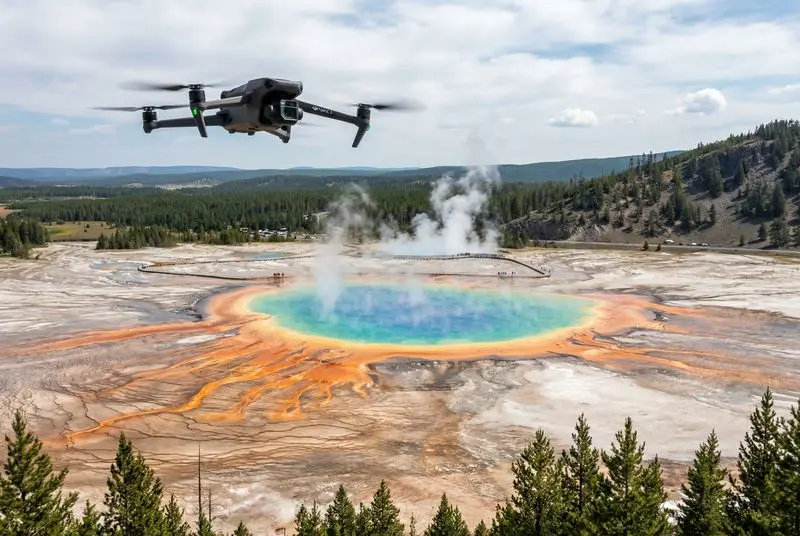
Wyoming, with its wide-open spaces and dramatic landscapes, is a popular area for drone flying. From the towering peaks of the Grand Tetons to the otherworldly formations of Yellowstone, the Equality State offers unparalleled opportunities for impressive aerial photography and videography. However, before you launch your drone into the Wyoming sky, it’s essential to have a firm grasp of the regulations that govern its use. The drone laws in Wyoming are a mix of federal, state, and local rules that all pilots, whether flying for fun or for work, must follow.
This guide is designed to be your resource for understanding and complying with all applicable drone laws in Wyoming. We will cover the specifics of FAA regulations, explore Wyoming’s unique state statutes regarding drones, and provide guidance on where you can and cannot fly. Our goal is to give you the information to operate your drone safely, legally, and responsibly, so you can focus on capturing the beauty of Wyoming from a new perspective.
Federal Drone Laws That Apply in Wyoming
As in all other states, federal law provides the primary framework for drone regulation in Wyoming. The Federal Aviation Administration (FAA) has established a set of rules to ensure that drones are integrated safely into the national airspace. These rules apply to all drone operations, regardless of purpose.
- Registration: Any drone weighing more than 0.55 pounds (250 grams) must be registered with the FAA. This can be done online through the FAA DroneZone portal. The registration fee is $5 and is valid for three years. Your registration number must be displayed on the exterior of your drone.
- Remote ID: A significant recent development in drone regulation is the requirement for Remote ID. Effective since September 16, 2023, most drones operating in U.S. airspace must be equipped with Remote ID capability. This technology broadcasts identification and location information about the drone and its control station, acting as a
digital license plate for your drone, allowing authorities to identify it in flight. There are two ways to comply: by flying a drone that has Remote ID technology built-in, or by retrofitting your drone with a Remote ID broadcast module. - Recreational Flyers: If you are flying purely for enjoyment, you are considered a recreational flyer. You must take and pass The Recreational UAS Safety Test (TRUST), a free online test that covers basic safety and regulatory knowledge. You must also follow the safety guidelines of a recognized Community-Based Organization (CBO).
- Commercial Pilots: If you are operating your drone for any business-related purpose, you are a commercial pilot and must obtain a Remote Pilot Certificate from the FAA. This requires passing the Part 107 Aeronautical Knowledge Test. The certificate must be renewed every 24 months.
- Airspace and Altitude: Drone flights are generally restricted to a maximum altitude of 400 feet above ground level (AGL) in uncontrolled (Class G) airspace. To fly in controlled airspace (Class B, C, D, and E), which surrounds most airports, you must receive authorization through the Low Altitude Authorization and Notification Capability (LAANC) system or the FAA DroneZone.
- Visual Line of Sight (VLOS): You must be able to see your drone with your own eyes at all times during flight. Alternatively, you can use a visual observer who is in direct communication with you and can see the drone.
For the most current and detailed information, always refer to the official FAA website and use the B4UFLY app to check airspace restrictions before you fly.
Wyoming-Specific Drone Laws
While the FAA has authority over the national airspace, states have the power to enact laws concerning drone usage within their borders, particularly in areas of privacy, trespass, and law enforcement. Wyoming has several key statutes that drone pilots need to be aware of.
Criminal Trespass by Drone
In a significant move to address privacy concerns, Wyoming enacted a law specifically targeting drone trespass. Under Wyoming Statute 6-3-414, a person commits the crime of “criminal trespass by drone” if they fly a drone at or below 400 feet over private property without consent, and with the intent to conduct surveillance on the people or property below. This law is a direct response to the growing number of drones and the potential for them to be used for intrusive purposes. A violation of this statute is a misdemeanor and can result in a fine of up to $750 and/or imprisonment for up to six months. [1]
Drones and Wildlife
Wyoming’s vast wilderness and abundant wildlife are among its greatest treasures, and the state has taken steps to protect them from interference by drones. Wyoming Statute 23-3-306 prohibits the use of any aircraft to harass, pursue, hunt, or kill wildlife. While the law was written before the widespread availability of drones, the term “aircraft” is interpreted broadly to include UAS. This means that using a drone to scout for game, track animals, or in any way assist in hunting is illegal. This regulation is in line with the principles of fair chase and ethical hunting. [2]
Intrusion of Seclusion
Beyond specific statutes, drone operators in Wyoming should also be aware of common law privacy torts. Wyoming courts recognize the tort of “intrusion upon seclusion.” This means that even if you are not technically trespassing, you could still be held liable for invasion of privacy if you use a drone to intentionally intrude into a person’s private space in a manner that a reasonable person would find highly offensive. For example, using a drone to peer into someone’s window would likely be considered an intrusion upon seclusion. [3]
Local and City Regulations
As of early 2026, there are no widespread, publicly documented local or city-level drone ordinances in Wyoming. The state has not enacted any preemption laws, which means that municipalities have the right to create their own regulations. However, the general trend in Wyoming has been to rely on state-level statutes to govern drone use. It is always a prudent measure to check with the local city or county clerk’s office for any specific rules before flying in a particular area, especially in more densely populated towns or near sensitive locations.
Where You Can and Can’t Fly in Wyoming
Knowing where you can and cannot fly is just as important as understanding the rules of the air. Here is a guide to some of the key locations in Wyoming with specific drone regulations:
- National Parks: All National Parks in the United States, including Wyoming’s iconic Yellowstone National Park and Grand Teton National Park, have a complete ban on the launching, landing, or operating of unmanned aircraft. This is to protect wildlife, preserve the natural quiet of the parks, and ensure visitor safety. [4]
- State Parks and Historic Sites: Drone policies in Wyoming’s state parks and historic sites can vary. While not a blanket ban, some parks may have designated areas for drone use or require a permit. You should contact the specific park you plan to visit ahead of time to inquire about their drone policy.
- Airports: Federal law prohibits drone flights within a five-mile radius of most airports without prior authorization. Use the B4UFLY app to see the airspace restrictions around airports and request authorization through LAANC if you need to fly in controlled airspace.
- Military Installations: For security reasons, flying drones over or near military bases is strictly prohibited.
- Critical Infrastructure: Be aware of flying near critical infrastructure such as power plants, dams, and government buildings. While not always explicitly prohibited, it is best to maintain a safe distance.
- Wilderness Areas: Many designated wilderness areas also have restrictions on motorized equipment, which includes drones. Check with the managing agency, such as the U.S. Forest Service or the Bureau of Land Management, for specific rules.
Penalties and Enforcement
Violating drone laws can lead to serious consequences. Both the FAA and Wyoming state authorities have the power to enforce these regulations.
- Federal Penalties: The FAA takes drone safety seriously and can impose substantial fines for violations. These can range from a few hundred dollars for minor infractions to tens of thousands of dollars for reckless or repeated offenses. In the most serious cases, criminal charges may be filed.
- State Penalties: As outlined above, the penalty for criminal trespass by drone in Wyoming is a misdemeanor, with a potential fine of up to $750 and up to six months in jail.
Tips for Staying Compliant
Navigating the world of drone regulations can seem complex, but following a few simple best practices can help you stay on the right side of the law.
- Educate Yourself: Before you fly, make sure you understand all of the applicable federal, state, and local laws.
- Use B4UFLY: Make the B4UFLY app your best friend. Check it before every flight to get up-to-date information on airspace restrictions.
- Register and Certify: Ensure your drone is registered with the FAA if required, and that you have the appropriate certification (TRUST for recreational, Part 107 for commercial).
- Respect Privacy: Be a good neighbor and respect the privacy of others. Avoid flying over private property without permission, and never use your drone to spy on people.
- Fly Safely: Always keep your drone within your visual line of sight, fly at or below 400 feet, and be aware of your surroundings. Never fly under the influence of drugs or alcohol.
Helpful Resources
References
[1] Wyoming Legislature, HB0128
[2] Wyoming Legislature, W.S. 23-3-306
[3] Wyoming Legislative Service Office, Memorandum on Drones and Trespass
[4] National Park Service, Unmanned Aircraft
← Back to Drone Laws by State Directory
Disclaimer: Drone laws are constantly evolving. While we strive to keep this guide updated, you should always verify local ordinances and check the FAA B4UFLY app before flying. This page is for educational purposes and does not constitute legal advice.
Sources: FAA UAS | NCSL State Drone Law Landscape | FAA Remote ID | FAA Part 107