
Drone Laws in Illinois
Your complete 2026 guide to flying drones legally in Illinois.
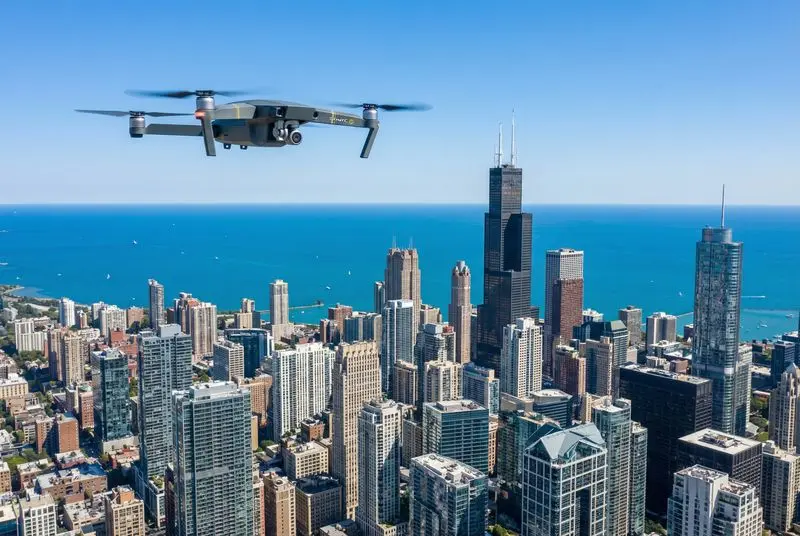
Drone Laws in Illinois: What You Need to Know (2026 Guide)
Welcome to the go-to resource for understanding drone laws in the state of Illinois.
Illinois, like many states, has a multi-layered system of drone regulations. Pilots must be aware of the rules set forth by the Federal Aviation Administration (FAA), which apply nationwide, as well as the laws passed by the Illinois General Assembly. To make matters more complex, some local municipalities, particularly the city of Chicago, have their own specific ordinances. Understanding all of these is key to avoiding potential penalties and ensuring you’re a responsible member of the drone community. This guide on drone laws in Illinois will walk you through everything you need to know.
Federal Drone Laws That Apply in Illinois
Before diving into Illinois-specific regulations, it’s essential to understand the federal laws that govern all drone operations in the United States. The Federal Aviation Administration (FAA) has established a comprehensive set of rules for both recreational and commercial drone pilots. These regulations are the foundation of drone safety and compliance in Illinois.
For commercial drone pilots in Illinois, operating under the FAA’s Small UAS Rule (Part 107) is mandatory. This includes pilots flying for any business purpose, from real estate photography to infrastructure inspection. The key requirements of Part 107 include:
- Obtaining a Remote Pilot Certificate by passing the FAA’s Aeronautical Knowledge Test.
- Registering your drone with the FAA.
- Keeping your drone within visual line of sight (VLOS).
- Flying at or below 400 feet in uncontrolled airspace.
- Obtaining authorization to fly in controlled airspace (Class B, C, D, and E) through LAANC or DroneZone.
Recreational flyers in Illinois must adhere to the rules outlined in 49 U.S.C. 44809. These rules are designed for those flying for personal enjoyment and include:
- Taking The Recreational UAS Safety Test (TRUST) and carrying proof of completion.
- Registering any drone weighing over 0.55 pounds (250 grams).
- Flying only for recreational purposes.
- Following the safety guidelines of an FAA-recognized Community-Based Organization (CBO).
All drones that require registration must also comply with the FAA’s Remote ID rule. This rule, which went into effect on September 16, 2023, requires drones to broadcast identification and location information. This technology acts as a “digital license plate” for drones, enhancing safety and security in the national airspace.
To assist pilots in identifying airspace restrictions and no-fly zones, the FAA provides the B4UFLY mobile app. This is an essential tool for all drone operators in Illinois, providing real-time information on where it is safe and legal to fly.
Illinois-Specific Drone Laws
While the FAA governs the skies, the Illinois General Assembly has passed several laws that impact how, when, and where drones can be operated within the state. These laws often focus on issues of privacy, wildlife protection, and law enforcement use. It is important for every drone pilot in Illinois to be familiar with these state-level statutes.
One of the most significant pieces of legislation is the Freedom from Drone Surveillance Act (725 ILCS 167/) [1]. This law primarily restricts the use of drones by law enforcement agencies for surveillance purposes. While it doesn’t directly regulate recreational or commercial drone use, it underscores the state’s focus on privacy. The act prohibits law enforcement from using a drone to gather information without a warrant, except in specific circumstances such as a terrorist threat, to prevent imminent harm, or for search and rescue missions.
Another key law for all drone pilots to be aware of is 520 ILCS 5/2.33(i) [2], which is part of the state’s Wildlife Code. This statute makes it illegal to “take, pursue or intentionally harass or disturb in any manner any wild birds or mammals by use or aid of…an unmanned aircraft.” This means that flying your drone too close to wildlife, whether intentionally or not, could result in penalties. This law is particularly relevant when flying in or near natural areas, parks, and wildlife refuges.
Illinois has also passed laws to prevent the use of drones for nefarious purposes related to hunting and fishing. House Bill 1652 makes it illegal to use a drone to interfere with another person’s lawful taking of fish or wildlife. This is aimed at preventing drone operators from using their devices to disrupt legal hunting and fishing activities.
In terms of privacy, House Bill 3906 is a critical piece of legislation. It prohibits the use of a drone to fly over another person’s occupied residence with the intent to record video or otherwise invade their reasonable expectation of privacy. This law reinforces the importance of respecting the privacy of others while operating your drone.
Local and City Regulations
An interesting aspect of Illinois drone law is the issue of state preemption. Senate Bill 3291 [3] generally prohibits local municipalities from creating their own drone ordinances. However, this preemption has a significant exception: it does not apply to municipalities with a population of 1 million or more. This means that the City of Chicago is free to, and has, enacted its own comprehensive set of drone regulations.
For drone pilots in the Chicago area, it is crucial to be aware of the City of Chicago’s Municipal Code (Chapter 10-36-400) [4]. These ordinances are extensive and include many provisions that mirror FAA regulations, but also add some specific local restrictions. For example, the Chicago ordinance prohibits operating a drone in a careless or reckless manner, over private property without consent, or in a way that interferes with the operations of law enforcement or emergency services. The ordinance also gives the Chicago Police Department the authority to seize drones that are being operated unlawfully.
Outside of Chicago, while most municipalities are preempted from creating their own drone laws, some have still enacted regulations that pertain to drone use on public property, such as parks. For example, the McHenry County Conservation District and the Crystal Lake Park District both have rules that restrict the launching and landing of drones within their parklands without prior permission. It is always a good practice to check the rules of any specific park or recreational area you plan to fly in.
Other municipalities have taken different approaches. The City of Evanston has a moratorium on drone use, while the Village of Schaumburg has an ordinance that restricts drone flights near village property during special events. These examples highlight the importance of checking for local rules, even with the state preemption law in place.
Where You Can and Can’t Fly in Illinois
Knowing where you can and cannot fly your drone is one of the most important aspects of being a responsible pilot. In Illinois, these restrictions are a combination of federal, state, and local rules.
Generally, you should avoid flying your drone in the following areas:
- Near Airports: It is illegal to fly a drone within 5 miles of an airport without proper authorization. The airspace around major airports like Chicago O’Hare (ORD) and Midway (MDW) is highly controlled, and you must use the LAANC system to request permission to fly, even at low altitudes.
- National Parks: The National Park Service has banned the use of drones in all national parks, and this includes the Pullman National Monument in Chicago.
- State Parks: The Illinois Department of Natural Resources has not issued a statewide ban on drones in state parks, but individual parks may have their own restrictions. It is always best to check with the specific park you plan to visit before flying.
- Over People: Flying a drone directly over people is generally prohibited, especially for recreational flyers. Commercial pilots operating under Part 107 have some exceptions to this rule if they have the proper certification and their drone meets certain safety standards.
- Near Military Installations: There are several military bases in Illinois, such as Scott Air Force Base. Flying a drone near these installations is restricted, and you should consult the B4UFLY app for specific boundaries.
- Stadiums and Sporting Events: The FAA implements Temporary Flight Restrictions (TFRs) over stadiums during major sporting events. It is illegal to fly a drone within a TFR.
- Wilderness Areas: To protect wildlife and the natural environment, drone use is often restricted in designated wilderness areas.
While there are many restrictions, there are also many great places to fly your drone in Illinois. Many local parks and open spaces are suitable for drone operations, as long as you are not in controlled airspace and are following all other rules. Some popular flying spots include designated AMA (Academy of Model Aeronautics) fields, which provide a safe and legal environment for drone enthusiasts.
Penalties and Enforcement
Violating federal, state, or local drone laws in Illinois can lead to significant penalties. The FAA has the authority to issue substantial fines for violations of its regulations. According to the FAA, fines can range from $1,771 to as high as $36,770 per violation for egregious offenses [5]. In addition to civil penalties, reckless operation of a drone that endangers people or other aircraft can lead to criminal charges.
At the state level, violations of Illinois-specific drone laws can also result in penalties. For example, harassing wildlife with a drone in violation of the state’s Wildlife Code is a petty offense, which can result in fines. Violations of privacy-related laws could also lead to civil liability.
In the City of Chicago, the police department has the authority to enforce the city’s drone ordinance, which can include the seizure of the drone. As drone use becomes more widespread, enforcement efforts at all levels of government are increasing. It is more important than ever for drone pilots to be aware of the rules and to operate their drones in a safe and responsible manner.
Tips for Staying Compliant
With a complex web of regulations to navigate, staying compliant can seem daunting. However, by following a few simple best practices, you can ensure that your drone operations in Illinois are safe and legal.
- Check B4UFLY Before Every Flight: The B4UFLY app from the FAA is an important tool for every drone pilot. It provides up-to-date information on airspace restrictions, TFRs, and other potential hazards.
- Register Your Drone: If your drone weighs more than 0.55 pounds, you must register it with the FAA. Make sure your registration is current and that the registration number is clearly marked on the outside of your drone.
- Get Certified: If you are flying for any non-recreational purpose, you must have a Remote Pilot Certificate (Part 107). For recreational flyers, you must have proof that you have passed The Recreational UAS Safety Test (TRUST).
- Respect Privacy: Be mindful of the privacy of others. Avoid flying over private property without permission, and do not use your drone to record images or video where people have a reasonable expectation of privacy.
- Check Local Ordinances: While Illinois has a state preemption law, it’s still a good idea to check for any local rules, especially if you are flying in a park or other public area. If you are in Chicago, you must be familiar with the city’s drone ordinance.
- Keep Your Drone in Sight: Always keep your drone within your visual line of sight. This is a fundamental rule of drone safety and is required by the FAA.
Helpful Resources
References
[1] Freedom from Drone Surveillance Act (725 ILCS 167/)
[2] Illinois Wildlife Code – 520 ILCS 5/2.33(i)
[3] Illinois General Assembly – SB3291
[4] City of Chicago Municipal Code – Chapter 10-36-400
[5] FAA Enforcement
← Back to Drone Laws by State Directory
Disclaimer: Drone laws are constantly evolving. While we strive to keep this guide updated, you should always verify local ordinances and check the FAA B4UFLY app before flying. This page is for educational purposes and does not constitute legal advice.
Sources: FAA UAS | NCSL State Drone Law Landscape | FAA Remote ID | FAA Part 107