
Drone Laws in Kansas
Your complete 2026 guide to flying drones legally in Kansas.
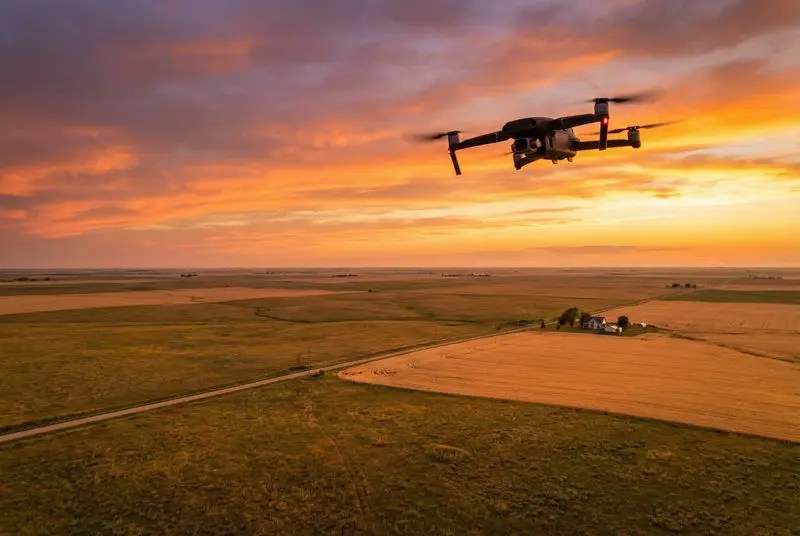
Flying a drone, or Unmanned Aircraft System (UAS), is an activity governed by a combination of federal, state, and sometimes local regulations. The Federal Aviation Administration (FAA) sets the nationwide standard for aviation safety, while Kansas has enacted its own specific statutes that address drone use in relation to privacy, wildlife, and state-managed lands.We will cover everything from FAA registration and certification to the specific nuances of Kansas law, helping you fly with confidence and stay on the right side of the law.
Federal Drone Laws That Apply in Kansas
Before you launch your drone in Kansas, you must be familiar with the federal regulations established by the FAA. These rules are the bedrock of safe drone operation across the United States and apply to all pilots, regardless of whether they are flying for fun or for work.
For Recreational Pilots (The Model Aircraft Rule)
If you fly your drone purely for personal enjoyment and recreation, you are classified as a recreational flyer. The FAA has a specific set of rules for you to follow:
- Take The Recreational UAS Safety Test (TRUST): This is a mandatory requirement for all recreational pilots. TRUST is a free online test that provides you with essential safety information. Once you pass, you will receive a certificate that you must be able to provide if asked by law enforcement or FAA officials.
- Register Your Drone: If your drone weighs more than 0.55 pounds (250 grams) and less than 55 pounds, it must be registered with the FAA. You can complete the registration process online at the FAA DroneZone. The fee is $5, and the registration is valid for three years. Your registration number must be clearly marked on the exterior of your drone.
- Fly Within Visual Line of Sight (VLOS): This is a fundamental rule of drone safety. You, or a designated visual observer, must be able to see the drone with your own eyes at all times. Using binoculars or a camera feed does not satisfy this requirement.
- Follow Airspace Rules: You are responsible for knowing the airspace in which you are operating. Flying in controlled airspace (typically Class B, C, D, and E near airports) requires prior authorization. This is most commonly obtained through the Low Altitude Authorization and Notification Capability (LAANC) system, which is accessible via numerous FAA-approved UAS Service Suppliers. Always use the FAA’s B4UFLY app to check for airspace restrictions and other advisories before you fly.
- Fly at or Below 400 Feet: In uncontrolled (Class G) airspace, your drone must remain at or below 400 feet above ground level (AGL). This ensures your drone stays well clear of most manned aircraft.
For Commercial Pilots (Part 107 Rules)
If you operate a drone for any purpose other than pure recreation, you are considered a commercial pilot. This includes activities like real estate photography, agricultural surveys, or any other work-related task. Commercial operations are governed by the FAA’s Small UAS Rule, also known as Part 107.
- Obtain a Remote Pilot Certificate: To fly commercially, you must obtain a Remote Pilot Certificate from the FAA. This requires you to be at least 16 years old, pass the Part 107 Aeronautical Knowledge Test, and complete a TSA background check.
- Register Your Drone: All commercial drones must be registered with the FAA through the DroneZone, regardless of their weight.
- Follow Part 107 Operating Rules: Part 107 outlines a comprehensive set of operational rules, including a maximum altitude of 400 feet AGL, daylight-only operations (unless you have proper anti-collision lighting), and prohibitions on flying over people or from a moving vehicle (though waivers are available for some of these rules).
Remote ID: The Digital License Plate for Drones
A significant recent development in drone regulation is the requirement for Remote ID. Effective since September 16, 2023, most drones that require registration must be capable of broadcasting identification and location information. This technology acts like a digital license plate, providing a means for the FAA, law enforcement, and other federal agencies to identify drones in flight. Ensure your drone is compliant with the FAA’s Remote ID rule, either through built-in broadcast capabilities or an attached broadcast module.
Kansas-Specific Drone Laws
Beyond the federal framework, Kansas has established its own laws that place further restrictions on drone operations. These laws primarily focus on protecting wildlife, managing state lands, and upholding individual privacy.
Drone Use on KDWP-Managed Lands (State Parks & Wildlife Areas)
The Kansas Department of Wildlife and Parks (KDWP) has a clear and strict policy regarding drone use on the properties it manages.
- Prohibition in State Parks and Wildlife Areas: According to Kansas Administrative Regulation K.A.R. 115-8-13, operating a drone is prohibited on any KDWP-owned or managed land. This includes all Kansas state parks, wildlife areas, and state fishing lakes. This rule is in place to protect wildlife from harassment and to ensure the safety and enjoyment of all visitors. Violating this regulation is a Class C misdemeanor. [1]
Hunting, Fishing, and Wildlife
Kansas law is particularly stringent for the use of drones in connection with hunting and fishing.
- Hunting and Scouting: It is illegal to use any aircraft, including a drone, to hunt, scout, or take any game animal or furbearing animal. This is explicitly prohibited by state statute K.S.A. 32-1003. This law prevents the use of drones to locate, track, or herd animals for the purpose of hunting. [2]
- Fishing: Drones are not a permitted method for taking fish in Kansas. The state’s regulations on legal methods of take, found in K.S.A. 32-1002, do not include the use of unmanned aircraft. [3]
- Locating Harvested Game: The prohibition extends to using a drone to locate a wounded or harvested animal. The state’s broad definition of “take” in K.S.A. 32-701 includes harassing, pursuing, or molesting wildlife, which the KDWP interprets as including the search for an animal with a drone. [4]
Privacy and Harassment
Reflecting growing concerns about privacy in the age of drones, Kansas has incorporated UAS into its anti-stalking laws.
- Protection from Stalking Act: The Kansas Protection from Stalking Act, K.S.A. 60-31a02, defines harassment to include any course of conduct carried out through the use of an unmanned aerial system over or near any dwelling, occupied vehicle, or other place where one may reasonably expect to be safe from uninvited intrusion or surveillance. This gives individuals a legal recourse if they are being harassed or stalked by a drone. [5]
Local and City Regulations
Currently, Kansas does not have a statewide preemption law that would restrict cities and counties from creating their own drone ordinances. However, the adoption of local drone laws has been limited. It is still a best practice for pilots to check with the local city or county clerk’s office for any specific restrictions, especially before flying in public parks or near large public gatherings. Some municipalities may have general nuisance or public safety ordinances that could be applied to reckless drone operations.
Where You Can and Can’t Fly in Kansas
Knowing where you can and cannot fly is one of the most important responsibilities of a drone pilot. In addition to the specific state-level restrictions, many areas are off-limits due to federal regulations.
- National Parks and Preserves: The National Park Service has banned drone flights in all areas it administers. In Kansas, this includes the Tallgrass Prairie National Preserve and the Brown v. Board of Education National Historic Site.
- State Parks and Wildlife Areas: As detailed above, drones are prohibited in all Kansas State Parks and other KDWP-managed properties.
- Airports: You must not fly within 5 miles of an airport without receiving prior authorization through LAANC or the FAA DroneZone. This is to prevent any potential conflict with manned aircraft during critical phases of flight.
- Military Installations: Flying over or near military bases, such as McConnell Air Force Base or Fort Riley, is restricted. These areas are often designated as no-fly zones for security reasons.
- Stadiums and Sporting Events: The FAA implements Temporary Flight Restrictions (TFRs) over stadiums during major sporting events, such as NCAA football games. These TFRs typically extend for a 3-nautical-mile radius around the stadium and are in effect from one hour before to one hour after the event.
Penalties and Enforcement
Failure to comply with drone regulations can lead to serious consequences.
- State Penalties: On the state level, violating KDWP regulations by flying in a state park is a Class C misdemeanor. If a drone is used in a way that constitutes stalking, it can lead to more severe criminal charges under the Protection from Stalking Act.
- Federal Penalties: The FAA takes its enforcement role seriously. Fines for unsafe drone operations can be substantial, ranging from $1,771 for minor infractions to over $36,000 per violation for more egregious offenses. Operating a drone in a manner that endangers a manned aircraft can result in federal criminal charges and imprisonment.
Tips for Staying Compliant
- Always Check B4UFLY: Make the B4UFLY app your first stop before every flight. It provides up-to-date information on airspace restrictions and other advisories.
- Carry Your Documentation: When you fly, you should always have your TRUST completion certificate (for recreational flyers) or your Remote Pilot Certificate (for commercial flyers), as well as your drone registration, available to present to law enforcement if requested.
- Respect Privacy: Be a good neighbor. Avoid flying over private property without permission, and never use your drone to photograph or record people in places where they have a reasonable expectation of privacy.
- Stay Informed and Educated: The world of drone technology and regulation is constantly evolving. Continuously educate yourself on the latest rules and best practices. Consider taking a training course, such as the Part 107 test prep course offered by Drone Launch Academy, to deepen your knowledge.
Helpful Resources
- FAA DroneZone (for registration)
- B4UFLY App (for airspace information)
- Kansas Department of Wildlife and Parks
- Kansas State Legislature
- Drone Launch Academy Part 107 Test Prep Course
References
[1] Kansas Department of Wildlife and Parks. (n.d.). Drones/Unmanned Aircraft Systems. Retrieved from https://ksoutdoors.gov/Outdoor-Activities/Drones-Unmanned-Aircraft-Systems
[2] Kansas State Legislature. (n.d.). K.S.A. 32-1003. Retrieved from http://www.kslegislature.gov/li_2024/b2023_24/statute/032_000_0000_chapter/032_010_0000_article/032_010_0003_section/032_010_0003_k/
[3] Kansas State Legislature. (n.d.). K.S.A. 32-1002. Retrieved from http://www.kslegislature.gov/li_2024/b2023_24/statute/032_000_0000_chapter/032_010_0000_article/032_010_0002_section/032_010_0002_k/
[4] Kansas State Legislature. (n.d.). K.S.A. 32-701. Retrieved from http://www.kslegislature.gov/li_2024/b2023_24/statute/032_000_0000_chapter/032_007_0000_article/032_007_0001_section/032_007_0001_k/
[5] Kansas State Legislature. (n.d.). K.S.A. 60-31a02. Retrieved from http://www.kslegislature.gov/li_2024/b2023_24/statute/060_000_0000_chapter/060_031a_0000_article/060_031a_0002_section/060_031a_0002_k/
← Back to Drone Laws by State Directory
Disclaimer: Drone laws are constantly evolving. While we strive to keep this guide updated, you should always verify local ordinances and check the FAA B4UFLY app before flying. This page is for educational purposes and does not constitute legal advice.
Sources: FAA UAS | NCSL State Drone Law Landscape | FAA Remote ID | FAA Part 107