
Drone Laws in Maine
Your complete 2026 guide to flying drones legally in Maine.
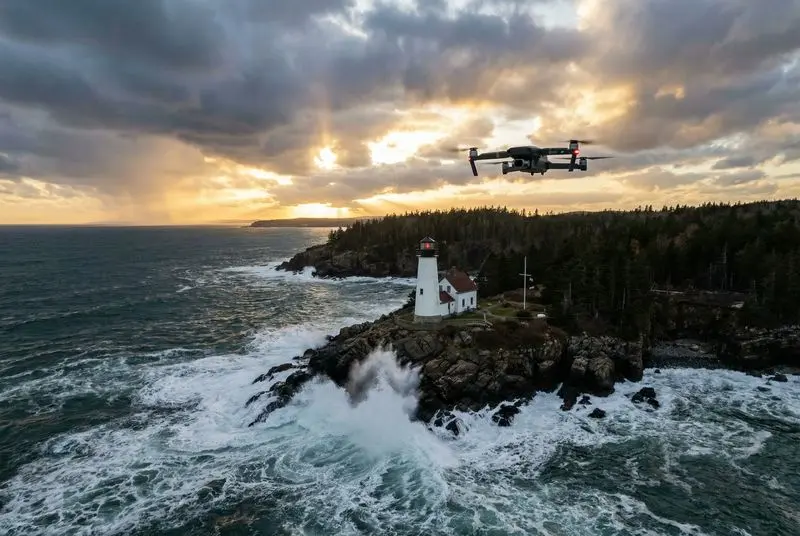
Drone Laws in Maine: What You Need to Know (2026 Guide)
Welcome to your comprehensive guide to drone laws in Maine for 2026.The world of drone regulation is constantly evolving, and staying informed about both federal and state-specific rules is key to avoiding hefty fines and legal trouble.
In this guide, we will cover everything you need to know about the drone laws in Maine. We’ll explore the federal regulations set by the Federal Aviation Administration (FAA) that apply nationwide, dive deep into the specific statutes enacted by the Maine Legislature, and discuss local rules and regulations you might encounter.
Federal Drone Laws That Apply in Maine
First and foremost, it’s important to understand that all drone pilots in Maine must adhere to the regulations set forth by the Federal Aviation Administration (FAA). These rules form the foundation of drone operation across the entire United States, for both recreational and commercial pilots.
For Recreational Pilots
If you are flying your drone purely for fun and personal enjoyment, you are considered a recreational pilot. The key federal regulations you must follow are:
- Take The Recreational UAS Safety Test (TRUST): All recreational flyers must pass the TRUST exam. It’s a free online test, and you must be able to provide proof of passing if asked by law enforcement.
- Register Your Drone: If your drone weighs more than 0.55 pounds (250 grams), you must register it with the FAA through the FAA DroneZone. Registration costs $5 and is valid for three years. Your registration number must be visible on the exterior of your drone.
- Fly Below 400 Feet: In uncontrolled airspace (Class G), you must fly at or below 400 feet above the ground.
- Keep Your Drone in Sight: You must always keep your drone within your visual line of sight (VLOS).
- Follow Airspace Rules: You need authorization to fly in controlled airspace (Class B, C, D, and E). You can get this authorization through the Low Altitude Authorization and Notification Capability (LAANC).
- Use the B4UFLY App: The FAA recommends using the B4UFLY mobile app to check for airspace restrictions before you fly.
For Commercial Pilots
If you are flying your drone for any business or commercial purpose, you must follow the FAA’s Part 107 rules. This includes:
- Obtain a Remote Pilot Certificate: You must pass the FAA’s Part 107 Aeronautical Knowledge Test to earn a Remote Pilot Certificate.
- Register Your Drone: All commercial drones must be registered with the FAA, regardless of weight.
- Follow Part 107 Operational Rules: These rules are more extensive than the recreational rules and cover topics like flying at night, flying over people, and more. You can find the full set of rules on the FAA’s website.
Remote ID
As of September 16, 2023, most drones are required to have Remote ID capabilities. This means your drone will broadcast identification and location information, which can be received by the FAA and law enforcement. You can learn more about Remote ID on the FAA’s website.
Maine-Specific Drone Laws
While the FAA has authority over the national airspace, states and local governments can also pass laws that affect drone operations. In Maine, several laws have been enacted that drone pilots should be aware of.
Law Enforcement Use of Drones (Title 25, §4501)
This law [1] regulates the use of drones by law enforcement agencies in Maine. It requires that any law enforcement use of a drone must comply with FAA regulations. It also requires law enforcement to obtain a warrant before using a drone for surveillance in a criminal investigation, except in certain emergency situations.
Drones Over Correctional Facilities (LD 2157 / HP 1446)
This bill [2] makes it a Class C crime to operate a drone on or over the premises of a correctional facility or jail without authorization. This is a serious offense, so It is important to be aware of the location of these facilities and avoid flying near them.
Drones and Stalking (HP 1533)
Maine has updated its stalking laws [3] to include the use of drones. This means that using a drone to follow or harass someone can be considered stalking and can lead to criminal charges.
Drones and Hunting
It is illegal to use a drone to aid in hunting in Maine [4]. This includes using a drone to locate, track, or harass wildlife for the purpose of hunting.
Drones in Maine State Parks
The use of drones is generally prohibited in Maine State Parks, Historic Sites, and DACF Boat Launches without a specific permit [5]. If you wish to fly a drone in one of these locations, you must contact the park authorities to request permission.
Local and City Regulations
Currently, there are no widespread local drone ordinances in Maine at the county or city level. However, it is always a good practice to check with the local authorities in the specific area where you plan to fly, as this can change. Some municipalities may have their own rules regarding drone use in local parks or other public areas.
Where You Can and Can’t Fly in Maine
In addition to the state-specific laws, there are several other locations where drone use is restricted:
- National Parks: Drones are banned in all National Parks in the United States, including Acadia National Park in Maine.
- Airports: You must not fly a drone within 5 miles of an airport without proper authorization.
- Military Installations: Flying drones near military bases is restricted. Always check for flight restrictions before flying near any military installation.
- Stadiums and Sporting Events: The FAA prohibits drone flights over stadiums and sporting events.
- Wilderness Areas: It is generally recommended to avoid flying drones in designated wilderness areas to protect wildlife and preserve the natural environment.
Penalties and Enforcement
Violating drone laws in Maine can result in significant penalties. At the federal level, the FAA can impose fines ranging from $1,771 to $36,770 per violation. Criminal penalties are also possible for endangering aircraft. At the state level, violating the laws regarding drones over correctional facilities or using a drone for stalking can result in criminal charges.
Tips for Staying Compliant
- Check the B4UFLY App: Always check the B4UFLY app before every flight to ensure you are aware of any airspace restrictions.
- Register Your Drone: Make sure your drone is registered with the FAA if it weighs more than 0.55 pounds.
- Get Certified: If you are flying for commercial purposes, obtain your Part 107 certificate. If you are a recreational pilot, make sure you have your TRUST certificate.
- Respect Privacy: Be mindful of people’s privacy and avoid flying over private property without permission.
- Check Local Rules: Even if there are no state-level restrictions, always check for local ordinances before you fly.
- Keep Your Drone in Sight: Always maintain a visual line of sight with your drone.
Helpful Resources
References
[1] https://legislature.maine.gov/statutes/25/title25sec4501.html
[2] https://legislature.maine.gov/legis/bills/getPDF.asp?paper=HP1446&item=1&snum=132
[3] https://legislature.maine.gov/legis/bills/bills_129th/billtexts/HP153301.asp
[4] https://wgme.com/news/local/hunting-with-a-drone-what-maines-laws-dont-say-could-get-you-fined-united-states-legality-maine-warden-service
[5] https://www.maine.gov/dacf/parks/docs/Drone-UAS-%20Policy.pdf
A Deeper Look at Maine’s Drone Regulations
While the state-level laws provide a framework, it’s worth delving deeper into the nuances of each regulation to fully grasp their implications for drone pilots.
Understanding the Law Enforcement Drone Act
The law governing law enforcement’s use of drones (Title 25, §4501) is a critical piece of legislation that balances the needs of public safety with the privacy of citizens. The requirement for a warrant for surveillance purposes is a significant protection for individual privacy. This means that law enforcement cannot use drones to arbitrarily spy on citizens. However, the exceptions for emergency situations, such as search and rescue missions or to prevent imminent danger, allow for the use of drones in critical situations where time is of the essence. This legislation serves as a model for other states looking to regulate law enforcement’s use of this technology.
The Importance of Protecting Correctional Facilities
The law prohibiting drones over correctional facilities (LD 2157 / HP 1446) was enacted to prevent the smuggling of contraband into prisons and jails. Drones have been used in other states to deliver drugs, weapons, and other illegal items to inmates, posing a significant security risk. By making it a Class C crime, Maine is sending a clear message that this behavior will not be tolerated. Pilots must be extremely cautious and use tools like the B4UFLY app to ensure they are not inadvertently flying near these sensitive locations.
Drones and Personal Privacy
The inclusion of drones in Maine’s stalking laws is a direct response to the potential for this technology to be used for harassment and invasion of privacy. The ability of drones to access areas that were previously private has raised legitimate concerns among the public. This law makes it clear that using a drone to follow, monitor, or harass someone is a serious offense with significant legal consequences. Responsible drone pilots should always be mindful of the privacy of others and avoid flying over private property without permission.
Preserving Maine’s Natural Heritage
The prohibition on using drones for hunting is designed to protect Maine’s wildlife and ensure fair chase practices. Using a drone to scout for game would give hunters an unfair advantage and could lead to over-harvesting of wildlife populations. This law is in line with similar regulations in many other states and reflects a commitment to ethical hunting practices. Similarly, the restrictions on drone use in state parks are in place to protect the natural environment and the visitor experience. The noise and presence of drones can disturb wildlife and detract from the tranquility of these natural areas. While it may be possible to obtain a permit for drone use in some state parks for specific purposes, such as scientific research or commercial filming, recreational flying is generally not permitted.
By understanding the reasoning behind these laws, drone pilots can better appreciate the importance of flying responsibly and respecting the legal and ethical boundaries of this technology. It is not just about avoiding fines, but about being a good steward of the airspace and a responsible member of the community.
← Back to Drone Laws by State Directory
Disclaimer: Drone laws are constantly evolving. While we strive to keep this guide updated, you should always verify local ordinances and check the FAA B4UFLY app before flying. This page is for educational purposes and does not constitute legal advice.
Sources: FAA UAS | NCSL State Drone Law Landscape | FAA Remote ID | FAA Part 107