
Drone Laws in North Carolina
Your complete 2026 guide to flying drones legally in North Carolina.
Navigating the skies of North Carolina with a drone offers impressive views, from the Blue Ridge Mountains to the Atlantic coast.This guide provides an overview of the regulations you need to know for 2026, covering everything from federal FAA requirements to state-specific statutes and local ordinances.
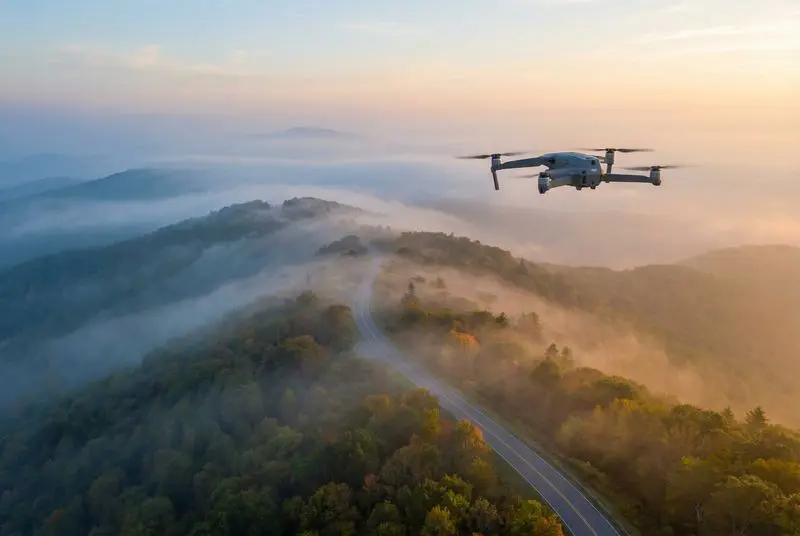
Drone technology is rapidly evolving, and so are the laws that govern it. In North Carolina, both the Federal Aviation Administration (FAA) and the state legislature have established rules to ensure that unmanned aircraft systems (UAS) are operated responsibly.
Federal Drone Laws That Apply in North Carolina
All drone operators in North Carolina must adhere to federal regulations established by the FAA. These rules provide a baseline for safe and responsible drone operation throughout the United States.
- FAA Drone Registration: Any drone weighing more than 0.55 pounds (250 grams) must be registered with the FAA. You can register your drone through the FAA DroneZone website. Registration is valid for three years.
- Remote ID: As of September 16, 2023, most drones are required to broadcast Remote ID information. This acts as a digital license plate for your drone, enhancing safety and accountability in the airspace.
- Recreational Flyers (The Recreational UAS Safety Test – TRUST): If you are flying for fun, you must pass The Recreational UAS Safety Test (TRUST). This is a free online test that provides education on safety and regulatory requirements. You must be able to present your completion certificate if asked by law enforcement.
- Commercial Pilots (Part 107 Certification): To operate a drone for any business or commercial purpose, pilots must obtain a Remote Pilot Certificate by passing the FAA’s Part 107 exam. This certification demonstrates a thorough understanding of drone regulations, operating requirements, and procedures for flying safely.
- General Flight Rules:
- Fly at or below 400 feet in uncontrolled (Class G) airspace.
- Keep your drone within your visual line of sight (VLOS) at all times.
- Obtain authorization before flying in controlled airspace (Class B, C, D, and E) through LAANC or DroneZone.
- Give way to and do not interfere with manned aircraft.
- Do not fly over people or moving vehicles.
For the most current and detailed information, always consult the FAA’s official website and use the B4UFLY app to check airspace restrictions before you fly.
North Carolina-Specific Drone Laws
Beyond the federal rules, North Carolina has enacted its own set of laws to govern the use of drones within the state. These regulations address privacy, safety, and the authority of local governments.
Key State Statutes
-
Surveillance and Privacy (N.C. G.S. § 15A-300.1): It is illegal to use a drone to conduct surveillance of a person or a privately-owned home, dwelling, or property without the owner’s consent. This law also prohibits distributing any images captured in violation of this statute. [1]
-
Operations Near Prisons (N.C. G.S. § 14-401.25): Drones are prohibited from flying within a horizontal distance of 500 feet or a vertical distance of 250 feet of any state or federal correctional facility. This measure, established by House Bill 128, is designed to prevent contraband delivery and maintain security. [2]
-
Hunting and Fishing (N.C. G.S. § 14-159.30): It is unlawful to use an unmanned aircraft system to hunt, fish, or assist a hunter or fisher. This includes using a drone to spot or track wildlife for the purpose of capture.
-
Interference with Manned Aircraft (N.C. G.S. § 14-280.3): Knowingly and willfully operating a drone in a way that interferes with a manned aircraft is a Class H felony. This underscores the critical importance of yielding the right of way to all traditional aircraft.
-
Flying Near Wildfires (N.C. G.S. § 15A-300.4): Operating a drone near a wildfire is strictly prohibited. Drones can interfere with aerial firefighting operations, posing a significant danger to pilots and emergency responders on the ground. [3]
State Permitting Repealed
as of December 1, 2024, the requirement for commercial and government drone operators to obtain a state-level permit from the N.C. Department of Transportation has been repealed. Operators are still required to hold a valid FAA Part 107 certificate for any non-recreational flights, but the separate North Carolina permit is no longer necessary. [4]
Local and City Regulations
North Carolina law provides a degree of state-level preemption, which means it limits the ability of local municipalities to create their own drone ordinances. Specifically, N.C. G.S. § 63-95 and § 63-96 grant the N.C. Department of Transportation the sole authority to regulate drone operations in the state, preventing a patchwork of conflicting local rules.
However, this preemption does not mean local entities have no control. Local governments can still regulate drone takeoffs and landings on their own public property, such as parks, and may have ordinances related to nuisance or harassment that could apply to drone use. For example, the city of Charlotte and the county of Mecklenburg have park ordinances that may restrict drone flights in certain areas.
Because rules for specific locations like city parks, county lands, and public venues can vary, it is always a best practice to check with the local parks and recreation department or city government before flying in a new area.
Where You Can and Can’t Fly in North Carolina
Knowing where you are permitted to fly is just as important as knowing the rules of the sky. While North Carolina offers vast open spaces, there are several key areas where drone flights are restricted or prohibited entirely.
-
National Parks: All national parks in the United States, including North Carolina’s Great Smoky Mountains National Park and Cape Hatteras National Seashore, are designated as no-fly zones for drones by the National Park Service (NPS). Flying in these areas is illegal and can result in significant penalties.
-
State Parks: The use of drones is restricted in North Carolina State Parks. While not a complete ban, flights require a special activity permit issued by the park superintendent. These permits are typically granted for scientific research, resource management, or commercial filming projects that provide a direct benefit to the park. Casual recreational flights are generally not approved. Always check with the specific state park’s office before considering a flight.
-
Airports and Controlled Airspace: As per FAA regulations, you must not interfere with airport operations. Flying in controlled airspace (Class B, C, D, and E) requires authorization, which can be obtained through the FAA’s LAANC system. Use the B4UFLY app to see the airspace class in your intended flight area.
-
Military Installations: North Carolina is home to several major military bases, such as Fort Bragg, Camp Lejeune, and Seymour Johnson Air Force Base. These are restricted areas, and flying a drone over or near them is prohibited without explicit permission from the Department of Defense.
-
Stadiums and Sporting Events: The FAA implements Temporary Flight Restrictions (TFRs) over stadiums during major sporting events, including NFL, MLB, and NCAA Division I football games. These TFRs typically extend in a 3-nautical-mile radius from the stadium and are active from one hour before to one hour after the event. It is illegal to fly a drone within these TFRs.
-
Critical Infrastructure: Be mindful of flying near critical infrastructure such as power plants, water treatment facilities, and correctional facilities. North Carolina law specifically prohibits flights near prisons.
Penalties and Enforcement
Violating federal or state drone laws in North Carolina can lead to significant penalties. Both the FAA and state law enforcement have the authority to enforce these regulations, and the consequences can range from civil fines to criminal charges.
-
State-Level Penalties:
- Interfering with a manned aircraft (N.C. G.S. § 14-280.3) is a Class H felony.
- Illegal surveillance (N.C. G.S. § 15A-300.1) is a Class 1 misdemeanor.
- Operating a drone near a prison (N.C. G.S. § 14-401.25) is a Class 1 misdemeanor.
-
Federal Penalties: The FAA has the authority to issue substantial civil penalties for violations of its regulations. As of 2026, these fines can be as high as $36,770 per violation for commercial operators and $1,771 for recreational flyers. In cases where a drone operator knowingly or recklessly endangers the national airspace system, the Department of Justice may pursue criminal charges. [5]
Tips for Staying Compliant
Staying compliant with drone regulations is straightforward if you follow a consistent pre-flight and in-flight routine. Here are some essential tips to ensure every flight you conduct in North Carolina is safe and legal:
-
Check B4UFLY Before Every Flight: The B4UFLY app is an important tool for every drone pilot. It provides real-time information on airspace restrictions, TFRs, and other advisories you need to be aware of before launching.
-
Register Your Drone: If your drone weighs more than 0.55 lbs (250g), it must be registered with the FAA. Make sure the registration number is clearly marked on the exterior of the aircraft.
-
Get Certified: All recreational flyers must have a TRUST certificate. If you are flying for any purpose other than pure recreation, you must have a Part 107 Remote Pilot Certificate.
-
Respect Privacy and Property: Never fly over private property without permission, and do not use your drone to photograph or record people in places where they have a reasonable expectation of privacy. This is not only a courtesy but also a legal requirement under North Carolina law.
-
Check Local Rules: While the state has preemption laws, local governments can still regulate drone use on their property. Before flying in a park or other public area, check the local government’s website or contact the relevant department to confirm their policies.
-
Maintain Visual Line of Sight (VLOS): Always keep your drone within your sight. This allows you to monitor its location, attitude, and surroundings to avoid collisions and other hazards.
Helpful Resources
- FAA DroneZone: https://faadronezone.faa.gov
- B4UFLY App: https://www.faa.gov/uas/getting_started/b4ufly
- N.C. Department of Transportation – Aviation Division: https://www.ncdot.gov/divisions/aviation/
- North Carolina General Assembly (for researching statutes): https://www.ncleg.gov/
- Drone Launch Academy Part 107 Prep Course: [Link to be added]
References
[1] North Carolina General Statute § 15A-300.1, via N.C. General Assembly, https://www.ncleg.gov/EnactedLegislation/Statutes/HTML/BySection/Chapter_15A/GS_15A-300.1.html
[2] North Carolina General Statute § 14-401.25, via N.C. General Assembly, https://www.ncleg.gov/EnactedLegislation/Statutes/HTML/BySection/Chapter_14/GS_14-401.25.html
[3] North Carolina General Statute § 15A-300.4, via N.C. General Assembly, https://www.ncleg.gov/EnactedLegislation/Statutes/HTML/BySection/Chapter_15A/GS_15A-300.4.html
[4] N.C. Department of Transportation, UAS Laws & Regulations, https://www.ncdot.gov/divisions/aviation/uas/Pages/laws-regulations.aspx
[5] Federal Aviation Administration, FAA Enforcement, https://www.faa.gov/newsroom/faa-steps-drone-enforcement-2025
← Back to Drone Laws by State Directory
Disclaimer: Drone laws are constantly evolving. While we strive to keep this guide updated, you should always verify local ordinances and check the FAA B4UFLY app before flying. This page is for educational purposes and does not constitute legal advice.
Sources: FAA UAS | NCSL State Drone Law Landscape | FAA Remote ID | FAA Part 107