
Drone Laws in Virginia
Your complete 2026 guide to flying drones legally in Virginia.
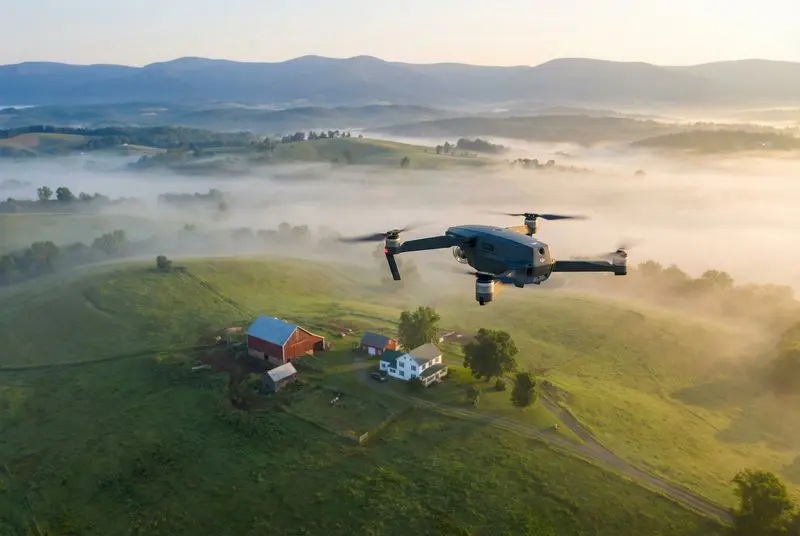
This guide serves as a resource for all drone operators in Virginia. We will cover the foundational federal regulations established by the Federal Aviation Administration (FAA), which apply to all drone flights in the United States. Additionally, we will explore the specific statutes and rules enacted by the Virginia General Assembly, which address state-level concerns such as privacy, law enforcement use of drones, and hunting. We will also examine local ordinances in major Virginia cities, providing a complete picture of the regulatory landscape. By the end of this guide, you will have the knowledge and resources necessary to confidently and responsibly understand the skies of Virginia.
Federal Drone Laws That Apply in Virginia
Every drone pilot in Virginia must adhere to the regulations set forth by the FAA. These federal laws create a standardized framework for safe and responsible drone operation across the country. The key federal regulations that you need to be aware of are outlined below.
Drone Registration
Any drone weighing more than 0.55 pounds (250 grams) must be registered with the FAA. This registration process is simple and can be completed online through the FAA DroneZone website. The registration is valid for three years and costs a nominal fee. Once registered, you will receive a unique registration number that must be clearly marked on the exterior of your drone.
Remote ID
As of September 16, 2023, the FAA requires all registered drones to be equipped with Remote ID capabilities. This technology acts as a digital license plate for your drone, broadcasting identification and location information during flight. This allows the FAA, law enforcement, and other authorities to identify drones and their operators, enhancing airspace security. An exception to this rule exists for drones flown exclusively within FAA-Recognized Identification Areas (FRIAs).
Flying for Fun: The Recreational UAS Safety Test (TRUST)
If you are flying your drone purely for recreational purposes, you are required to take and pass The Recreational UAS Safety Test (TRUST). This is a free online test designed to educate hobbyist pilots on drone safety and basic regulations. The test is straightforward and can be completed in a short amount of time. Upon successful completion, you will receive a certificate that you must be able to present to law enforcement or FAA officials upon request.
Flying for Work: Part 107 Certification
For any non-recreational drone use, including for commercial purposes, pilots must obtain a Remote Pilot Certificate by passing the FAA’s Part 107 exam. This certification is required for any flight that is in furtherance of a business, including for compensation or for goodwill. The Part 107 exam covers a wide range of topics, including drone regulations, operating requirements, and procedures for flying safely in various airspace conditions. Certified Part 107 pilots are granted more operational flexibility than recreational flyers.
General Flight Rules
All drone pilots must adhere to the following general flight rules:
- Altitude: Fly your drone at or below 400 feet above ground level (AGL) in uncontrolled airspace (Class G).
- Airspace Authorization: To fly in controlled airspace (Class B, C, D, and E), you must obtain authorization through the Low Altitude Authorization and Notification Capability (LAANC) system or the FAA DroneZone.
- Visual Line of Sight (VLOS): You must keep your drone within your visual line of sight at all times, or have a dedicated visual observer who can do so.
- Respect Airspace: Do not interfere with manned aircraft, and always yield the right of way.
Virginia-Specific Drone Laws
In addition to the federal regulations, Virginia has enacted its own set of laws to address specific state-level concerns. These laws primarily focus on privacy, the use of drones by public bodies, and hunting.
Use of Drones by Public Bodies (Va. Code § 19.2-60.1) [1]
This statute governs the use of unmanned aircraft systems by law enforcement and other state agencies in Virginia. It establishes a warrant requirement for the use of drones in most situations, with a few exceptions for emergencies. For example, a warrant is not required when an Amber Alert or a Senior Alert has been activated, or when there is a clear and present danger to life. The law also mandates that any state agency wishing to use a drone must establish a clear policy for its use and submit it to the Virginia Department of Public Safety and Homeland Security.
Trespass with an Unmanned Aircraft System (Va. Code § 18.2-121.3) [2]
To protect the privacy of its citizens, Virginia has enacted a law that makes it a Class 1 misdemeanor to use a drone to trespass on private property. This includes knowingly and intentionally causing a drone to enter the property of another and come within 50 feet of a dwelling house for the purpose of coercing, intimidating, or harassing another person. The law also prohibits the use of a drone to peep or spy into a dwelling or occupied building.
Use of Drones for Hunting (4VAC15-20-240) [3]
The Virginia Department of Wildlife Resources has established a regulation that prohibits the use of a drone to hunt or to assist another person in hunting on the same day. This rule is in place to ensure fair chase and ethical hunting practices, preventing the use of technology to gain an unfair advantage over wildlife.
State Registration of Aircraft (Va. Code § 5.1-5) [4]
Virginia law explicitly states that owners of unmanned aircraft are not required to register their drones with the state. Your FAA registration is the only registration required to fly in Virginia.
Local and City Regulations
While Virginia has a solid framework of state-level drone laws, it does not have a broad preemption law that would prevent local governments from creating their own ordinances. As a result, You should check for any local rules in the specific city or county where you plan to fly. Here are a few examples of local regulations in Virginia:
- Fairfax County: The Fairfax County Park Authority allows the use of drones on park lands, provided that pilots adhere to all FAA regulations. However, there are specific restrictions on where you can fly, and it is always a good idea to check the Park Authority’s website for the most up-to-date information.
- Richmond: The City of Richmond has a police department general order that governs the use of drones by law enforcement. While there are no specific ordinances that restrict the general public’s use of drones, it is always a good practice to be mindful of your surroundings and respect the privacy of others.
- Virginia Beach: Virginia Beach is a popular destination for drone pilots, and the city generally welcomes drone use, as long as pilots follow FAA regulations. However, be aware of the controlled airspace around Naval Air Station Oceana and be sure to obtain LAANC authorization when necessary.
Where You Can and Can’t Fly in Virginia
Knowing where you can and cannot fly your drone is one of the most important aspects of being a responsible pilot. Here are some of the key areas to be aware of in Virginia:
- Virginia State Parks: The Virginia Department of Conservation and Recreation (DCR) prohibits the use of drones in all Virginia State Parks, unless you have obtained a special use permit from the DCR. This rule is in place to protect the parks’ natural resources and ensure the enjoyment of all visitors.
- National Parks: As in all states, flying a drone is strictly prohibited in all National Parks, which are managed by the National Park Service (NPS). This includes the popular Shenandoah National Park.
- Airports and Controlled Airspace: You must not fly your drone within 5 miles of an airport without proper authorization through LAANC or the FAA DroneZone.
- Military Installations: Virginia is home to a significant number of military bases. Flying a drone over these installations is strictly prohibited and can result in serious consequences.
- Stadiums and Sporting Events: The FAA implements Temporary Flight Restrictions (TFRs) over stadiums during major sporting events. Always check for TFRs before you fly to avoid a hefty fine.
Penalties and Enforcement
Violating drone laws in Virginia can lead to significant penalties from both the FAA and state authorities. It is crucial to take these regulations seriously to avoid any legal trouble.
- Federal Penalties: The FAA has the authority to impose fines ranging from $1,771 to $36,770 per violation for unsafe drone operations. In more serious cases, criminal penalties, including imprisonment, are also possible for actions that endanger aircraft.
- State Penalties: As previously mentioned, violating Virginia’s drone trespass law is a Class 1 misdemeanor, which can result in fines and/or jail time.
Tips for Staying Compliant
- Always Check the B4UFLY App: Before every flight, make it a habit to check the B4UFLY app for airspace restrictions, TFRs, and other advisories.
- Get Registered and Certified: Ensure your drone is registered with the FAA and that you have the appropriate certification (TRUST for recreational flyers, Part 107 for commercial pilots).
- Respect Privacy: Be a good neighbor and respect the privacy of others. Avoid flying over private property without permission.
- Know the Local Rules: Always check for and comply with any local ordinances in your flying area.
- Maintain Visual Line of Sight: Keep your drone where you can see it at all times.
Helpful Resources
- FAA DroneZone
- B4UFLY App
- Virginia General Assembly
- Virginia Department of Conservation and Recreation (State Parks)
- Drone Launch Academy Part 107 Course
References
[1] Virginia Law: § 19.2-60.1. Use of unmanned aircraft systems by public bodies – https://law.lis.virginia.gov/vacode/title19.2/chapter5/section19.2-60.1/
[2] Virginia Law: § 18.2-121.3. Trespass with an unmanned aircraft system – https://law.lis.virginia.gov/vacode/title18.2/chapter5/section18.2-121.3/
[3] Virginia Law: 4VAC15-20-240. Use of drones for certain activities – https://law.lis.virginia.gov/admincode/title4/agency15/chapter20/section240/
[4] Virginia Law: § 5.1-5. Registration of aircraft – https://law.lis.virginia.gov/vacode/title5.1/chapter1/section5.1-5/
← Back to Drone Laws by State Directory
Disclaimer: Drone laws are constantly evolving. While we strive to keep this guide updated, you should always verify local ordinances and check the FAA B4UFLY app before flying. This page is for educational purposes and does not constitute legal advice.
Sources: FAA UAS | NCSL State Drone Law Landscape | FAA Remote ID | FAA Part 107