
Drone Laws in Washington
Your complete 2026 guide to flying drones legally in Washington.
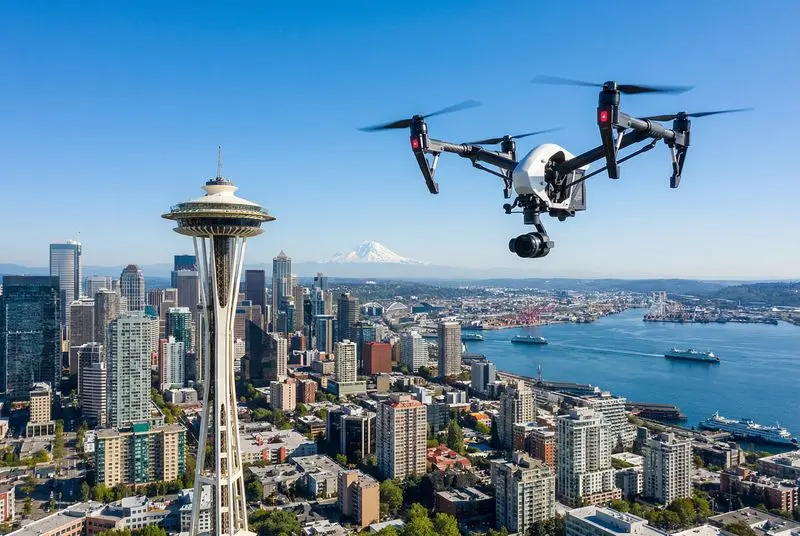
As a drone pilot in Washington, you are accountable to a multi-layered system of regulations. At the highest level, the Federal Aviation Administration (FAA) sets the nationwide standards for drone operation. Layered on top of that are state-specific laws enacted by the Washington State Legislature, as well as a patchwork of local ordinances from cities and counties. Navigating this legal landscape can seem daunting, but this guide is designed to break it down for you, ensuring you have the knowledge to fly with confidence and compliance.
Federal Drone Laws That Apply in Washington
Federal drone regulations are the foundation of drone law in the United States and apply in every state, including Washington. These rules, established and enforced by the FAA, are designed to ensure the safety and security of the national airspace. The requirements vary depending on the nature of your flight—whether it is for commercial purposes or purely for recreation.
For those flying for business or any form of compensation, the FAA’s Part 107 regulations are the governing standard. To become a commercial drone pilot, you must obtain a Remote Pilot Certificate by passing the FAA’s Part 107 Aeronautical Knowledge Test. This comprehensive exam covers a wide range of topics, including airspace classifications, flight restrictions, aviation weather, and drone loading and performance. The certificate demonstrates that you have the necessary knowledge to operate your drone safely in a commercial capacity.
Recreational flyers, on the other hand, are required to take The Recreational UAS Safety Test (TRUST). This is a brief, free online test that covers the fundamental safety principles of flying a drone for fun. Upon completion, you will receive a certificate that you must be able to produce if asked by law enforcement.
Other critical federal regulations include maintaining a visual line of sight (VLOS) with your drone at all times, either with your own eyes or with the assistance of a visual observer. You are also restricted to a maximum altitude of 400 feet above ground level in uncontrolled (Class G) airspace. To fly in controlled airspace, which surrounds most airports, you must obtain authorization through the Low Altitude Authorization and Notification Capability (LAANC) system or the FAA DroneZone.
For more detailed information and to access these services, please visit the official FAA websites:
- FAA DroneZone: https://faadronezone.faa.gov
- B4UFLY App: https://www.faa.gov/uas/getting_started/b4ufly
Washington-Specific Drone Laws
Beyond the federal framework, Washington has its own set of laws that drone pilots must follow. These state-level regulations address specific concerns and priorities within Washington’s borders.
A key state requirement for commercial drone operators is registration with the Washington State Department of Transportation (WSDOT) Aviation Division. This registration, which became mandatory on April 1, 2022, is in addition to your FAA registration. It applies to anyone operating a drone for commercial purposes under Part 107. The purpose of this state-level registration is to help WSDOT better understand and manage commercial drone activity within the state.
Washington’s notable state parks are a major draw for drone photographers, but flying in these areas is carefully regulated. Under Washington Administrative Code (WAC) 352-32-130, operating a remote-controlled aircraft within a state park is generally not allowed without a specific permit issued by the park’s director or their designee. The process for obtaining a permit involves submitting an application, and the park authorities will consider factors such as the potential impact on wildlife, the environment, and the experience of other park visitors. If a permit is granted, it will likely include specific restrictions on when, where, and how you can fly your drone. It is imperative to contact the specific state park you wish to fly in well in advance to inquire about their policies and permit application process.
Local and City Regulations
The regulatory landscape for drones in Washington becomes even more granular at the local level. Numerous cities and counties have enacted their own ordinances, often focusing on drone use in parks and other public areas. These local rules can be more restrictive than state or federal laws, so You should do your research before flying in a new location.
For example, in King County, home to Seattle, the operation of all remote-controlled vehicles, including drones, is prohibited in county parks unless you are in an area specifically designated for that purpose. The City of Seattle itself has a similar ordinance that prohibits drones in its parks. Furthermore, if you are using a drone for commercial filming and plan to take off or land on city-owned property, you will need to obtain a film permit.
Other municipalities have also taken steps to regulate drone use. The city of Bellevue, for instance, prohibits drones in its parks, with the exception of designated flying areas at Marymoor Park Airfield and 60 Acres Park. Snohomish County has a similar ban on remote-controlled aircraft in its parks, except in designated zones. On the state capitol campus in Olympia, the use of unmanned aircraft is strictly prohibited under WAC 200-250-030 to ensure the security of the government complex.
These are just a few examples, and many other local jurisdictions in Washington have their own rules. The best practice is to always check the website of the city or county you plan to fly in, or contact their parks and recreation department to inquire about any local drone ordinances.
Where You Can and Can’t Fly in Washington
Knowing where you can and cannot fly is one of the most important aspects of being a responsible drone pilot. In Washington, there are several types of locations where drone flights are restricted or prohibited altogether.
First and foremost, the National Park Service has a nationwide ban on drones in all national parks. This means you cannot fly your drone in iconic Washington locations such as Mount Rainier National Park, Olympic National Park, and North Cascades National Park. This ban is in place to protect wildlife, preserve the natural soundscape, and ensure the enjoyment of all park visitors.
As previously discussed, flying in Washington’s state parks generally requires a permit. Similarly, many local parks are also off-limits to drones. It is also illegal to fly a drone within five miles of most airports without proper authorization. The B4UFLY app is an excellent resource for checking the airspace around you and determining if you are near an airport.
Flying near military installations is also strictly prohibited. These areas are considered sensitive and are often designated as restricted airspace. Additionally, the FAA implements Temporary Flight Restrictions (TFRs) over stadiums during major sporting events. It is illegal to fly a drone within the boundaries of a TFR.
To protect wildlife and preserve the natural environment, the U.S. Forest Service prohibits the use of motorized equipment, including drones, in designated wilderness areas. Finally, be aware of the Olympic Coast National Marine Sanctuary, where drone use is prohibited below 2,000 feet AGL over designated areas.
Penalties and Enforcement
Ignoring drone laws in Washington can lead to serious consequences. The FAA has robust enforcement authority and can issue substantial fines for unsafe or unauthorized drone operations. Fines can range from $1,771 to as high as $36,770 per violation, depending on the severity of the offense. In addition to financial penalties, the FAA can also suspend or revoke a pilot’s Part 107 certificate.
Beyond the FAA, you can also face penalties at the state and local levels. Violating state park regulations or local ordinances can result in fines and citations. Furthermore, if your drone operation is deemed to be reckless and endangers others, you could face criminal charges. This is particularly true in cases involving privacy violations, such as using a drone for voyeurism, which is a criminal offense in Washington.
Tips for Staying Compliant
With a clear understanding of the rules and a commitment to safety, you can enjoy flying your drone in Washington while staying on the right side of the law. Here are some key tips to help you stay compliant:
- Always Check B4UFLY: Before every flight, make it a habit to check the B4UFLY app. It provides up-to-date information on airspace restrictions, TFRs, and other advisories that may affect your flight.
- Stay Current on Registrations: Ensure that your drone is properly registered with the FAA. If you are a commercial pilot, remember to also register with the WSDOT Aviation Division.
- Maintain Your Certifications: If you are flying for commercial purposes, make sure your Part 107 certificate is current. If you are a recreational flyer, keep a copy of your TRUST completion certificate with you when you fly.
- Prioritize Privacy: Respect the privacy of others by avoiding flights over private property without permission. Do not use your drone to photograph or record people in places where they have a reasonable expectation of privacy.
- Research Local Rules: Before flying in a new area, take the time to research the local drone ordinances. A quick search on the city or county’s website can save you from inadvertently breaking the law.
- Maintain Visual Line of Sight: Always keep your drone within your visual line of sight. This is not only a legal requirement but also a critical safety measure that allows you to see and avoid other aircraft and obstacles.
By following these guidelines and staying informed about the evolving regulatory landscape, you can be a responsible and respected member of the drone community in Washington.
Helpful Resources
- FAA DroneZone: https://faadronezone.faa.gov
- B4UFLY App: https://www.faa.gov/uas/getting_started/b4ufly
- WSDOT Aviation Division: https://wsdot.wa.gov/travel/aviation/drones-unmanned-aircraft-systems-uas
- Washington State Legislature: https://leg.wa.gov/
- Drone Launch Academy Part 107 Course: https://dronelaunchacademy.com/drone-exam-study-course/
Internal Links:
References:
[1] King County, Washington, Code of Ordinances, Title 7, Chapter 7.12, Section 7.12.330
← Back to Drone Laws by State Directory
Disclaimer: Drone laws are constantly evolving. While we strive to keep this guide updated, you should always verify local ordinances and check the FAA B4UFLY app before flying. This page is for educational purposes and does not constitute legal advice.
Sources: FAA UAS | NCSL State Drone Law Landscape | FAA Remote ID | FAA Part 107