
Drone Laws in West Virginia
Your complete 2026 guide to flying drones legally in West Virginia.
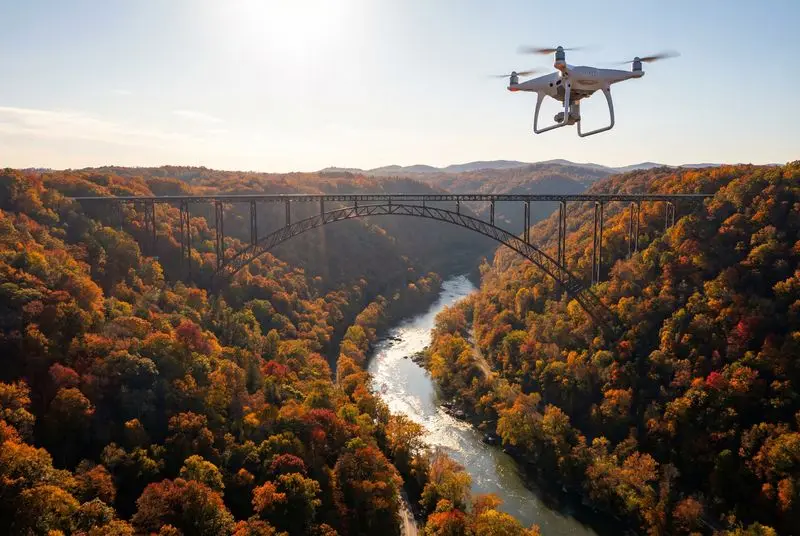
West Virginia, with its rolling mountains, deep valleys, and scenic rivers, offers a impressive canvas for drone pilots. From the majestic New River Gorge to the historic streets of Harpers Ferry, the
Mountain State is a paradise for aerial photography and videography. However, before you launch your drone into the wild and wonderful skies of West Virginia, You should have a firm grasp of the drone laws in West Virginia. This applies to both recreational hobbyists and certified commercial pilots. Understanding and adhering to these regulations ensures not only your safety but also the safety of others and the protection of the state’s natural and historic treasures.
This guide serves as your resource for navigating the legal landscape of drone operation in West Virginia. We will cover the foundational federal regulations set by the Federal Aviation Administration (FAA), which apply to all drone operations nationwide. Then, we will explore the specific state-level statutes that West Virginia has enacted, covering important issues such as privacy, wildlife protection, and the use of drones in state parks. Furthermore, we will discuss local ordinances, identify areas where drone flight is restricted, and outline the potential penalties for non-compliance. By the end of this guide, you will be well-equipped with the knowledge to fly your drone legally and responsibly, allowing you to focus on capturing the notable beauty of West Virginia from a unique perspective.
Federal Drone Laws That Apply in West Virginia
FAA Drone Registration
One of the first steps for any drone owner is registration. If your drone weighs more than 0.55 pounds (250 grams) and less than 55 pounds, you are required to register it with the FAA. This process is straightforward and can be completed online through the FAA’s DroneZone portal. The registration fee is a nominal $5 and is valid for three years. Upon registration, you will receive a unique registration number that must be clearly marked on the exterior of your drone. This requirement is a key component of the FAA’s efforts to promote accountability and traceability within the drone community.
Remote ID: The Digital License Plate for Drones
In a move to further enhance drone safety and security, the FAA has implemented the Remote ID rule, which went into effect on September 16, 2023. Remote ID acts as a digital license plate for your drone, broadcasting identification and location information that can be received by other parties, including law enforcement and the public. All registered drones are required to comply with the Remote ID rule. The only exception is for drones flown exclusively within an FAA-Recognized Identification Area (FRIA). This technology is a critical step in the safe integration of drones into the national airspace system.
Flying for Fun: The Recreational UAS Safety Test (TRUST)
For those who fly drones purely for enjoyment and recreational purposes, the FAA requires the completion of The Recreational UAS Safety Test (TRUST). This is a free, online test designed to provide recreational pilots with a foundational understanding of drone safety and FAA regulations. The test is administered by several FAA-approved test administrators and can be completed in a short amount of time. Once you have passed the test, you will receive a certificate that you must be able to produce if requested by law enforcement or FAA officials.
Flying for Work: The Part 107 Certificate
If your drone operations extend beyond simple recreation and into the realm of commercial use, you must obtain a Remote Pilot Certificate by passing the FAA’s Part 107 Aeronautical Knowledge Test. This certificate is required for any flight that is conducted for business purposes, in exchange for compensation, or in furtherance of a business. The Part 107 regulations cover a wide range of operational parameters, including airspace classifications, weather limitations, and flight restrictions. Holding a Part 107 certificate demonstrates that you have the knowledge and skills to operate a drone safely in a commercial capacity.
Fundamental Flight Rules for All Pilots
- Maintain a Maximum Altitude of 400 Feet: To avoid conflicts with manned aircraft, drones must be flown at or below 400 feet above ground level (AGL).
- Keep Your Drone in Your Visual Line of Sight (VLOS): You must be able to see your drone with your own eyes at all times during flight. The use of a visual observer can supplement this, but the pilot in command must be able to see the drone.
- Respect Airspace Restrictions: Do not fly in controlled airspace (Class B, C, D, and E) without obtaining prior authorization through the Low Altitude Authorization and Notification Capability (LAANC) system or the FAA DroneZone.
- Yield to Manned Aircraft: Drones must always give way to manned aircraft, including airplanes and helicopters. Remember, you are sharing the sky.
By familiarizing yourself with these federal regulations, you are taking the first and most important step toward becoming a safe and responsible drone pilot in West Virginia. For the most current and detailed information, always refer to the official FAA website and utilize the B4UFLY app before every flight.
West Virginia-Specific Drone Laws
While the FAA provides the overarching legal framework for drone operation, the state of West Virginia has also enacted its own laws to address specific concerns related to unmanned aircraft systems. These state-level statutes primarily focus on issues of privacy, the protection of wildlife, and ensuring the safety of law enforcement and emergency responders. It is crucial for all drone pilots in West Virginia to be aware of these additional regulations to ensure full compliance with the law.
Privacy and Surveillance: House Bill 3005 (2018)
In response to growing concerns about privacy in the age of drones, the West Virginia Legislature passed House Bill 3005 in 2018. This law, which is now codified in the West Virginia Code, makes it illegal to use a drone for certain types of surveillance. Specifically, the law prohibits the use of an unmanned aerial vehicle to:
- Invade a Reasonable Expectation of Privacy: You cannot intentionally use a drone to capture photographs, audio, or video of a person or their private property without their consent in a manner that would be considered an invasion of their reasonable expectation of privacy. This is a critical provision that protects the privacy of individuals in their homes and on their property.
- Follow or Contact Without Permission: The law also makes it illegal to use a drone to follow or contact another person without their permission. This provision is aimed at preventing the use of drones for stalking or harassment.
- Harassment and Disregard for Safety: Furthermore, the statute prohibits the use of a drone to harass another person or to operate it with a willful disregard for their safety. This underscores the importance of flying in a manner that is respectful and considerate of those around you.
The full text of this law can be found in West Virginia Code §61-16-1 and §61-16-2.
Protecting Wildlife: House Bill 2515 (2015)
West Virginia is renowned for its abundant wildlife, and the state has taken steps to protect its fauna from the potential misuse of drones. House Bill 2515, passed in 2015, explicitly prohibits the use of drones for hunting, fishing, or taking any wildlife. This includes using a drone to locate, track, or harass animals. The intent of this law is to ensure that hunting and fishing remain fair-chase activities and to prevent the undue stress and disturbance of wildlife that can be caused by drones. The specific language of this prohibition is located in West Virginia Code §20-2-5k.
Drones in State Parks: House Bill 4607 (2018)
The beautiful state parks of West Virginia are a major draw for residents and tourists alike. To manage the use of drones within these sensitive areas, the state passed House Bill 4607 in 2018. This law does not impose an outright ban on drones in state parks, but it does require that anyone wishing to fly a drone within a state park must first obtain permission from the Park Superintendent and register with the park. This regulation allows park officials to manage drone activity, ensuring the safety of visitors and the protection of the park’s natural and cultural resources. You should contact the specific state park you plan to visit ahead of time to inquire about their drone policy and obtain the necessary permissions.
Interference with Emergency Services and Other Prohibitions: West Virginia Code §61-16-2
In addition to the laws mentioned above, West Virginia Code §61-16-2 outlines several other prohibited uses of unmanned aerial vehicles. This statute makes it a misdemeanor to knowingly and intentionally:
- Interfere with Emergency Personnel: Operate a drone in a manner that interferes with the official duties of law enforcement officers, firefighters, or other emergency medical personnel. This is a critical safety measure to ensure that first responders can perform their duties without obstruction.
- Photograph or Record a Crime Scene: Use a drone to take photographs or video of a crime scene without proper authorization. This is to protect the integrity of investigations and the privacy of those involved.
- Arm a Drone: It is illegal to arm a drone with a deadly weapon. This provision is a clear statement against the weaponization of drones.
By understanding and adhering to these state-specific laws, you can ensure that your drone flights in West Virginia are not only enjoyable but also legal and respectful of the state’s laws and the rights of its citizens.
Local and City Regulations
As of early 2026, there are no widespread, specific drone ordinances at the local or city level in West Virginia. The state laws that have been enacted apply uniformly across all counties and municipalities. However, the landscape of drone regulation is constantly evolving. Therefore, it is always a prudent measure to check with the local city or county government in the specific area where you intend to fly. A quick phone call or visit to the local government’s website can provide you with the most up-to-date information and prevent any potential conflicts with local rules that may have been recently enacted.
Where You Can and Can’t Fly in West Virginia
Knowing the rules of the sky is only half the battle; you also need to know where you are permitted to fly. West Virginia’s diverse geography presents a variety of airspace considerations. Here is a breakdown of some of the key areas where drone flight is restricted or requires special permission:
- National Parks and Forests: The National Park Service has a nationwide ban on the use of drones in all National Parks. In West Virginia, this includes the New River Gorge National Park and Preserve. Similarly, the U.S. Forest Service generally discourages drone use in national forests to protect wildlife and preserve the natural environment. It is best to avoid flying in these areas.
- State Parks: As we have discussed, flying a drone in a West Virginia state park requires prior permission from the Park Superintendent. Each park may have its own specific rules and designated flying areas, so be sure to inquire before you go.
- Airports and Heliports: The FAA has strict regulations regarding drone flights near airports and heliports. You must not fly within five miles of an airport without first obtaining authorization through the LAANC system. This is to prevent any potential for interference with manned aircraft.
- Military Installations: For security reasons, drone flight is prohibited over and around military bases and other sensitive government facilities.
- Stadiums and Sporting Events: The FAA issues Temporary Flight Restrictions (TFRs) over stadiums and other large sporting events. It is illegal to fly a drone within the boundaries of these TFRs.
- Wilderness Areas: To protect wildlife and maintain the pristine character of these areas, it is highly recommended to refrain from flying drones in designated wilderness areas.
Penalties and Enforcement
Failure to comply with federal and state drone laws can lead to serious consequences. The FAA has the authority to impose significant civil penalties, with fines ranging from $1,771 to as much as $36,770 per violation. In cases where a drone is flown in a manner that is deemed reckless or endangers the national airspace, criminal charges can also be pursued.
In addition to federal penalties, violating West Virginia’s state drone laws can result in misdemeanor charges. These charges can carry their own set of penalties, including fines and potential jail time. It is clear that both federal and state authorities are taking drone safety and compliance seriously, making it all the more important for pilots to be well-informed and responsible.
Tips for Staying Compliant
Navigating the world of drone regulations can seem daunting, but staying compliant is straightforward if you follow a few key practices:
- Always Check B4UFLY: Before every flight, make it a habit to check the FAA’s B4UFLY app. This will provide you with real-time information on airspace restrictions and any advisories in your planned flight area.
- Keep Your Registration Current: Ensure that your drone is properly registered with the FAA and that your registration number is clearly displayed on the aircraft.
- Carry Your Certifications: If you are a recreational pilot, always have your TRUST completion certificate with you. If you are a commercial pilot, you must have your Part 107 Remote Pilot Certificate on hand during all flight operations.
- Be a Good Neighbor: Respect the privacy of others and do not fly over private property without obtaining permission from the landowner. Avoid flying in a way that could be perceived as intrusive or harassing.
- Stay Informed About Local Rules: While there are no known local ordinances in West Virginia at this time, it is always a good idea to double-check with local authorities before you fly.
- Prioritize Safety: Always fly in a safe and responsible manner. Keep your drone within your visual line of sight, be aware of your surroundings, and never fly under the influence of drugs or alcohol.
Helpful Resources
For further information and to stay up-to-date on the latest drone regulations, here are some valuable resources: