
Drone Laws in Indiana
Your complete 2026 guide to flying drones legally in Indiana.
Welcome to our comprehensive guide to drone laws in Indiana for 2026.This article provides a detailed overview of federal, state, and local regulations governing unmanned aerial vehicles (UAVs) in Indiana. We will cover everything from FAA requirements and state-specific statutes to local ordinances and no-fly zones, ensuring you have the information you need to operate your drone responsibly.
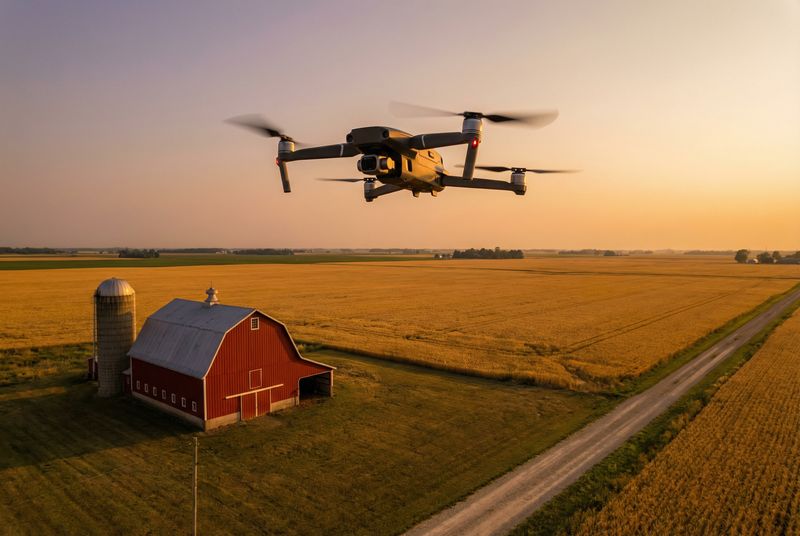
The drone laws in Indiana are a combination of federal regulations established by the Federal Aviation Administration (FAA) and state-level legislation passed by the Indiana General Assembly. These laws address a variety of concerns, including privacy, public safety, and the protection of wildlife. As drone technology continues to evolve, so do the regulations that govern its use.
Federal Drone Laws That Apply in Indiana
For commercial drone pilots in Indiana, operating a drone for any business-related purpose requires compliance with the FAA’s Part 107 regulations. This includes obtaining a Remote Pilot Certificate by passing the FAA’s Aeronautical Knowledge Test. The Part 107 rules govern aspects of drone operation such as altitude limits, airspace restrictions, and operating requirements.
Recreational drone pilots, or hobbyists, must take The Recreational UAS Safety Test (TRUST) and follow a distinct set of rules. These include keeping the drone within the visual line of sight, flying at or below 400 feet in uncontrolled airspace, and obtaining authorization for flights in controlled airspace through LAANC or DroneZone. Drones weighing over 0.55 pounds (250 grams) must be registered with the FAA.
As of September 16, 2023, most drones are required to broadcast Remote ID information, which acts as a digital license plate for your drone. This requirement applies to both commercial and recreational pilots. You can find more information about these federal rules and access resources like the B4UFLY app on the official FAA website.
Indiana-Specific Drone Laws
In addition to federal regulations, the Indiana General Assembly has enacted several state-wide laws that address specific uses and concerns related to drones. These statutes cover a range of activities, from hunting and surveillance to operations on state-owned lands. It is important for all drone pilots in Indiana to be aware of these state-specific rules.
One of the most significant state laws is IC 14-22-6-16, which prohibits the use of unmanned aerial vehicles to aid in hunting. This law makes it illegal to use a drone to search for, scout, or locate a wild animal during the hunting season, as well as in the 14 days leading up to it. However, the law does permit the use of a drone with infrared technology to locate and recover a legally taken animal.
Privacy is another key area addressed by Indiana’s drone laws. HB 1009 (2014) established the crime of “Unlawful Photography and Surveillance on Private Property.” This law makes it a Class A misdemeanor to knowingly and intentionally conduct electronic surveillance of another person’s private property without their permission. The same bill also put in place warrant requirements for law enforcement’s use of drones in investigations.
Public safety is also a priority in Indiana’s drone legislation. SB 299 (2017) created the “public safety remote aerial interference offense,” which makes it a crime to intentionally obstruct or interfere with a public safety official, such as a police officer or firefighter, while they are performing their duties. The same bill also introduced restrictions for sex offenders, making it an offense for them to use a drone to follow, contact, or capture images of a person in violation of their parole conditions.
Finally, the use of drones on state-managed properties is restricted. According to IAC 312 8-2-8 (i), it is prohibited to operate a drone on any property managed by the Indiana Department of Natural Resources (DNR), which includes state parks, forests, and nature preserves. However, the DNR may grant special licenses for specific purposes, such as filming.
Local and City Regulations
While the state of Indiana has not enacted any preemption laws that would prevent local governments from creating their own drone ordinances, very few municipalities have done so. This means that in most of Indiana, you only need to worry about federal and state laws. However, it is always a good practice to check for any local rules before you fly, especially in more populated areas.
One notable exception is the city of Fort Wayne, which has established its own drone ordinance. Fort Wayne City Ordinance § 96.30 requires drone operators to notify the city before flying in the Downtown Aerial District or within a 500-yard radius of a public event. This notification must include details about the operator, the drone, and the proposed flight.
As drone use becomes more common, it is possible that other cities and counties in Indiana will adopt their own regulations. Therefore, You should stay informed about the local laws in your specific area of operation. You can usually find this information on the official website of the city or county you plan to fly in.
Where You Can and Can’t Fly in Indiana
Navigating the skies of Indiana requires an awareness of where you are and are not permitted to fly your drone. In addition to the general rules of the air, there are specific locations where drone use is restricted or prohibited. Understanding these no-fly zones is essential for any drone pilot in the state.
As a general rule, you should always be mindful of your surroundings and respect the privacy of others. Flying over private property without permission is not only a potential nuisance but could also lead to legal trouble under Indiana’s privacy laws. It is always best to obtain consent from landowners before flying over their property.
Here are some of the key locations where drone flights are restricted in Indiana:
- State Parks and DNR Properties: As mentioned earlier, the Indiana Department of Natural Resources prohibits the operation of drones on all of its properties, including state parks, forests, and nature preserves, without a special permit.
- Airports and Heliports: Flying a drone near an airport is a major safety hazard. You must maintain a safe distance from all airports and obtain authorization through LAANC if you need to fly in controlled airspace.
- Critical Infrastructure: Be aware of and avoid flying over critical infrastructure facilities such as power plants, water treatment facilities, and correctional facilities.
- Sporting Events: The FAA implements Temporary Flight Restrictions (TFRs) over stadiums during major sporting events, such as NFL, MLB, and NCAA games. Flying a drone within these TFRs is strictly prohibited.
- Emergency Situations: Never fly your drone near an active emergency response situation, such as a fire or a police incident. Doing so could interfere with the work of first responders and is illegal.
Penalties and Enforcement
Violating federal, state, or local drone laws in Indiana can result in significant penalties, including substantial fines and even criminal charges. Both the FAA and the state of Indiana take drone safety and compliance seriously, and enforcement actions are becoming more common.
On the federal level, the FAA has the authority to impose fines for violations of its regulations. These fines can range from a few hundred dollars for minor infractions to tens of thousands of dollars for more serious offenses, such as flying in a restricted area or interfering with manned aircraft. The FAA can also revoke a pilot’s Part 107 certificate for repeated or egregious violations.
In Indiana, state-level penalties can also be severe. For example, the unlawful use of a drone for surveillance on private property or to interfere with public safety officials is a Class A misdemeanor, which can result in a fine of up to $5,000 and a jail sentence of up to one year. The use of a drone for hunting purposes can also lead to significant fines and the suspension of hunting privileges.
It is important to remember that ignorance of the law is not an excuse. As a drone pilot, you are responsible for knowing and complying with all applicable regulations. By flying safely and responsibly, you can avoid these penalties and help to ensure that the skies remain open and accessible for everyone.
Tips for Staying Compliant
Staying compliant with drone laws in Indiana is straightforward if you follow a few key best practices. By being a responsible and informed pilot, you can ensure that your flights are safe, legal, and enjoyable. Here are some essential tips to help you stay on the right side of the law:
- Check the B4UFLY App: Before every flight, use the FAA’s B4UFLY app to check for any airspace restrictions or advisories in your area. This is the easiest way to ensure that you are not flying in a prohibited zone.
- Register Your Drone: If your drone weighs more than 0.55 pounds (250 grams), you must register it with the FAA. Make sure your registration is current and that the registration number is clearly marked on the outside of your drone.
- Get Certified: If you are flying for recreational purposes, you must have a current TRUST certificate. For commercial operations, a Part 107 Remote Pilot Certificate is required. Always carry proof of your certification with you when you fly.
- Respect Privacy: Be mindful of the privacy of others. Avoid flying over private property without permission, and do not use your drone to capture images or videos of people in situations where they have a reasonable expectation of privacy.
- Check for Local Ordinances: While most of Indiana does not have local drone laws, it is always a good idea to check with the city or county where you plan to fly to see if any specific rules are in place.
- Maintain Visual Line of Sight: Always keep your drone within your visual line of sight. This is a fundamental rule of safe drone operation and is required by the FAA.
Helpful Resources
Here are some helpful resources for drone pilots in Indiana:
- FAA DroneZone: The official website for registering your drone, obtaining authorizations, and finding information about FAA regulations.
- B4UFLY App: The FAA’s official app for checking airspace restrictions and advisories.
- Indiana General Assembly: The official website of the Indiana legislature, where you can find the full text of state laws.
- Indiana Department of Natural Resources: The state agency responsible for managing state parks and other natural areas.
- Drone Launch Academy Part 107 Course: A comprehensive course to help you prepare for the FAA’s Part 107 exam.