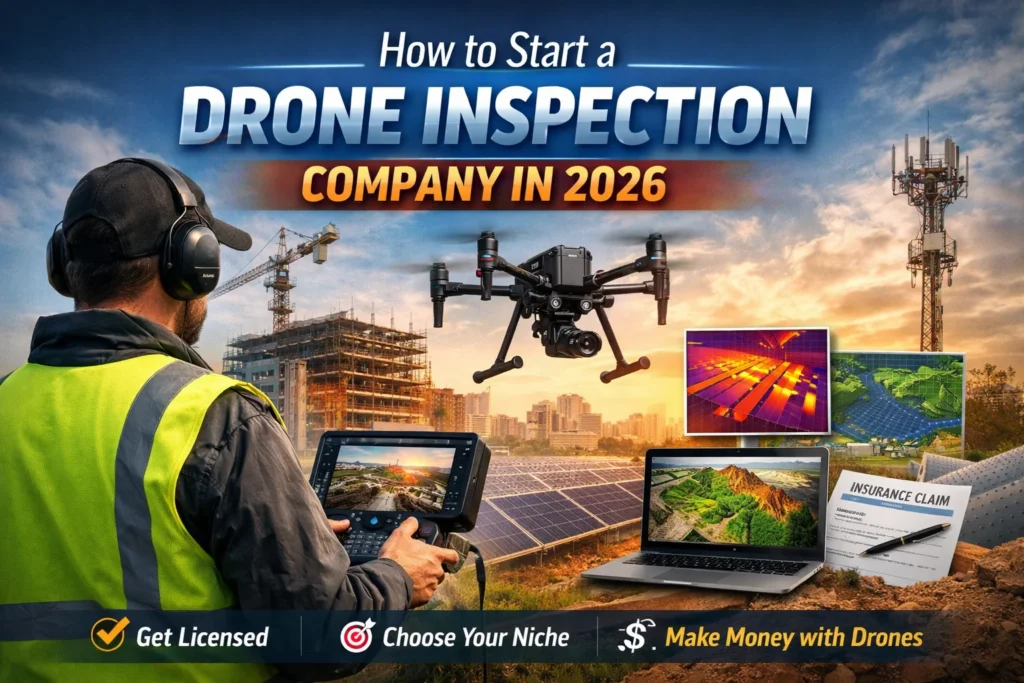
The drone industry has grown quickly in recent years. What started as a niche tech hobby has turned into a serious service business used by construction firms, roofers, insurance companies, utilities, and real estate developers. If you’re researching how to start a drone inspection company in 2026, the good news is this: the demand is real, the barrier to entry is reasonable, and you don’t need a massive budget to get started.
Drone inspections are one of the most practical ways to build a profitable drone business today. They solve real problems—safety, speed, accuracy—and clients are already used to paying for them.
Key Takeaways
- A drone inspection company uses drones to inspect roofs, buildings, construction sites, solar panels, and infrastructure without putting people at risk.
- Clients hire drone inspection companies to reduce safety risks, speed up inspections, lower costs, and receive detailed visual data.
- To start a drone inspection company, one must obtain an FAA Part 107 license, choose a profitable niche, develop a solid business plan, invest in appropriate drones and insurance, and build a strong portfolio.
- To make money with drones, skills and expertise are key for high-paying jobs.
- Drone Launch Academy provides courses, training, and industry-recognized certifications to help individuals and businesses become licensed, safe, and successful commercial drone pilots. The courses cover everything from FAA Part 107 test prep to specialized skills such as cinematography, mapping, real estate media, and starting a drone business.
How to Start a Drone Inspection Company: Step-by-Step Plan

Companies don’t hire drone pilots because they’re cool. They hire them because they save money and reduce risk. Roof inspections, construction progress checks, solar inspections, and infrastructure monitoring are faster and safer when done from the air.
This shift has created one of the most reliable ways to make money with a drone without competing in oversaturated creative markets. Inspection work is practical, repeatable, and often tied to long-term contracts.
If you’re exploring how to make money with a drone, start with the steps below.
1. Choose the Right Inspection Niche (This Matters More Than Gear)
Before buying equipment or building a website, you need to decide who you serve. Successful pilots don’t chase every opportunity. They choose one niche and become known for it. That focus is what separates strong UAV business ideas from hobby-level side gigs.
Many people fail when creating a drone business because they try to offer everything. Specialization builds trust, raises pricing, and shortens sales cycles.
The fastest-growing inspection niches include:
Niche |
How Drones are Used |
| Roofing & Storm Damage Inspections | Drone inspections are widely used by roofing companies and insurance adjusters to document storm damage, missing shingles, leaks, and structural issues safely and quickly—without climbing onto the roof. |
| Construction Site Inspections | Construction firms use drones to track progress, verify completion of work, monitor safety risks, and document site conditions over time through consistent aerial views. |
| Solar Panel Inspections | Thermal drone inspections help identify malfunctioning panels, heat loss, and electrical issues that are invisible to the naked eye, improving system performance and reducing downtime. |
| Energy & Utility Inspections | Drone inspections are used to assess infrastructure like power lines, towers, and facilities, reducing inspection time and minimizing worker risk in hazardous environments. |
| Commercial Real Estate Assessments | Drone inspections help assess roofs, building exteriors, and large sites during acquisitions, insurance reviews, and routine property condition assessments—without disrupting tenants or operations. |
If you’re comparing UAV business ideas, inspection services win because clients often need repeat service, not one-off projects.
2. Building Skills Clients Actually Pay For
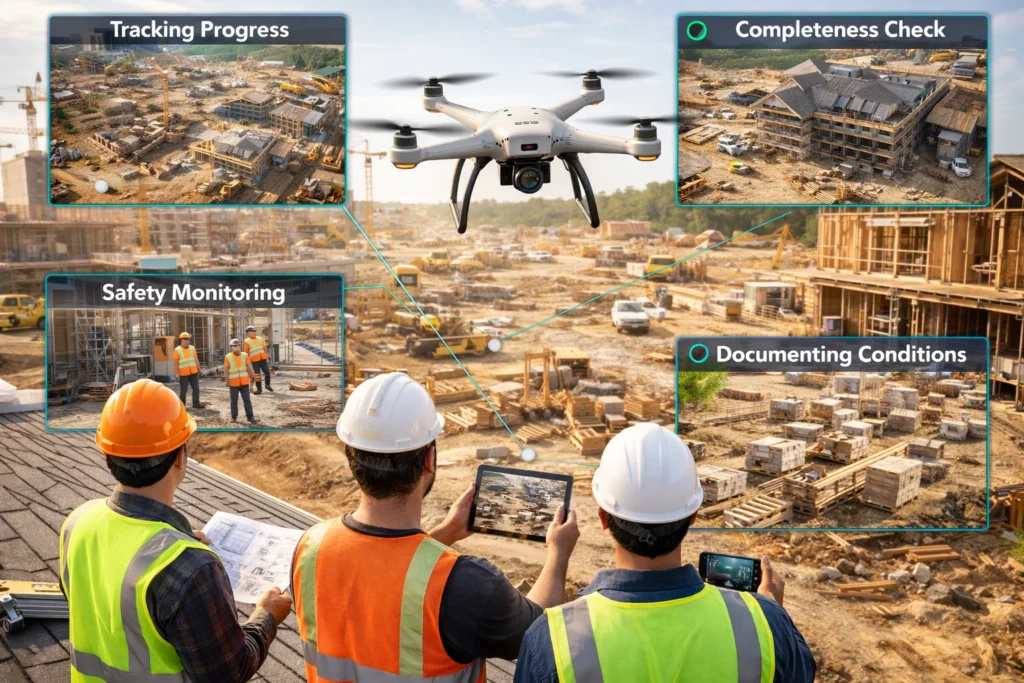
Flying safely is only step one. When offering inspection services, clients pay for clear documentation, analysis, and professional reporting.
You need to know how to:
- Capture consistent inspection imagery
- Identify visible issues and anomalies
- Communicate findings clearly
- Deliver professional reports
This is where structured training makes a difference. Drone Launch Academy focuses on industry-specific education, not just test prep. Our inspection and business programs are designed to help pilots move from theory to paid work faster.
Skill-building is the real secret behind sustainable strategies for making money with drones.
Check out our courses for beginners and advanced drone pilots to develop your skills:
3. Legal Foundations: Licensing, Insurance, and Business Setup
You can’t legally run a drone inspection service without the proper credentials. This step isn’t optional.
FAA Part 107 Certification
If you want to operate commercially in the U.S., you must hold a Part 107 Remote Pilot Certificate. It’s the foundation of every legitimate aerial drone business.
Check out Drone Launch Academy’s FAA Part 107 Test Prep Course. Join over 30,000 students who have trusted Drone Launch Academy to help them pass the FAA Part 107 exam the first time — with a 99.54% success rate.
Business Registration
After obtaining your pilot certification, you must register your business. When starting a UAV business, most pilots choose an LLC. It protects personal assets and makes you look more professional to contractors and insurance clients.
Insurance
Liability insurance isn’t just about protection—it’s about credibility. Many inspection clients will not hire uninsured pilots, no matter how good your work is.
This legal setup is identical whether you’re starting a drone business for inspections or expanding into other services later.
4. Equipment & Software: Buy What Your Niche Requires
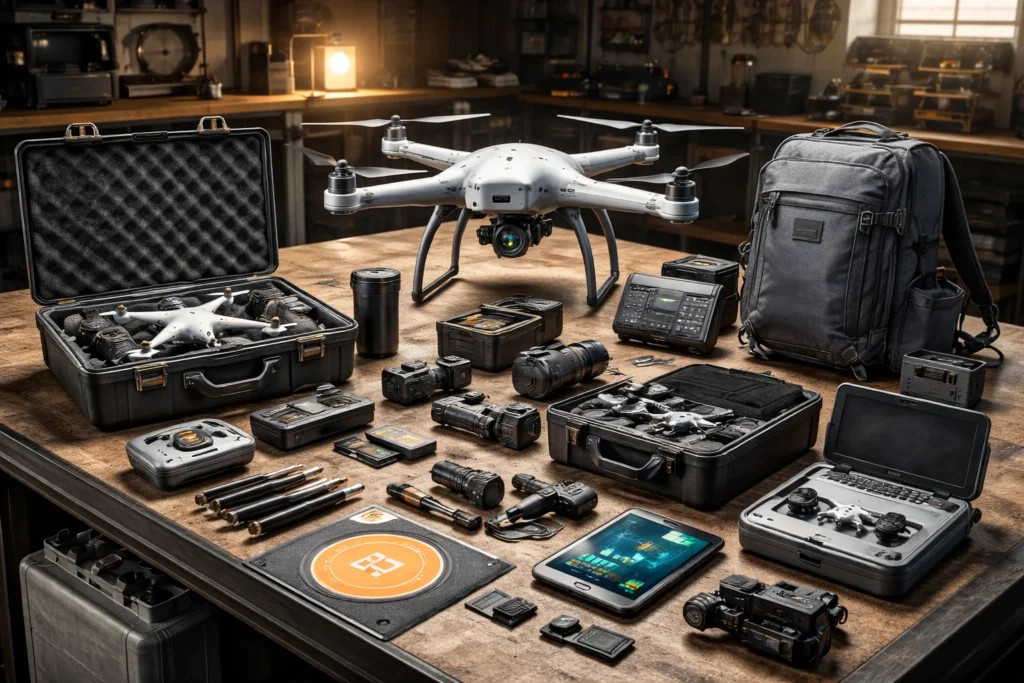
You don’t need a $20,000 drone on day one. What you need is the right tool for the job.
Most inspection pilots start with:
- A drone with a high-resolution camera
- Optional thermal sensor (for roofing, solar, or energy work)
- Mapping or reporting software for documentation
Overbuying equipment is one of the biggest mistakes new pilots make when starting a UAV business. Clients pay for insights, not gear.
Many successful drone businesses reinvest profits gradually, upgrading equipment only when contracts demand it.
Startup Costs for a Drone Inspection Business
Starting a drone inspection company doesn’t require a massive upfront investment, but costs vary by niche.
- Entry-level inspection setup: $2,000–$5,000
- Professional inspection setup (thermal, mapping): $6,000–$15,000
These costs typically include your drone, software subscriptions, insurance, certification fees, and basic marketing assets. Many successful drone businesses start lean and upgrade equipment only after landing paid clients.
5. Getting Your First Clients
When learning how to make money with a drone, here’s the part most guides gloss over: clients don’t magically appear. You need a simple client acquisition plan.
Start with:
- Direct outreach to roofing, construction, and solar companies
- A basic website showing your services and sample reports
- A small portfolio (even practice inspections count early on)
Many pilots land their first contracts by offering discounted pilot projects. This isn’t working for free—it’s strategic positioning while you build credibility.
Marketing Your Drone Inspection Business
Inspection clients don’t want flashy ads. They want reliability.
Focus your marketing on:
- Clear service pages
- Before-and-after examples
- Case studies and testimonials
- Local SEO for inspection keywords
LinkedIn outreach and direct email still outperform social media for inspection work. This approach works for nearly all drone company ideas that target B2B clients.
Pricing and Packages
Inspection pricing is different from photography. You’re charging for data, safety, and expertise.
Start by calculating your annual operating costs, including equipment, software, insurance, travel, and maintenance. Then choose a pricing model that fits your services.
Common pricing models include:
- Per inspection
- Monthly monitoring contracts
- Post-storm assessment packages
Key factors that influence pricing include:
- Deliverables (photos, 3D models, thermal data, reports)
- Site complexity (size, access, risk level)
- Time and effort (flight, processing, editing)
- Market rates in your area
The recommended strategy is to avoid competing on price. Instead, clearly communicate the value and results you provide so clients understand—and are willing to pay for—the ROI.
Pilots who struggle to make money with drones usually underprice or fail to package their services clearly.
Types of Drone Inspections You Can Offer
Drone inspection companies typically provide three core inspection types:
- Visual inspections using high-resolution photos and video
- Thermal inspections to detect heat loss, moisture, or electrical issues
- 3D mapping and models for measurements, planning, and documentation
Offering more than one inspection type increases your value and allows you to charge premium rates based on the data you deliver—not just flight time.
Turning Skills Into a Sustainable Business
Drone inspections are no longer experimental—they’re expected. Companies want safer inspections, faster results, and clear documentation.
If you’re serious about starting a drone inspection company, focus on skill building, specialization, professionalism, and consistent execution. That’s how pilots move from curiosity to contracts.
Drone Launch Academy exists to shorten that learning curve—helping pilots go from licensed to profitable with real-world training, industry-specific skills, and business systems that work.
Drone Launch Academy’s Drone Business Course
Give us 8 weeks, and we’ll give you a thriving drone business!
Whether you want a life-long business or just supplemental income, this course is your surefire solution. We’ll teach you how to get your first $1k. Then we’ll show you how to keep growing so the income never stops.
Our system includes:
- Video Lessons
- Flight Assignments
- Business Assignments
- Pre-Designed Ad Campaigns
- Proven Outreach Scripts
- Sales Presentation Script
- Accountability Groups
- Drone Discounts
Get started today.
Build your drone business in 8 weeks!
FAQs
Is a drone business profitable?
A drone business has the potential for high profit margins, particularly in specialized niches, due to relatively low startup and operating costs compared to other ventures. Profitability largely depends on your ability to attract clients and manage costs effectively.
How Much Can You Make Running a Drone Inspection Company?
Drone inspection income varies by niche, location, and experience, but inspection services are among the most consistent ways to make money with a drone.
Many entry-level inspection pilots earn between $75 and $200 per inspection. Pilots who secure ongoing contracts with roofing companies, construction firms, or solar installers can generate $3,000 to $8,000 per month per client. As experience grows, higher-risk inspections and thermal services can command even higher rates.
The biggest income difference comes from offering repeat inspection services rather than one-off jobs.
Can I start my own drone business?
Yes, you can start your own drone business. The key to success is treating it as a formal business, not just a side hustle, and building systems for repeat clients.
Do I need a license to fly a drone in the U.S?
Yes, if you plan to fly a drone for any commercial purpose, you must obtain a Part 107 Remote Pilot Certificate from the FAA.
How do I scale from a solo pilot to a real drone business?
Once your inspection service is running, scaling becomes possible.
Growth options include:
- Adding new inspection niches
- Hiring subcontracted pilots
- Offering reporting or data analysis add-ons
Many pilots start solo and grow into multi-pilot drone businesses within a few years. Inspection work scales better than creative services because processes can be standardized.
This is how an inspection-focused aerial drone business evolves into a long-term company.
What are the most common mistakes to avoid when starting a drone inspection business?
If you want to succeed, avoid these pitfalls:
- Trying too many drone business ideas at once
- Buying gear before securing clients
- Skipping insurance
- Ignoring reporting quality
Learning from proven systems dramatically reduces trial and error.
What’s the difference between drone inspection services and other drone business ideas?
Compared to photography or cinematic drone work, inspection services offer more predictable income and repeat clients. Inspection work focuses on safety, compliance, and documentation—needs that don’t disappear during slow seasons.
This is why inspection-focused drone businesses tend to scale faster and generate steadier revenue than creative-only drone services.