
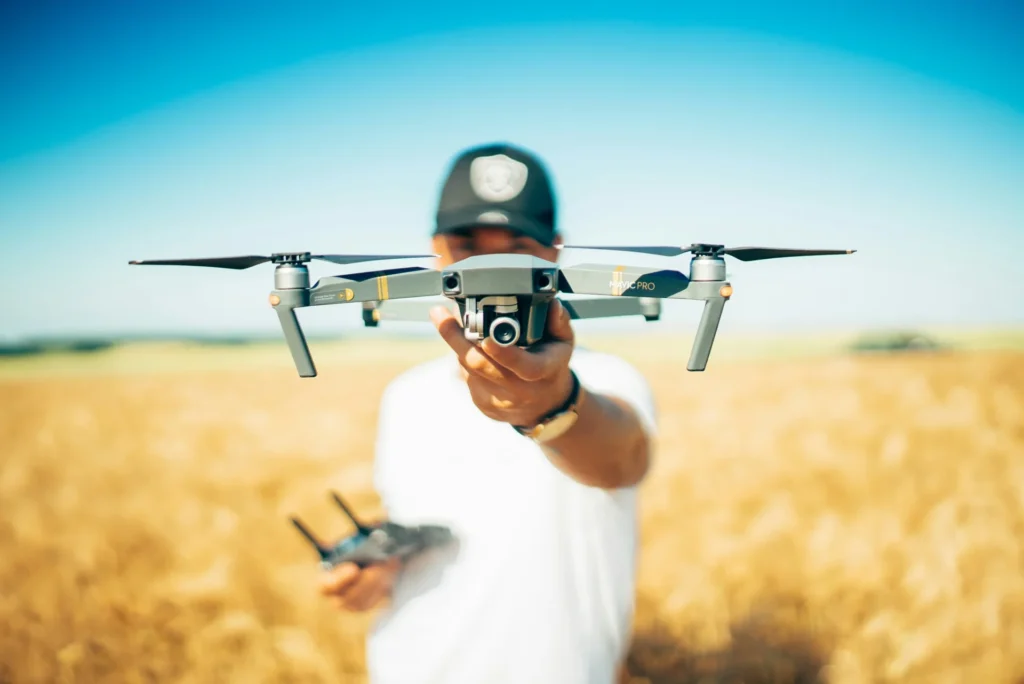
If you’ve ever watched a drone map a construction site, inspect a roof, help during a rescue mission, or capture stunning aerial footage, you’ve seen a UAV pilot in action—even if you didn’t realize it. According to the FAA, there are 837,513 registered drones in the United States, including 453,635 commercial drone registrations and 481,760 certified remote pilots, highlighting the rapid growth of professional UAV operations.
In this guide, we’ll answer the question, “What is a UAV pilot?” and break down exactly what they do, how they’re trained, how much they earn, and how you can become one.
Key Takeaways
- A UAV pilot is a trained professional who flies drones for commercial and industrial work
- You need an FAA UAV pilot certification to fly legally for money
- UAV pilot jobs exist across many industries, including real estate, agriculture, construction, filmmaking/media, public safety (emergency/police), energy (inspection), surveying, and environmental conservation
- How much UAV pilots make depends on skills and specialization. However, averages are cited around $95,000 – $130,000 annually, depending heavily on industry and location, with top earners in Aerospace/Defense potentially hitting over $200k, while construction or real estate might see averages closer to $85k-$95k.
- Choosing the right drone pilot training course matters because factors like experience, specific skills (inspection, mapping, film), employer (defense contractors pay more), and region significantly impact pay, with major cities and high-demand sectors offering higher rates.
- If you’re serious about turning drones into a career, the fastest path is education. Drone Launch Academy offers courses for beginners through advanced, with industry-recognized certifications.
What Is a UAV Pilot?

A UAV pilot (Unmanned Aerial Vehicle pilot) is a trained professional who operates drones for commercial, industrial, government, or research purposes. These pilots fly drones to collect data, capture images, inspect infrastructure, or support operations—all while following aviation rules and safety standards.
Key responsibilities include:
- Operating the drone: Piloting the UAV remotely to complete its mission, from takeoff to landing.
- Flight planning: Developing and monitoring flight paths to ensure efficiency and safety.
- Data collection: Operating cameras and other equipment to capture photos, videos, or other data.
- Monitoring performance: Overseeing the vehicle’s performance and conducting necessary pre-flight and post-flight checks.
- Regulatory compliance: Staying up-to-date on and adhering to all local and national flight laws and regulations.
- Environmental awareness: Monitoring weather conditions to ensure safe flight is possible.
Requirements and certifications
- Certification: In many places, like the U.S. under the FAA’s Part 107, a remote pilot certificate is required for commercial use.
- Knowledge: Obtaining a certificate involves passing a knowledge test on topics like regulations, weather, and flight operations.
- Eligibility: Requirements often include being of a certain age (e.g., 16 in the U.S.) and having the ability to read, speak, write, and understand English.
What Do UAV Pilots Actually Do Day to Day?
A big misconception is that UAV pilots just show up, fly, and leave. In reality, flying is only part of the job.
Here’s what most commercial UAV pilot workdays include:
- Planning flight paths and mission objectives
- Checking airspace, weather, and FAA restrictions
- Inspecting drones before and after flights
- Flying missions safely and precisely
- Operating cameras, sensors, or mapping software
- Processing photos, video, or mapping data
- Delivering reports to clients
- Keeping detailed flight logs
Whether it’s mapping land, inspecting roofs, or filming video, professional drone work is structured, repeatable, and data-driven.
Industries That Hire UAV Pilots
There are more uav pilot jobs available today than ever before—and they’re not slowing down.
Common industries include:
- Construction and surveying
- Real estate and commercial photography
- Agriculture and crop monitoring
- Roof, solar, and infrastructure inspections
- Public safety and search & rescue
- Environmental research
- Media and filmmaking
Some pilots work full-time for companies. Others freelance or build their own businesses. Many do a mix of both.
*In industries like construction, surveying, and environmental research, UAV pilots often perform drone mapping. So, what is drone mapping? It’s the process of using drones to capture aerial data that’s turned into accurate 2D maps and 3D models.
The demand for UAV pilot jobs continues to grow as drones replace slower, more expensive traditional methods.
How Much Do UAV Pilots Make?
The answer depends on experience, location, and industry—but here’s a realistic breakdown:
- Entry-level pilots: $20–$40/hour
- Experienced pilots: $50–$100+/hour
- Specialized services (mapping, inspections): $1,000+ per project
Full-time salaries can range from $50,000 to $100,000+ per year, while freelancers often scale higher by specializing.
Your income grows with your skills, not just flight time.
FAA UAV Pilot Certification Explained
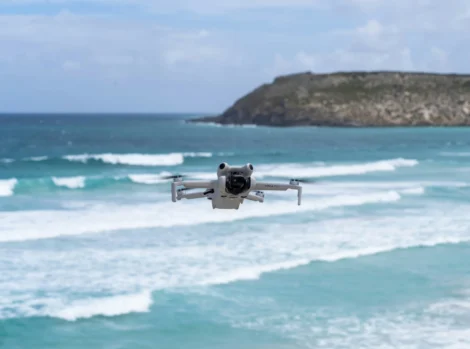
To fly drones commercially in the U.S., you must hold an FAA Remote Pilot Certificate.
This is often called:
- FAA UAV Pilot Certification
- Part 107 license
The FAA UAV pilot certification proves you understand:
- Airspace rules
- Weather effects
- Emergency procedures
- Aviation safety
- Drone regulations
Without it, you cannot legally make money flying drones.
Drone Launch Academy specializes in helping pilots pass this exam quickly and confidently through structured training and our Part 107 test prep course. *Pass the test or your money back guaranteed.
If you do not pass the FAA Unmanned Aircraft Knowledge Exam, submit a refund request at dronelaunchacademy.com/107refund to receive a refund for your course purchase and a credit for your exam registration fee. Refund requests must be submitted within 90 days of your FAA exam date.
How to Become a UAV Pilot (Step-by-Step)
If you’re wondering how to be a uav pilot, the process is more straightforward than most people expect.
Here’s the proven path:
- Meet Eligibility Requirements: Be at least 16, able to read/write/speak English, and physically/mentally fit for safe operation.
- Study for the Part 107 Exam: Learn airspace, weather, regulations, and operations using FAA guides or online courses.
- Get an FAA Tracking Number (FTN): Create a profile on the IACRA website to get your FTN.
- Schedule & Pass the UAG Test: Book the “Unmanned Aircraft General – Small (UAG)” test at an FAA-approved center. It’s a 60-question test; score 70%+ to pass.
- Apply for Your Certificate: Log back into IACRA and complete Form 8710-13 for your Remote Pilot Certificate.
- Get Your License: After TSA vetting, you’ll get a temporary certificate, then the permanent one by mail.
- Register Your Drone: Register any drone over 0.55 lbs (250g) on the FAA DroneZone.
Learning how to be a UAV pilot isn’t about buying the most expensive drone—it’s about getting the right education and practice.
Drone Pilot Training: What You Actually Need

Professional pilots don’t wing it—they train.
High-quality drone pilot training teaches you:
- Safety procedures
- Camera and sensor operation
- Mapping and inspection workflows
- Real-world mission planning
- Drone mapping and modeling fundamentals
Effective drone pilot training prepares you for real jobs, not just the test.
This is where structured programs like Drone Launch Academy stand out—because they teach skills employers and clients actually need.
Drone Pilot Training Cost (What to Expect)
Costs vary depending on depth and support, but generally:
- Basic online courses: a couple of hundred dollars
- Full certification + skill training: $300–$1000+
- Advanced industry training: varies by specialization
Think of drone pilot training costs as an investment. One paid job can often cover the cost of training. The key is choosing training that leads to income—not just a certificate.
Choosing the Right Drone Pilot Training Course
Not all training is equal.
A good drone pilot training course should:
- Prepare you for the FAA exam
- Teach real-world flying scenarios
- Cover industry use cases
- Include updated regulations
- Offer community or instructor support
A strong drone pilot training course doesn’t just help you pass—it helps you succeed long-term. Pilots who want to increase their earning potential often invest in an advanced drone mapping course to learn complex workflows used in construction, surveying, and engineering projects.
Drone Launch Academy follows a step-by-step system:
- Learn to fly
- Get certified
- Build industry skills
- Grow a business or career
Why Thousands of Pilots Choose Drone Launch Academy
Drone Launch Academy isn’t just another online drone course—it’s a launchpad for real skills, real certifications, and real opportunities.
Unlike generic drone training programs that focus on theory alone, Drone Launch Academy is built by industry professionals who actively work with drones in the field. Every lesson is designed to help you pass certifications faster, fly with confidence, and turn drone skills into income.
What sets Drone Launch Academy apart:
- Practical, real-world training—not just test prep
- Courses taught by experienced drone professionals
- Clear explanations in plain English (no tech overload)
- Flexible, self-paced learning that fits your schedule
- Trusted by tens of thousands of drone pilots worldwide
If you’re serious about flying smarter, getting certified faster, and turning drones into a career or business asset, Drone Launch Academy is built for you.
Important Information About Our Drone Launch Pass Guarantee
To be eligible for the Drone Launch Pass Guarantee, you must meet the following requirements before taking the FAA Unmanned Aircraft Knowledge Exam:
- Complete all course modules
- Earn a Drone Launch Academy Certificate of Completion by scoring 85% or higher on one of the Final Exams
Achieve a score of 85% or higher on one of our practice Final Exams within 7 days of your official FAA unmanned aircraft knowledge exam
Want to turn drone skills into paying clients?
Getting certified is only the first step. If you want a clear roadmap for pricing, outreach, client acquisition, and building a profitable drone business, Drone to $1K walks you through the business-building process step by step.
Download the Drone Business Launch Checklist
Before you spend more money on gear, map out the business basics: certification, niche, services, pricing, insurance, deliverables, outreach, and follow-up. This checklist helps you turn a drone idea into a focused business plan.
Need your Part 107 before you start earning with your drone?
If you plan to fly drones for paid work or in support of a business, your next step is earning your FAA Part 107 Remote Pilot Certificate. Drone Launch Academy’s FAA Part 107 Exam Prep Course is built to help you pass the exam on your first try with structured lessons, practice questions, and lifetime access.
Making money with a drone becomes more realistic when you stop thinking like a general hobbyist and start thinking like a service provider. Choose a niche, understand what clients actually need, build a simple offer, and start consistent outreach. If you want a guided business-building system, Drone to $1K is the next step after certification.


