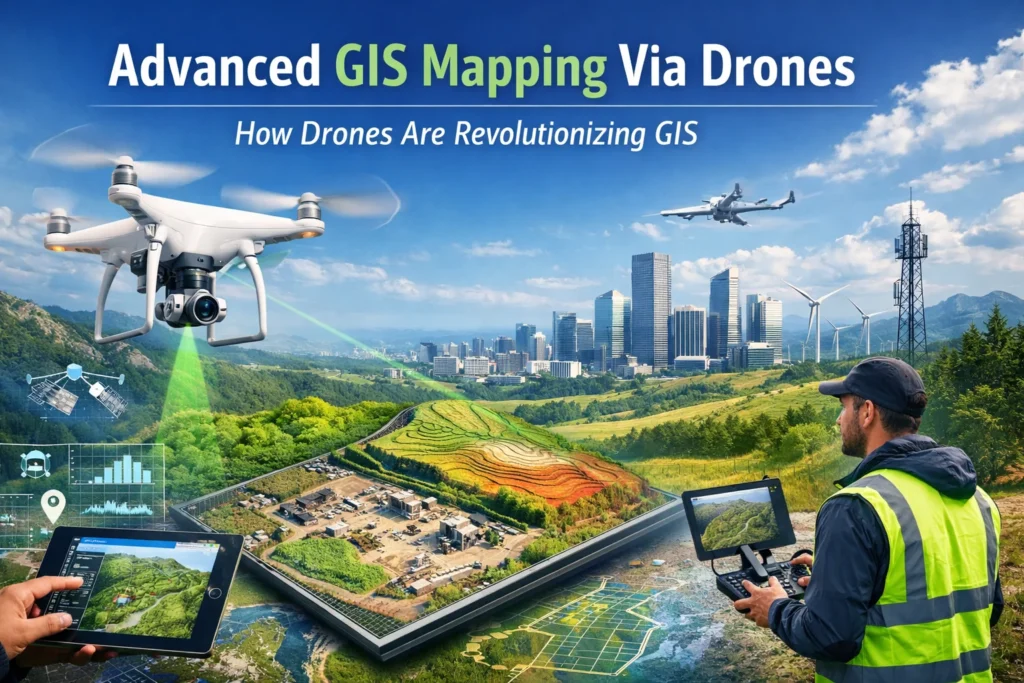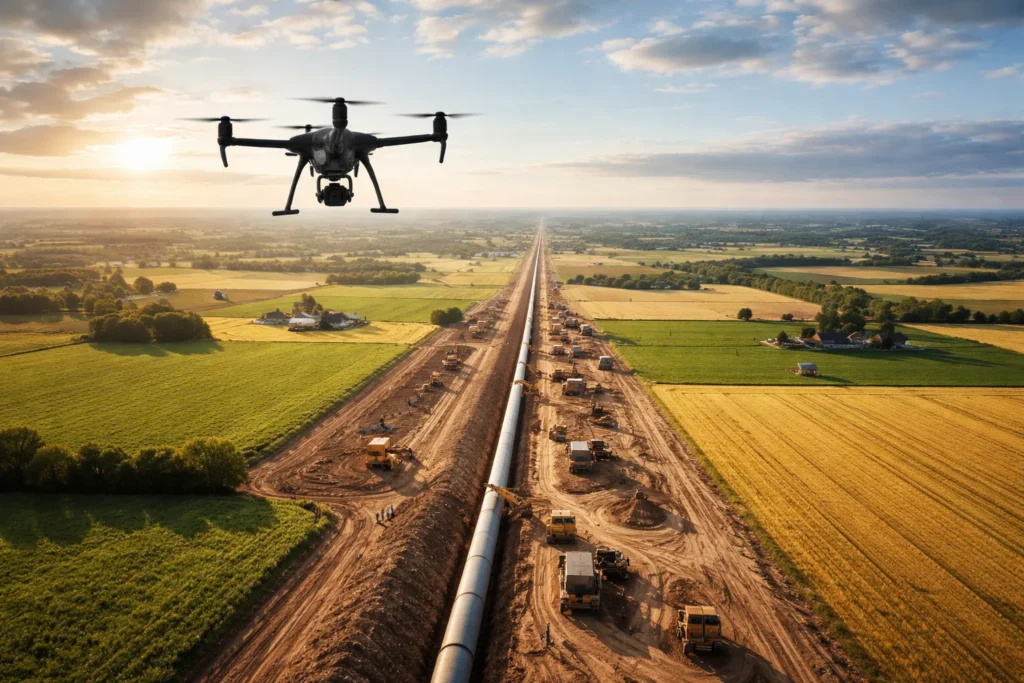
The advantages of drones span nearly every industry, from farming fields to disaster zones, making them one of the most versatile and rapidly adopted technologies of the past decade. While they began as military tools, civilian and commercial applications have exploded in recent years.
The benefits of UAV (unmanned aerial vehicle) technology go far beyond novelty. Drones save time, reduce costs, improve safety, and collect data with a level of precision that traditional methods simply cannot match.
Drone vs. Traditional Methods: At a Glance
| Factor | Traditional Method | Drone Advantage |
| Cost | High (crew, equipment, aircraft) | Lower operational cost |
| Safety | Human exposure to hazards | Remote operation |
| Speed | Days to weeks | Hours to days |
| Data Precision | Limited by physical access | High-resolution, multi-sensor |
| Coverage Area | Restricted by terrain | Large-scale in a single flight |
According to Grand View Research, the global drone market is projected to reach USD 182.45 billion by 2033, underscoring just how rapidly adoption is accelerating. The opportunities are massive, but you must be FAA-certified to fly commercially.
Key Takeaways
- Drones save time, reduce costs, improve safety, and collect data with a level of precision that traditional methods simply cannot match.
- Infrastructure inspections cost 4x less compared to traditional methods.
- Inspection time drops from days to hours, and workers stay safely on the ground.
- Construction firms save tens of thousands annually by switching to drone-based surveys.
- Multispectral and thermal cameras detect crop stress, corrosion, and damage invisible to the naked eye.
- Drones cover hundreds of acres in a single flight, terrain that would require entire ground crews.
- Workers are removed entirely from hazardous environments: power lines, wildfire perimeters, unstable structures.
- Insurance claim processing drops from weeks to days.
- Aerial photography and video at a fraction of the cost of traditional helicopter methods.
- Medical supply delivery by drone has reduced maternal mortality in remote communities.
- Drones have contributed to saving 1,000+ lives globally in disaster response.
- The FAA has certified 368,000+ remote pilots in the US as of 2023, and businesses still need more.
- Most drone disadvantages can be addressed with proper training, the right equipment, and an understanding of the rules before you fly.
The Core Advantages of Drones
Whether you are managing farmland, overseeing a construction site, or coordinating emergency response, UAVs offer measurable improvements over conventional approaches. Here are the most significant benefits driving adoption.
Drones Remove Humans from Hazardous Environments
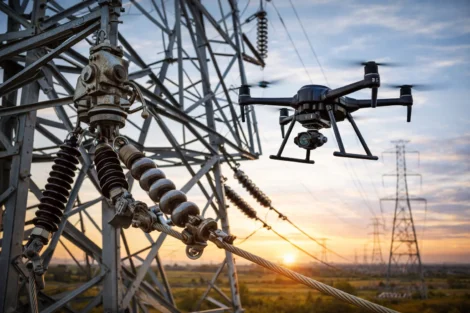
One of the most compelling UAV benefits is removing workers from dangerous situations entirely. No more sending people into:
- Damaged bridges or unstable rooftops
- High-voltage power line corridors
- Active wildfire perimeters
Drones survey hazardous sites after storms, and thermal sensors detect overheating components in electrical systems. In every case, the risk stays with the machine, not the operator.
Drone Technology in Agriculture and Precision Farming
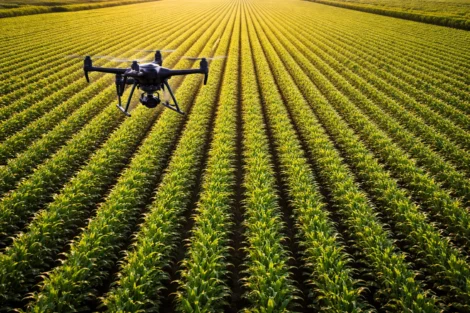
The adoption of drone technology in agriculture has fundamentally changed how farmers manage large properties. The USDA’s Natural Resources Conservation Service has confirmed that drones provide a faster, safer, and more accurate method of data acquisition for agricultural surveys.
UAVs equipped with multispectral and thermal cameras can detect early signs of crop stress, disease, or pest infestation across hundreds of acres in a single flight. Drone technology in farming also enables precision application of fertilizers and pesticides, targeting only affected areas rather than treating entire fields uniformly. The result is less chemical use, lower input costs, and improved yields.
Ready to help farmers work smarter? Start mapping crops like a pro →
Drones for Infrastructure Inspection
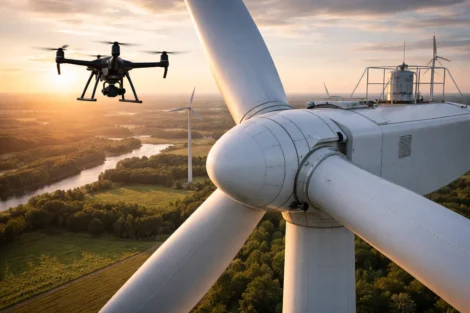
Cost-effective drone inspection methods have changed what’s possible for industries that depend on hazardous, time-consuming manual inspections. Bridges, power lines, wind turbines, cell towers, and pipelines all require regular inspection, but accessing them safely and efficiently has historically been a major operational challenge.
With drones, companies can fly close to transmission lines and towers to capture high-resolution images and thermal data that reveal damage, corrosion, or wear before they become a failure.
- Teams can identify issues early and schedule targeted maintenance rather than relying on broad, expensive inspection schedules.
- Inspection time drops from days to hours, and workers stay safely on the ground.
- UAVs complete infrastructure inspections at roughly one-quarter the cost of manual methods.
Drones for Construction and Worker Safety
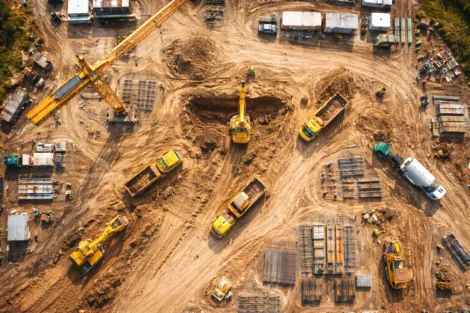
The use of unmanned aerial vehicles in construction and worker safety has become standard practice on large job sites. Project managers use drones for site surveys, progress monitoring, 3D mapping, and documentation, tasks that once required dedicated survey teams and significant time.
From a safety perspective, UAVs allow supervisors to monitor active hazards, identify unsafe practices, and assess site conditions after incidents without putting additional personnel at risk.
Drones also generate up-to-date aerial imagery that replaces outdated maps and satellite photos, giving teams accurate, real-time visibility from the first day of a project through to completion.
Construction firms are cutting survey costs by tens of thousands of dollars. Get the mapping skills they’re hiring for →
Drone Surveillance and Security Services
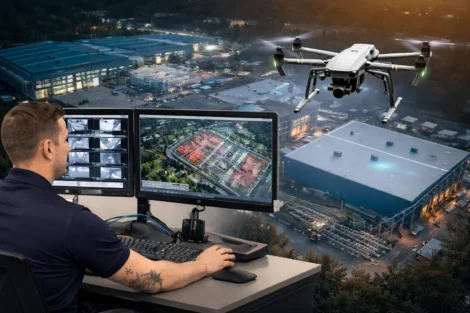
Drones for surveillance and security solutions have emerged as a powerful alternative to static cameras and patrol-based monitoring. Businesses, event organizers, and government agencies now use UAVs equipped with 360-degree HD cameras and thermal imaging to monitor large areas that would require dozens of personnel to cover on foot.
Drones for enhanced security and surveillance offer advantages that fixed cameras simply cannot match:
- Real-time aerial feeds with 360-degree HD and thermal imaging
- Fast incident response deployed on short notice, repositioned instantly
- 24/7 operation, including low-light and nighttime monitoring
Search and Rescue Drones
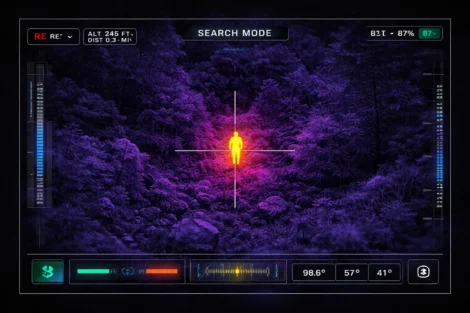
Search and rescue is where drones save lives. Drones provide an aerial perspective that ground teams cannot replicate, enabling responders to cover vast areas quickly and locate missing persons in dangerous or physically inaccessible terrain.
A search and rescue drone equipped with thermal imaging can:
- Continue operations after dark
- Detect heat signatures in dense forest, mountains, or flood zones
- Provide real-time video feeds
giving incident commanders immediate situational awareness without requiring them to enter hazardous areas.
According to research, drones have contributed to saving more than 1,000 lives globally in disaster response scenarios as of 2023.
Aerial Photography
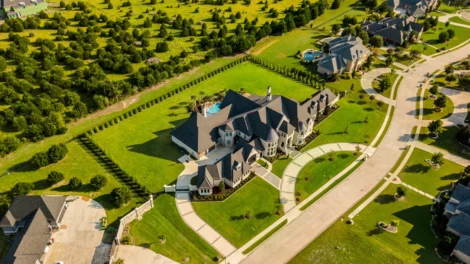
The advantages of aerial photography via drones extend well beyond scenic images.
- In real estate, aerial footage has become a standard marketing tool, giving buyers a complete view of properties, surrounding land, and neighborhood context that ground-level photography cannot provide.
- In construction, media production, and environmental monitoring, high-resolution aerial imagery supports accurate documentation, creative storytelling, and data-driven analysis.
Drones deliver this capability at a fraction of the cost of traditional helicopter-based aerial photography, making it accessible to small businesses and independent operators for the first time.
Check out Drone Launch Academy’s Aerial Photo Pro and Real Estate Media Pro courses to become an expert!
Drone Delivery
The benefits of drone delivery are becoming increasingly concrete as regulatory frameworks catch up with the technology.
In healthcare, drone delivery benefits are already measurable: medical supplies, blood products, and vaccines are being transported to remote or underserved communities in countries such as Rwanda, where the initiative has reduced maternal mortality and improved emergency response times.
In commercial logistics:
- Delivery drones reduce reliance on ground vehicles
- Produce lower emissions
- Can reach destinations in dense urban environments or remote areas where traditional last-mile delivery is slow and expensive.
Commercial Applications of Drones
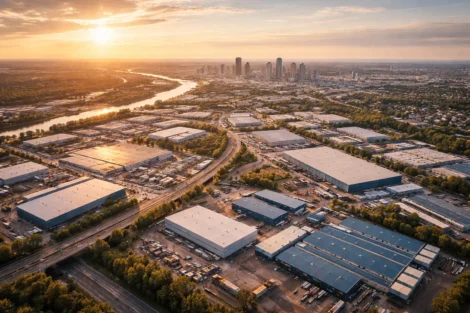
Drones work across nearly every industry. Across insurance, energy, environmental conservation, and media, UAVs are replacing manual processes that were expensive, slow, or dangerous.
- Insurance companies deploy drones to assess property damage after storms, reducing claim processing times from weeks to days.
- Energy firms use them to inspect pipelines and wind turbines for faults before they escalate.
- Conservation organizations monitor wildlife and fragile ecosystems from above without disturbing habitats.
Municipalities are also deploying drones for traffic monitoring, bridge inspections, and emergency dispatch, reducing response times and operational costs across public-sector services that were previously difficult to scale. The common thread in every case is the same: faster data, lower costs, and safer operations.
These industries need pilots. The opportunity is now. Land high-paying clients with our Drone to $1K course →
Disadvantages of Drones
- Limited battery life / short flight time (20–60 min)
- Weather sensitivity (wind, rain, cold)
- FAA regulations & compliance complexity
- Privacy concerns (cameras, surveillance)
- High upfront cost (equipment, software, insurance)
- Operational range limitations
- Collision risk
- Sensor limitations
- Maintenance and repairs
- Steep learning curve/skill requirement
- Limited loading capacity
- Cybersecurity / GPS signal vulnerability
- Noise pollution
- Wildlife disturbance
Every one of these challenges has a known solution, and most come down to proper training, the right equipment, and understanding the rules before you fly
The Drone Industry Is Booming – Here’s How to Get Your Share
The benefits of drones are concrete, measurable, and growing more accessible as the technology matures. The opportunity is real, but it only belongs to pilots who are trained, certified, and ready to work.
The drone industry is growing. Are you positioned to benefit from it?
Drone Launch Academy helps people become UAV pilots with real industry training and certifications. Whether you’re starting from zero or leveling up an existing skill set, Drone Launch Academy gives you the shortest path from curious to certified to paid.
The pilots getting in now are the ones who will own this market.
FAQs
What is the biggest advantage of drones? Speed and cost. Drones complete in hours what ground crews take days to finish, at a fraction of the price.
What industries use drones the most? Agriculture, construction, infrastructure inspection, real estate, and public safety are the top five.
Are drones worth it for business? Yes. Infrastructure inspections alone cost 4x less with drones, and businesses across every sector are actively hiring certified pilots.
Ready to turn drone interest into drone skills?
Whether you are just getting started or looking to specialize, Drone Launch Academy has a course for your next step. Explore the full DLA course library or start with the beginner-friendly Drones 101 course.
Download the Drone Business Launch Checklist
Before you spend more money on gear, map out the business basics: certification, niche, services, pricing, insurance, deliverables, outreach, and follow-up. This checklist helps you turn a drone idea into a focused business plan.
Need your Part 107 before you start earning with your drone?
If you plan to fly drones for paid work or in support of a business, your next step is earning your FAA Part 107 Remote Pilot Certificate. Drone Launch Academy’s FAA Part 107 Exam Prep Course is built to help you pass the exam on your first try with structured lessons, practice questions, and lifetime access.
Drones are changing the way industries collect data, manage assets, and deliver services. Whether you are interested in inspection, mapping, media, agriculture, or public safety, there is a drone application that fits your goals. If you are ready to explore what a drone career or business could look like, Drone Launch Academy’s course library is a good place to start.