
Drone Laws in Mississippi
Your complete 2026 guide to flying drones legally in Mississippi.
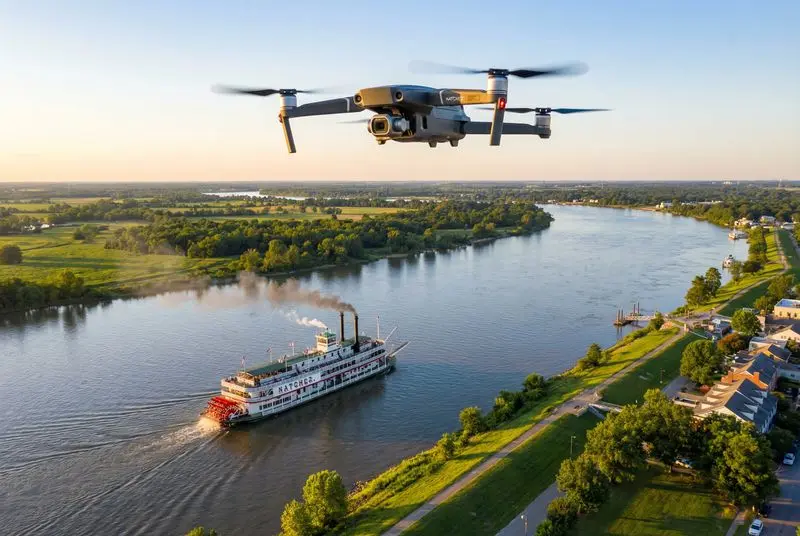
From the rolling hills of the north to the Gulf Coast beaches, Mississippi offers a diverse and beautiful landscape for drone pilots. As drones, or Unmanned Aircraft Systems (UAS), become more accessible and capable, their popularity for both recreation and business is soaring across Mississippi.This guide provides an overview of the drone laws in Mississippi, covering everything from federal FAA regulations to state-specific statutes. We’ll explore where you can fly, what to do to stay out of trouble, and how to operate your drone responsibly in Mississippi.
Federal Drone Laws That Apply in Mississippi
Regardless of where you are in the United States, including Mississippi, all drone operations fall under the jurisdiction of the Federal Aviation Administration (FAA). These federal laws provide a baseline for safe and responsible drone use. It’s essential to understand these rules before you fly, as they apply to everyone, from the casual hobbyist to the certified commercial operator.
For Recreational Pilots
Flying for fun is one of the most popular ways to enjoy a drone. The FAA has a specific set of rules for these recreational flyers, established under Section 44809 of the FAA Reauthorization Act of 2018. Here’s a more detailed look at what you need to do:
- Take The Recreational UAS Safety Test (TRUST): This is a mandatory requirement for all recreational flyers, regardless of the weight of their drone. The test is free, can be taken online through multiple FAA-approved providers, and covers basic safety and airspace knowledge. Once you pass, you’ll receive a certificate that you must be able to provide to law enforcement or FAA personnel upon request. [1]
- Register Your Drone: Any drone weighing more than 0.55 pounds (250 grams) and less than 55 pounds must be registered. You can complete the registration process online via the FAA DroneZone. You’ll receive a registration number that must be marked on the exterior of your drone. This registration is valid for three years and costs $5. [2]
- Fly Below 400 Feet: Keep your drone at or below 400 feet above the ground.
- Keep Your Drone in Sight: Always maintain a visual line of sight with your drone.
- Follow Airspace Rules: Do not fly in controlled airspace (around airports) without authorization. Use the B4UFLY app to check airspace restrictions. [3]
- Respect Privacy: Do not fly over private property or take photos or videos of people without their permission.
For Commercial Pilots
Any flight that is not strictly for recreational purposes is considered a commercial operation. This includes activities like taking photos for a real estate listing, conducting inspections for a construction company, or even creating content for a monetized YouTube channel. These flights are governed by the FAA’s Small UAS Rule, also known as Part 107. The requirements are more stringent than for recreational flyers:
- Obtain a Remote Pilot Certificate: To become a certified commercial drone pilot, you must be at least 16 years old, pass the FAA’s Aeronautical Knowledge Test (the Part 107 exam), and undergo a background check by the Transportation Security Administration (TSA). The certificate is valid for two years, and you must pass a recurrent knowledge test every 24 months to keep it active.
- Register Your Drone: All commercial drones must be registered with the FAA.
- Follow all Part 107 operational rules: These include altitude and speed restrictions, and rules about flying over people and at night.
Mississippi-Specific Drone Laws
While the FAA governs the skies, the state of Mississippi has enacted its own laws that primarily address ground-level concerns like privacy, trespass, and voyeurism. These state-level statutes are crucial for every drone pilot to understand, as they carry significant legal consequences.
Trespass Laws (HB 1370 – 2024)
A significant development in Mississippi drone law came in 2024 with the passage of House Bill 1370. This bill didn’t create a new, separate drone law, but instead amended several existing trespass statutes to explicitly include unmanned aircraft. The key takeaway is that flying a drone over private property without permission with the intent to conduct surveillance is now considered a form of trespass. This applies to enclosed lands, general private property, and even individual buildings. The law’s focus on “intent to conduct surveillance” is important; simply flying over a property by accident may not constitute a violation, but hovering, recording, or appearing to monitor the property or its occupants certainly could. [4]
Voyeurism Law (Mississippi Code § 97-29-61)
Mississippi’s voyeurism statute, often called the “Peeping Tom” law, was amended to address modern technology, including drones. Under Mississippi Code § 97-29-61, it is a felony to use any instrumentality, including a drone, to look into an area where a person has a reasonable expectation of privacy. This includes places like bedrooms, bathrooms, or changing rooms. The law is violated if the act is done for a “lewd, licentious and indecent purpose” with the intent to spy on the occupants. This is a serious offense, and a conviction can lead to up to five years in prison, or even ten years if the victim is a minor. [5]
Local and City Drone Regulations in Mississippi
One of the complexities of drone law is the patchwork of local rules that can exist at the city and county level. However, Mississippi has taken steps to prevent this. The state has a preemption law, which means that only the state government, not local municipalities, can create laws or regulations regarding drone use. This is a significant advantage for drone pilots in Mississippi, as it prevents a confusing web of different rules from one town to the next. While this preemption is in place, it is still wise to be aware of local policies for parks and public spaces, which may have their own rules about launching and landing drones on their property. Always check for posted signs and local park rules before flying.
Where You Can and Can’t Fly in Mississippi
Knowing where you can legally operate your drone is just as important as knowing how to fly it. While Mississippi’s preemption law simplifies things by centralizing regulations at the state level, there are still many location-based rules, stemming from federal regulations and property management policies, that every pilot must respect.
- State Parks: The Mississippi Department of Wildlife, Fisheries, and Parks has its own policies regarding drone use. As a general rule, launching, landing, or operating a drone within state parks, wildlife management areas (WMAs), and state-owned lakes is restricted. The primary concerns are the protection of wildlife from harassment and ensuring the peace and safety of other visitors. Before you even consider flying in one of these beautiful areas, you must check directly with the park’s management for their specific rules and to see if a special use permit is required and available.
- National Parks and Federal Lands: This is a strict, nationwide rule. The National Park Service (NPS) has banned the use of drones in all areas under its jurisdiction. This includes well-known sites like the Natchez Trace Parkway and Gulf Islands National Seashore. The ban is in place to protect wildlife, preserve the natural quiet and scenery, and ensure visitor safety. Flying a drone in a National Park is a federal offense.
- Airports and Controlled Airspace: The airspace around airports is among the most heavily regulated. The FAA prohibits drone flights in controlled airspace (Class B, C, D, and E surface areas) without prior authorization. To fly in these zones, you must use the Low Altitude Authorization and Notification Capability (LAANC) system or the FAA DroneZone portal to request permission. The B4UFLY app is an essential tool for visualizing these airspace boundaries. Flying near an airport without authorization is extremely dangerous and carries severe penalties.
- Critical Infrastructure: Mississippi law is very clear about protecting its critical infrastructure. It is illegal to fly a drone over facilities such as power plants, water treatment facilities, refineries, and correctional facilities without explicit written permission from the owner. This is a security measure to prevent surveillance or potential attacks on these sensitive locations.
- Stadiums and Sporting Events: The FAA implements Temporary Flight Restrictions (TFRs) over stadiums during major sporting events, including NFL, MLB, NCAA Division I football, and major motor speedway events. These TFRs typically extend in a 3-nautical-mile radius from the stadium and are active from one hour before the event until one hour after. Flying a drone within one of these TFRs is a serious violation.
Penalties and Enforcement
Both federal and state authorities have the power to enforce drone laws, and the consequences for violations can be severe. Ignorance of the law is not considered a valid defense, so it is your responsibility as a pilot to understand and follow all applicable rules.
- Federal Penalties: The FAA takes violations of its regulations very seriously. Fines can be substantial, with penalties for a single careless or reckless operation often exceeding $1,500. For more egregious offenses, such as flying in a TFR or interfering with emergency response operations, fines can reach up to $36,770 per violation. In cases where a drone operator knowingly or willfully endangers the national airspace, criminal charges can also be pursued.
- State Penalties: Violating Mississippi’s state laws carries its own set of penalties. A conviction for trespass under the statutes amended by HB 1370 can result in fines and potential jail time. A conviction for felony voyeurism under § 97-29-61 is even more serious, carrying a potential prison sentence of up to five years. These penalties underscore the importance of respecting privacy and property rights when flying your drone.
Tips for Staying Compliant
- Always check the B4UFLY app before you fly.
- Register your drone and carry proof of registration.
- Understand and follow all federal and state laws.
- Respect the privacy of others.
- Never fly under the influence of drugs or alcohol.
Helpful Resources
- FAA DroneZone
- B4UFLY App
- Mississippi Legislature
- Drone Laws by State Directory
- Drone Laws in Louisiana
- Drone Laws in Alabama
- Drone Launch Academy Part 107 Course
References
[1] FAA TRUST: https://www.faa.gov/uas/recreational_flyers/trust
[2] FAA Drone Registration: https://faadronezone.faa.gov/#/
[3] B4UFLY App: https://www.faa.gov/uas/getting_started/b4ufly
[4] Mississippi HB 1370: https://billstatus.ls.state.ms.us/documents/2024/html/HB/1300-1399/HB1370PS.htm
[5] Mississippi Code § 97-29-61: https://law.justia.com/codes/mississippi/title-97/chapter-29/in-general/section-97-29-61/
← Back to Drone Laws by State Directory
Disclaimer: Drone laws are constantly evolving. While we strive to keep this guide updated, you should always verify local ordinances and check the FAA B4UFLY app before flying. This page is for educational purposes and does not constitute legal advice.
Sources: FAA UAS | NCSL State Drone Law Landscape | FAA Remote ID | FAA Part 107