
Drone Laws in Arizona
Your complete 2026 guide to flying drones legally in Arizona.
Navigating the skies in Arizona with a drone offers impressive opportunities for notable aerial photography and unique recreational flying experiences. However, before you launch, it’s crucial to understand the legal landscape. Arizona has a specific set of rules that every unmanned aerial system (UAS) pilot, whether flying for fun or for work, must follow. This guide provides an overview of the drone laws in Arizona, ensuring you can operate safely and responsibly.
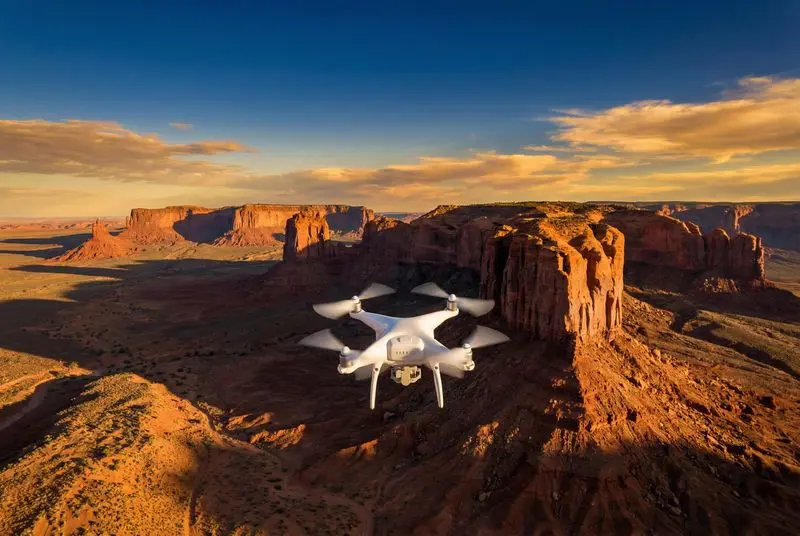
From understanding the overarching federal regulations set by the Federal Aviation Administration (FAA) to diving into the specifics of Arizona’s state statutes, this guide is your essential resource. We will cover everything from registration and certification requirements to where you can and cannot fly. For both commercial and recreational pilots, being well-informed is the first step toward a successful and compliant flight. Arizona’s legal framework has some unique features, including a significant state preemption law that simplifies local regulations, which we will explore in detail.
Federal Drone Laws That Apply in Arizona
Before diving into Arizona’s specific statutes, it’s essential to remember that all drone operations in the United States fall under the jurisdiction of the Federal Aviation Administration (FAA). These federal rules provide the foundation for safe and legal drone operation everywhere, including Arizona.
For commercial drone pilots operating for business purposes, the FAA’s Part 107 regulations are the standard. This requires pilots to obtain a Remote Pilot Certificate by passing the Part 107 Aeronautical Knowledge Test. The certificate must be renewed every 24 months. Part 107 pilots must adhere to a strict set of operational rules, including altitude limits and airspace restrictions, though some rules can be waived by the FAA under specific circumstances.
For recreational flyers, the rules are more straightforward but just as important. If you are flying purely for fun, you must take and pass The Recreational UAS Safety Test (TRUST). This is a free online test that provides education on safety and regulatory requirements. Proof of passing the TRUST test must be available whenever you fly.
Here are the key federal regulations that all pilots must follow:
- Drone Registration: Any drone weighing more than 0.55 pounds (250 grams) must be registered with the FAA. You can register your drone through the FAA DroneZone website. Your registration number must be clearly marked on the exterior of the aircraft.
- Remote ID: As of September 16, 2023, most drones required to be registered must also broadcast Remote ID information. This acts as a digital license plate, providing identification and location information to other parties. The only exception is if you are flying within an FAA-Recognized Identification Area (FRIA).
- Fly Below 400 Feet: Drones must be flown at or below 400 feet above ground level (AGL) in uncontrolled (Class G) airspace.
- Maintain Visual Line of Sight (VLOS): You must be able to see your drone with your own eyes at all times. Using a visual observer to assist is permitted, but you cannot rely solely on a camera feed or monitor.
- Airspace Authorization: Flying in controlled airspace (Class B, C, D, and E) requires authorization. For most pilots, this is obtained instantly through the Low Altitude Authorization and Notification Capability (LAANC) system, accessible via many third-party drone apps.
- Respect No-Fly Zones: Never interfere with manned aircraft, and stay clear of airports, emergency response efforts, and temporary flight restrictions (TFRs), which are often in place over major sporting events or other sensitive locations.
For the most current information and to manage your registrations and authorizations, always refer to official FAA resources like the FAA DroneZone and the B4UFLY app.
Arizona-Specific Drone Laws
Arizona has taken a unique and streamlined approach to regulating drones at the state level. The primary piece of legislation that governs all UAS operations is Arizona Revised Statute (A.R.S.) § 13-3729. This law, originally passed as SB 1449, not only sets the rules for the state but also significantly limits the ability of local governments to create their own drone ordinances.
State Preemption: A Uniform Law for Arizona
The most important feature of A.R.S. § 13-3729 is its state preemption clause. Subsection C of the law states:
“Except as authorized by law, a city, town or county may not enact or adopt any ordinance, policy or rule that relates to the ownership or operation of an unmanned aircraft or unmanned aircraft system…” [1]
This means that Arizona has a single, statewide law for drone operations, and pilots do not need to worry about a confusing patchwork of different rules from one city or county to the next. Any local drone ordinance is considered void under this statute. The only exception is that local governments can regulate the takeoff and landing of drones within parks and preserves that they own.
What Arizona Law Prohibits
A.R.S. § 13-3729 outlines several key restrictions. Violating these is a Class 1 Misdemeanor:
- Interference with Emergency Services: It is illegal to operate a drone in a way that interferes with law enforcement, firefighters, or any other emergency services operation.
- Violation of FAA Rules: Any operation that is prohibited by federal FAA regulations is also illegal under Arizona state law.
Flying Near Critical Infrastructure
The law takes a much more serious stance on flights near sensitive locations. It is a Class 6 Felony to operate a drone to intentionally photograph or loiter over or near a “critical facility” in the furtherance of a criminal offense. A second violation is elevated to a Class 5 Felony.
Critical facilities are broadly defined and include:
- Petroleum refineries and chemical manufacturing plants
- Water treatment facilities and dams
- Power plants, electrical substations, and high-voltage transmission lines
- Jails, prisons, and courts
- Federal or state military installations
New Law Enforcement Powers (HB 2755)
Reflecting a proactive approach to security concerns, a 2025 law, HB 2755, grants law enforcement the authority to damage or disable a drone that is being used to commit a crime or is carrying contraband, such as illegal drugs. This law was passed to help combat the use of drones by cartels for smuggling across the border [2].
Local and City Regulations
Thanks to Arizona’s state preemption law (A.R.S. § 13-3729), pilots have the benefit of regulatory consistency across the state. You generally do not need to research specific drone ordinances for cities like Phoenix, Tucson, or Scottsdale, as the state law supersedes any local attempts to regulate drone operations.
However, the law provides one specific exception: parks and preserves. Municipalities and counties retain the right to regulate the takeoff and landing of drones within parks they own and manage. This means that while the act of flying over a park is governed by state and federal law, you may be prohibited from launching or landing your drone from within the park boundaries.
Because of this, you should always check the rules for specific parks before planning a flight. For example:
- Maricopa County Parks: The county, which includes the greater Phoenix area, explicitly prohibits the use of drones in its entire regional park system.
- City of Phoenix: The Parks and Recreation Department has designated specific fields in some parks as being suitable for model aircraft and drone use, but operation is generally restricted elsewhere.
Always look for posted signage at park entrances or check the official website for the parks and recreation department of the specific city or county you are in.
Where You Can and Can’t Fly in Arizona
Understanding where you are legally allowed to fly is one of the most important responsibilities of any drone pilot. While Arizona’s preemption law simplifies things, there are still many statewide and federal restrictions to be aware of.
Prohibited Areas
- National Parks: The National Park Service has a nationwide ban on drone flights within all national parks, including the Grand Canyon, Saguaro, and Petrified Forest National Parks. Flying a drone in these areas is illegal and carries significant federal penalties.
- State Parks: Drone use is prohibited in all of Arizona’s State Parks for recreational purposes. Commercial drone flights may be allowed but require a special use permit from the park.
- Critical Infrastructure: As detailed in A.R.S. § 13-3729, you must avoid flying over or near critical infrastructure like power plants, water treatment facilities, and military bases.
- Airports: Do not fly within 5 miles of an airport without proper authorization through the LAANC system.
- Stadiums and Sporting Events: The FAA implements Temporary Flight Restrictions (TFRs) over stadiums during major sporting events. Always check for TFRs before flying.
- Wilderness Areas: Drones are generally banned in federally designated wilderness areas to protect wildlife and preserve the natural environment.
Popular Flying Locations
While many parks are off-limits, Arizona still offers vast open spaces and beautiful landscapes perfect for drone flying, especially in the uncontrolled (Class G) airspace that covers much of the state. Areas managed by the Bureau of Land Management (BLM) are often great options, but be sure to check for any specific restrictions for that area. Always fly responsibly and respect both the environment and private property rights.
Penalties and Enforcement
Violating drone laws in Arizona can lead to severe consequences from both state and federal authorities.
- State Penalties: Under A.R.S. § 13-3729, interfering with emergency services is a Class 1 Misdemeanor. Flying over critical infrastructure for criminal purposes is a Class 6 Felony, which can result in significant fines and prison time.
- Federal Penalties: The FAA has the authority to issue substantial fines for violations of its regulations. These can range from $1,771 for minor infractions to over $36,000 per violation for more serious offenses. Endangering manned aircraft can also lead to criminal prosecution.
Tips for Staying Compliant
- Check B4UFLY: Use the FAA’s B4UFLY app before every flight to check for airspace restrictions and advisories.
- Register Your Drone: Ensure any drone over 250g is registered and marked.
- Get Certified: Carry your TRUST completion certificate for recreational flights or your Part 107 certificate for commercial work.
- Respect Privacy: Do not fly over private property without permission or in a way that could be considered harassment or voyeurism.
- Check Park Rules: Before flying in or near a local park, verify its rules on drone takeoff and landing.
- Maintain VLOS: Always keep your drone within your visual line of sight.
Helpful Resources
- FAA DroneZone: For registration and official information.
- B4UFLY App: Essential for pre-flight airspace checks.
- Arizona State Legislature – A.R.S. § 13-3729: Read the full text of the state drone law.
- Drone Launch Academy Part 107 Course: The best resource for preparing for your commercial drone pilot certificate.
Disclaimer: The information on this page is for informational purposes only and does not constitute legal advice. Drone laws are subject to change. Always check with the FAA and local authorities for the most current regulations before flying.
Internal Links
- Return to the main Drone Laws by State Directory.
- Learn about drone laws in neighboring states: California, Nevada, and Utah.
References
[1] Arizona State Legislature. (2016). A.R.S. § 13-3729: Unlawful operation of model or unmanned aircraft; state preemption; classification; definitions. Retrieved from https://www.azleg.gov/ars/13/03729.htm
[2] FOX 10 Phoenix. (2025, May 12). HB 2755: New AZ law to allow law enforcement to shoot down drug-carrying drones near border. Retrieved from https://www.fox10phoenix.com/news/hb-2755-new-az-law-allow-law-enforcement-shoot-down-drug-carrying-drones-border
← Back to Drone Laws by State Directory
Disclaimer: Drone laws are constantly evolving. While we strive to keep this guide updated, you should always verify local ordinances and check the FAA B4UFLY app before flying. This page is for educational purposes and does not constitute legal advice.
Sources: FAA UAS | NCSL State Drone Law Landscape | FAA Remote ID | FAA Part 107