
Drone Laws in Minnesota
Your complete 2026 guide to flying drones legally in Minnesota.
Navigating the skies of the “Land of 10,000 Lakes” with a drone offers impressive opportunities for notable aerial photography and unique perspectives. However, before you launch your drone in Minnesota, it’s crucial to understand the legal landscape. Both recreational and commercial drone pilots must adhere to a combination of federal, state, and local regulations to ensure safe and legal operation. Understanding the drone laws in Minnesota is the first step to a successful flight.
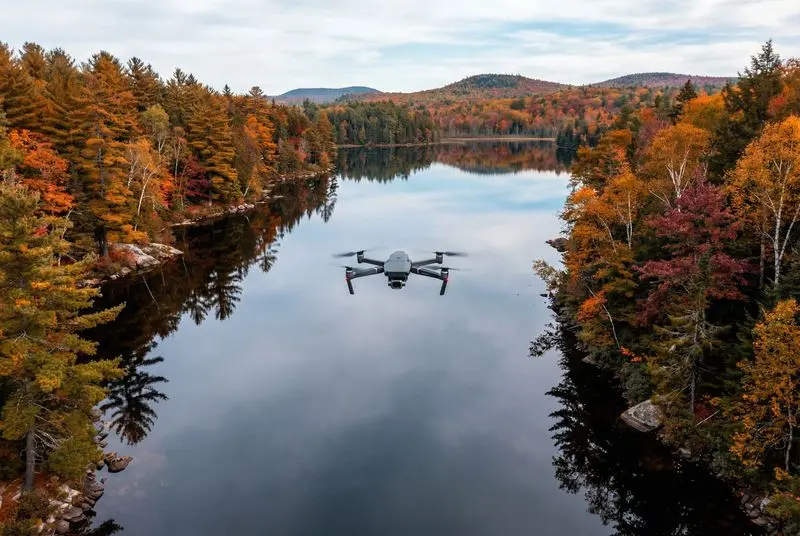
This guide provides an overview of the rules you need to know. We’ll cover everything from the federal standards set by the FAA to the specific statutes enacted by the state of Minnesota, and even touch on local ordinances in key areas.
Federal Drone Laws That Apply in Minnesota
For Recreational Pilots
If you are flying your drone purely for enjoyment, you must follow the FAA’s guidelines for recreational flyers. A key requirement is to take The Recreational UAS Safety Test (TRUST). This is a free online test that provides education and testing on safety and regulatory information. Once you pass, you’ll receive a certificate that you must be able to provide to law enforcement or FAA officials upon request.
Other key federal rules for recreational flyers include:
- Registration: You must register any drone weighing more than 0.55 pounds (250 grams) with the FAA through the DroneZone website.
- Visual Line of Sight (VLOS): You must keep your drone within your visual line of sight at all times, or use a visual observer who is co-located with you and in direct communication.
- Altitude: Fly at or below 400 feet in uncontrolled (Class G) airspace.
- Airspace Authorization: To fly in controlled airspace (Class B, C, D, and E), you must receive authorization through LAANC (Low Altitude Authorization and Notification Capability) or the DroneZone portal.
- Remote ID: As of September 16, 2023, most drones must have Remote ID capability, which broadcasts identification and location information. Think of it as a digital license plate for your drone.
For Commercial Pilots
For anyone operating a drone for business purposes—which includes anything from selling photos to conducting inspections—the FAA’s Part 107 rules apply. To become a commercial drone pilot, you must:
- Be at least 16 years old.
- Pass the FAA’s Part 107 Aeronautical Knowledge Test.
- Obtain a Remote Pilot Certificate from the FAA.
- Register your drone with the FAA.
Part 107 pilots have more operational flexibility than recreational flyers but are also subject to stricter regulations. These include adhering to the 400-foot altitude limit, maintaining visual line of sight, and obtaining airspace authorization when necessary. The B4UFLY app is an essential tool for all pilots to check for airspace restrictions and other advisories before every flight.
Minnesota-Specific Drone Laws
Beyond the federal rules, the state of Minnesota has its own set of laws that govern the use of drones. These statutes primarily address registration for commercial drones, the use of drones by law enforcement, and flying near correctional facilities. It’s important to note that Minnesota has not enacted widespread, preemptive state laws that would block local governments from creating their own drone rules.
Commercial Drone Registration
One of the most significant state-level regulations is the requirement for commercial drone operators to register their aircraft with the Minnesota Department of Transportation (MnDOT). According to Minnesota Statute 360.55, Subd. 9, any unmanned aircraft system weighing less than 55 pounds that is used for commercial purposes must be registered annually with the state for a $25 fee [1]. Drones used exclusively for recreational purposes are exempt from this state registration requirement. This is a separate registration from the one required by the FAA.
Furthermore, Minnesota Statute 360.59 requires that commercial drone operators provide proof of insurance at the time of registration and maintain that insurance for each flight [2]. This underscores the state’s focus on ensuring accountability and financial responsibility for commercial drone operations.
Law Enforcement Use of Drones
Minnesota has a detailed law, Statute 626.19, that strictly governs how law enforcement agencies can use drones [3]. The law emphasizes privacy and requires that law enforcement obtain a search warrant before using a drone for surveillance in most situations. There are exceptions for emergencies, such as a situation involving the risk of death or bodily harm, or to document evidence at imminent risk of destruction. The statute also prohibits law enforcement from equipping drones with facial recognition technology without a warrant and mandates that data collected by drones be deleted within seven days unless it is part of an active criminal investigation.
Flying Over Correctional Facilities
Minnesota Statute 243.552 makes it a misdemeanor to knowingly fly a drone over a state correctional facility or its grounds without the commissioner’s permission [4]. This rule is in place to maintain security and prevent the introduction of contraband.
Local and City Drone Regulations
One of the most important aspects of flying a drone in Minnesota is being aware of local rules. Because the state has not passed a broad preemption law, individual cities, counties, and park boards have the authority to enact their own drone ordinances. This creates a patchwork of regulations across the state, requiring pilots to research the rules for their specific flight location.
For instance, the Minneapolis Park and Recreation Board has a formal policy that prohibits the takeoff and landing of drones in city parks without a permit [5]. This rule applies to all drones weighing between 0.55 and 4 pounds. To get a permit, operators must submit an application, pay a fee, and provide proof of insurance. This is a common approach for managing drone activity in urban parks to ensure the safety and enjoyment of all visitors. Other cities like St. Paul and various suburban communities may have similar restrictions. Therefore, You should visit the official website or contact the local parks department or city clerk’s office before any flight to ensure you are in compliance.
Where You Can and Can’t Fly in Minnesota
Determining where you can legally fly your drone in Minnesota requires an understanding of airspace classifications and land ownership rules.
- National Parks: Flying a drone in any of America’s National Parks is prohibited. This includes Voyageurs National Park in Minnesota.
- State Parks: The Minnesota Department of Natural Resources (DNR) manages a vast network of state parks, state forests, and Scientific and Natural Areas (SNAs). The rules for drone use vary between these different types of land. While there isn’t a blanket ban on drones in all state parks, their use is generally discouraged to protect wildlife and ensure a peaceful experience for visitors. Some parks may have specific no-fly zones, especially during nesting seasons for sensitive bird species. It is imperative to check the specific regulations for the park you plan to visit on the DNR website before you go.
State forests, on the other hand, are generally more permissive for drone flights. However, pilots must still follow all FAA regulations and be mindful of their surroundings, especially during hunting seasons. A key restriction across all DNR-managed lands is the prohibition on using drones to harass or disturb wildlife. This is a serious offense and can lead to significant penalties.
The Boundary Waters Canoe Area Wilderness (BWCAW) is a federally designated wilderness area and has a strict ban on all motorized equipment, which includes drones. Flying a drone within the BWCAW is illegal and subject to federal penalties.
* Airports: You must not interfere with manned aircraft. This means staying away from airports and the flight paths of planes and helicopters. Use the B4UFLY app to see if you are near any airports.
* Critical Infrastructure: Avoid flying over critical infrastructure such as power plants, water treatment facilities, and correctional facilities.
Penalties and Enforcement
Violating drone laws can result in significant penalties from both the FAA and the state of Minnesota. The FAA can impose fines ranging from $1,771 to $36,770 per violation for unsafe operations. Criminal penalties are also possible for actions that endanger aircraft. At the state level, violating Minnesota’s drone laws can lead to misdemeanor charges and other penalties.
Tips for Staying Compliant
- Check B4UFLY: Always use the B4UFLY app to check for airspace restrictions and advisories before every flight.
- Register Your Drone: Register your drone with the FAA (if it weighs over 0.55 lbs) and with MnDOT (if you are flying commercially).
- Get Certified: Complete the TRUST test for recreational flying or obtain your Part 107 certificate for commercial operations.
- Respect Privacy: Do not fly over private property without permission, and be mindful of the privacy of others.
- Check Local Rules: Always check for and comply with any local drone ordinances.
- Maintain Visual Line of Sight: Keep your drone where you can see it at all times.
Helpful Resources
- FAA DroneZone
- B4UFLY App
- Minnesota Department of Transportation – Drones
- Minnesota Legislature – Statutes
- Drone Launch Academy Part 107 Course
Disclaimer: The information on this page is for informational purposes only and should not be considered legal advice. Drone laws are subject to change. Always check with the FAA and local authorities for the most current regulations.
Neighboring States:
* Drone Laws in Wisconsin
* Drone Laws in Iowa
References
[1] Minnesota Statute 360.55, Subd. 9
[2] Minnesota Statute 360.59
[3] Minnesota Statute 626.19
[4] Minnesota Statute 243.552
[5] Minneapolis Park & Recreation Board Drone Policy
← Back to Drone Laws by State Directory
Disclaimer: Drone laws are constantly evolving. While we strive to keep this guide updated, you should always verify local ordinances and check the FAA B4UFLY app before flying. This page is for educational purposes and does not constitute legal advice.
Sources: FAA UAS | NCSL State Drone Law Landscape | FAA Remote ID | FAA Part 107