
Drone Laws in Iowa
Your complete 2026 guide to flying drones legally in Iowa.
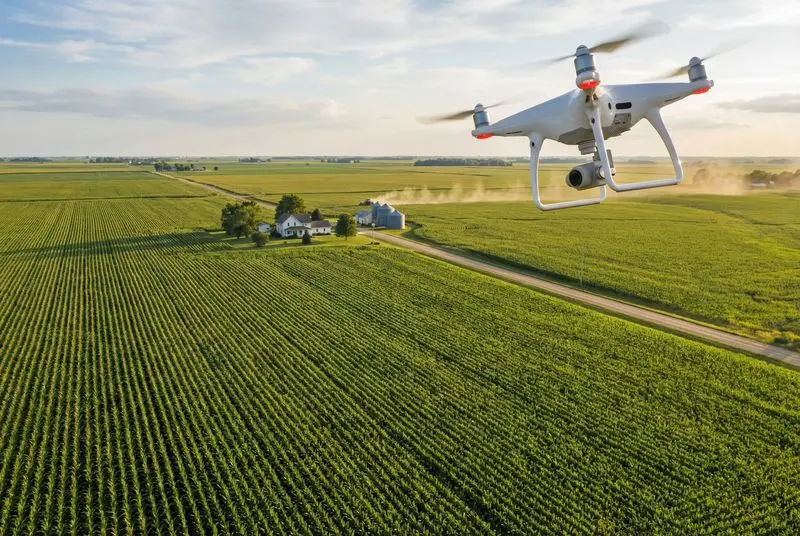
Flying a drone in Iowa, with its beautiful landscapes and open spaces, can be a rewarding experience for both recreational and commercial pilots. However, it’s crucial to be aware of the regulations that govern drone operations in Iowa.
Federal Drone Laws That Apply in Iowa
Federal regulations established by the Federal Aviation Administration (FAA) apply to all drone operations in the United States, including Iowa. These rules provide a baseline for safe and responsible drone use. All drone operators must adhere to these federal laws, regardless of whether they are flying for fun or for commercial purposes.
One of the most fundamental requirements is FAA registration. Any drone weighing more than 0.55 pounds (250 grams) must be registered with the FAA. This can be done online through the FAA DroneZone website for a nominal fee of $5, and the registration is valid for three years. The registration number must be clearly marked on the exterior of the drone.
In addition to registration, the FAA has implemented the Remote ID rule, which went into effect on September 16, 2023. This rule requires all registered drones to broadcast Remote ID information, which acts as a digital license plate, allowing authorities to identify the drone and its operator while it is in the air. This is a critical step in ensuring accountability and safety in the national airspace.
For those flying drones for commercial purposes, obtaining a Remote Pilot Certificate under Part 107 of the FAA regulations is mandatory. This involves passing the FAA’s Part 107 exam, which tests knowledge of drone regulations, operating requirements, and procedures for flying safely. This certification is essential for anyone operating a drone for business, including services like aerial photography, real estate imaging, or agricultural surveying.
Recreational flyers, on the other hand, are required to take and pass The Recreational UAS Safety Test (TRUST). This is a free online test designed to educate hobbyist pilots on drone safety and best practices. Proof of passing the TRUST test must be carried by the operator while flying.
All drone flights must be conducted at or below 400 feet in uncontrolled (Class G) airspace. To fly in controlled airspace (Class B, C, D, and E), which surrounds most airports, operators must obtain authorization through LAANC (Low Altitude Authorization and Notification Capability) or the FAA DroneZone. Furthermore, pilots must always maintain a visual line of sight with their drone, meaning they must be able to see the drone with their own eyes at all times.
To assist pilots in complying with these regulations, the FAA provides valuable resources such as the FAA DroneZone and the B4UFLY app, which provides real-time information about airspace restrictions.
Iowa-Specific Drone Laws
In addition to the federal framework, Iowa has enacted its own legislation pertaining to drone operations, with a strong emphasis on protecting privacy and property rights. The primary state law governing drones is Iowa Code Chapter 715E, Remotely Piloted Aircraft. This statute, which was significantly updated in 2024, establishes clear boundaries for flying drones over private property.
The law specifically addresses the issues of intrusion and surveillance by drone. It is a simple misdemeanor to knowingly fly a drone over a homestead or a “secure farmstead area” without the owner’s explicit consent. A subsequent violation is elevated to a serious misdemeanor. The law goes further to address the use of drones for surveillance, making it a serious misdemeanor to use a drone equipped with a camera or other recording device to spy on a homestead or secure farmstead area without permission. A repeat offense is classified as an aggravated misdemeanor. These provisions are designed to prevent the use of drones for harassment or invasion of privacy.
However, the Iowa legislature recognized the importance of legitimate drone use and included several key exceptions to these restrictions. The law does not prohibit drone flights over these protected areas when conducted for commercial or agricultural purposes, as long as the operations are in compliance with FAA regulations. This is a critical provision for the growing number of businesses and farmers in Iowa who use drones for a variety of applications, from crop monitoring to infrastructure inspection. Other exceptions include operations by government agencies, public utilities, and railroad companies, as well as flights conducted above 400 feet and for the purpose of collecting weather data.
Another important piece of legislation is Iowa Code § 808.15, which limits the use of drones by law enforcement. This statute stipulates that any information or evidence obtained by a law enforcement drone is not admissible in a criminal or civil proceeding unless it was obtained with a warrant or falls under another specific legal exception. This law serves as a check on the power of law enforcement to use drones for surveillance and protects the civil liberties of Iowans.
Local and City Regulations
While the state of Iowa has established a clear legal framework for drone operations, it is important for pilots to be aware that local jurisdictions may have their own specific ordinances. Therefore, it is always a prudent measure to check with the city or county you intend to fly in for any local rules that may be in effect.
Regarding state parks, the Iowa Department of Natural Resources (DNR) generally discourages the use of drones. Although there is no explicit statewide ban on drones in state parks, the Iowa Administrative Code (571-61.2(2)) prohibits the landing and taking off of aircraft within state parks. This regulation effectively restricts the use of drones, as they must be launched and recovered from within the park boundaries. For this reason, it is highly recommended to contact the park ranger for the specific park you wish to fly in to obtain clarification on their policies.
As for cities and counties, at the time of this writing, major metropolitan areas such as Des Moines and Cedar Rapids have not enacted any specific drone ordinances. However, general park rules and regulations may still apply. For instance, some city parks may have rules that prohibit the flying of model aircraft or other similar devices, which could be interpreted to include drones. Therefore, before flying in any city park, You should check with the local parks and recreation department to ensure that you are in compliance with all applicable regulations.
Where You Can and Can’t Fly in Iowa
In addition to the specific state and local laws, there are several general areas where drone flights are either restricted or outright prohibited. These restrictions are in place to ensure the safety of the public and to protect sensitive locations.
All National Parks in the United States, including any that may be in Iowa, have a complete ban on the use of drones. This is to protect wildlife and to preserve the natural experience for all visitors.
Flying a drone near an airport is extremely dangerous and is strictly regulated. You are not permitted to fly a drone within five miles of an airport without first obtaining proper authorization through the FAA’s LAANC system.
For security reasons, it is also advisable to avoid flying your drone near military installations. These areas are often designated as restricted airspace, and unauthorized drone activity can result in serious consequences.
Flying a drone over a large group of people is prohibited by FAA regulations. This is to prevent potential injuries in the event of a drone malfunction or crash.
Finally, be aware of Temporary Flight Restrictions (TFRs), which are often put in place over stadiums during sporting events and other large public gatherings. The B4UFLY app is an excellent resource for checking for any active TFRs in your area.
Penalties and Enforcement
Violating drone laws in Iowa can lead to significant penalties from both the Federal Aviation Administration and the state. These penalties are designed to deter unsafe and illegal drone operations and to ensure the safety of the national airspace.
On the federal level, the FAA has the authority to impose substantial fines for unsafe drone operations. These fines can range from $1,771 to as much as $36,770 per violation. In cases where a drone operator’s actions are deemed to be particularly reckless or to have endangered an aircraft, criminal penalties, including imprisonment, are also a possibility.
At the state level, violations of Iowa’s drone laws regarding intrusion and surveillance can result in criminal charges. As previously mentioned, these offenses can be classified as simple, serious, or aggravated misdemeanors, depending on the nature of the offense and whether the individual has any prior convictions for similar offenses.
Tips for Staying Compliant
To ensure that you are flying your drone safely and legally in the state of Iowa, You should be proactive and to follow a set of best practices.
First and foremost, always use the B4UFLY app to check for any airspace restrictions before every flight. This will help you to avoid flying in restricted areas and to be aware of any temporary flight restrictions that may be in effect.
If your drone weighs more than 0.55 pounds, you must register it with the FAA. This is a simple process that can be completed online, and it is a legal requirement.
If you are flying for commercial purposes, you must obtain your Part 107 certificate. For those flying for recreational purposes, you must complete the TRUST test. These certifications demonstrate that you have the necessary knowledge to operate your drone safely.
Always be mindful of privacy and avoid flying your drone over private property without first obtaining permission from the owner. This is not only a matter of courtesy, but it is also a legal requirement in Iowa.
Before flying in a new location, take the time to check for any local ordinances or park regulations that may be in effect. This will help you to avoid any potential conflicts with local authorities.
Finally, always keep your drone within your visual line of sight. This is a fundamental rule of drone safety, and it is essential for preventing accidents and collisions.
Helpful Resources
Neighboring States:
* Drone Laws in Illinois
* Drone Laws in Minnesota
* Drone Laws in Missouri
References
[1] Iowa Code Chapter 715E, Remotely Piloted Aircraft. (https://www.legis.iowa.gov/docs/code/2025/715E.pdf)
← Back to Drone Laws by State Directory
Disclaimer: Drone laws are constantly evolving. While we strive to keep this guide updated, you should always verify local ordinances and check the FAA B4UFLY app before flying. This page is for educational purposes and does not constitute legal advice.
Sources: FAA UAS | NCSL State Drone Law Landscape | FAA Remote ID | FAA Part 107