
Drone Laws in North Dakota
Your complete 2026 guide to flying drones legally in North Dakota.
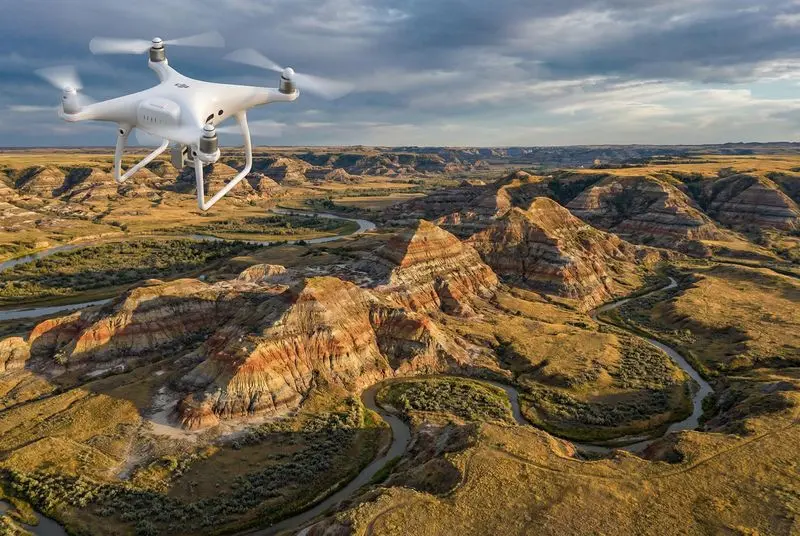
North Dakota, a state known for its vast plains, rugged badlands, and growing agricultural and energy sectors, is increasingly seeing the use of drones for both recreational and commercial purposes. From capturing notable aerial photography of Theodore Roosevelt National Park to conducting crop surveys in the Red River Valley, drones are becoming an important tool. However, with this rise in drone activity comes the need for a clear understanding of the laws and regulations that govern their use. This guide is designed to be your resource for navigating the drone laws in North Dakota, ensuring that you can operate your unmanned aircraft system (UAS) safely, legally, and responsibly.
For both hobbyists and certified professionals, the legal framework for drone operation can appear to be a complex patchwork of federal, state, and local rules.We will cover the foundational rules set by the Federal Aviation Administration (FAA) that apply nationwide, explore the specific statutes enacted by the North Dakota legislature, and touch upon local ordinances that may affect your flights. Our mission is to provide you with the knowledge and confidence to fly your drone in the Peace Garden State while respecting privacy, ensuring safety, and staying on the right side of the law.
Federal Drone Laws That Apply in North Dakota
For recreational flyers, the primary requirements include taking The Recreational UAS Safety Test (TRUST). This is a free, online test that provides education on basic aviation safety and community-based best practices. Once you pass, you receive a certificate that you must be able to provide if asked by law enforcement or the FAA. Furthermore, if your drone weighs more than 0.55 pounds (250 grams), it must be registered in the FAA’s DroneZone system. The registration costs $5, is valid for three years, and the registration number must be visible on the exterior of the aircraft.
Commercial drone pilots, or anyone flying for business purposes, must operate under the FAA’s Part 107 rules. This requires passing a 60-question Aeronautical Knowledge Test at an FAA-approved testing center to earn a Remote Pilot Certificate. This certification demonstrates a deeper understanding of airspace classifications, weather, aircraft loading, and emergency procedures. Part 107 pilots are also subject to more stringent operational rules but have the ability to apply for waivers to fly in ways not typically permitted, such as at night or over people.
A critical rule for all drone flights is the requirement to keep the aircraft within your visual line of sight (VLOS). This means you, or a designated visual observer, must be able to see the drone with your own eyes at all times without the aid of binoculars or other devices. Flights are also limited to a maximum altitude of 400 feet above ground level (AGL) to avoid conflicts with manned aircraft. Flying in controlled airspace, such as the areas around airports (Class B, C, D, and E), is strictly prohibited without prior authorization. Pilots can obtain this authorization in near-real-time through the Low Altitude Authorization and Notification Capability (LAANC) system, which is accessible via numerous FAA-approved UAS Service Suppliers.
Finally, all drones required to be registered must comply with the FAA’s Remote ID rule. Effective since September 2023, Remote ID acts as a digital license plate for your drone, broadcasting identification and location information. This technology is a crucial step towards ensuring the safety and security of the national airspace, allowing the FAA, law enforcement, and other federal agencies to identify drones flying in their jurisdiction.
North Dakota-Specific Drone Laws
In addition to the federal framework, North Dakota has established its own set of laws that drone operators must follow. These state-level regulations primarily address the use of drones by law enforcement and the protection of wildlife, reflecting the state’s focus on balancing technological advancement with individual privacy and environmental conservation.
North Dakota Century Code Chapter 29-29.4 – Limitations on UAS Use
North Dakota was one of the first states to address the use of drones by law enforcement, passing legislation that places clear limits on their deployment for surveillance. The core of this law, found in the North Dakota Century Code, is the protection of citizens’ privacy from aerial surveillance.
29-29.4-02. Limitations on use of unmanned aerial vehicle system.
A law enforcement agency may not use an unmanned aerial vehicle system to gather evidence or other information in a criminal investigation without a search warrant issued by a court of competent jurisdiction.
This statute makes it clear that law enforcement cannot use a drone to spy on citizens or gather evidence without judicial oversight. The warrant must be specific, detailing the purpose, location, and duration of the drone’s use. However, the law does provide for warrantless use in specific, urgent situations. These exceptions include circumstances with a high risk of a terrorist attack, the imminent escape of a suspect, or to prevent the imminent loss of life or destruction of evidence. Drones may also be used for search and rescue missions without a warrant.
Interestingly, a 2015 amendment to this law made North Dakota the first state to explicitly permit law enforcement to arm drones with “less than lethal” weapons, such as tasers and rubber bullets. This controversial provision highlights the evolving nature of drone technology and its application in public safety. You can review the full text of this chapter on the North Dakota Legislative Branch’s website.
N.D. Admin. Code § 30-04-02-22 – Drones on State Wildlife Management Areas
To protect the state’s natural resources and wildlife, the North Dakota Administrative Code includes a specific regulation regarding drone use in sensitive environmental areas. This rule states that a person may not operate a drone or any radio-controlled aircraft while on any state wildlife management area unless they have received specific authorization from the director of the North Dakota Game and Fish Department. This rule is crucial for preventing the harassment of wildlife, which can be easily disturbed by the presence and noise of drones, particularly during nesting or mating seasons. Before planning a flight near one of these areas, You should contact the department to understand the restrictions and obtain permission if required.
Local and City Regulations
One of the complexities of drone law is the interaction between federal, state, and local regulations. In some states, the state government has passed “preemption” laws, which prohibit local municipalities from creating their own drone ordinances. North Dakota has not enacted such a law. This means that cities like Fargo, Bismarck, or Grand Forks, as well as any county government, have the legal authority to pass their own rules regarding drone operations within their boundaries.
As of early 2026, there are no major, publicly documented local drone ordinances in North Dakota. The regulatory landscape at the local level is currently quiet. However, this can change at any time. Local governments might enact rules that restrict drone takeoffs and landings in city parks, regulate flights over public property, or create specific no-fly zones around sensitive locations like schools or hospitals. Therefore, it is a critical best practice for any drone pilot to check with the local city or county clerk’s office before conducting a flight, especially for commercial operations. This proactive step can prevent inadvertent violations of local rules that may not be widely publicized.
Where You Can and Can’t Fly in North Dakota
Knowing the specific locations where you can and cannot legally fly your drone is just as important as understanding the rules of operation. North Dakota’s diverse landscape offers incredible opportunities for aerial imaging, but it also includes sensitive areas where drone flights are restricted or prohibited. Adhering to these location-based rules is essential for safety and compliance.
First and foremost, all National Parks are designated as no-fly zones for drones. This federal regulation, established by the National Park Service (NPS), applies to Theodore Roosevelt National Park. The ban is in place to protect wildlife from harassment and to preserve the natural quiet and experience for all visitors. Operating a drone within the park’s boundaries is a federal offense that can lead to significant fines and confiscation of your equipment.
For North Dakota State Parks, the rules can be more nuanced. While the state has a clear ban on drones in State Wildlife Management Areas to protect fauna, the regulations for state parks fall under the jurisdiction of the North Dakota Parks and Recreation Department. Policies can vary from park to park and may change based on the season or specific environmental conditions. It is imperative to visit the official website for the specific state park you plan to visit or call the park office directly to get the most accurate and current information before launching your drone.
Airspace around airports is highly regulated. You must not operate a drone in the controlled airspace surrounding airports like Hector International Airport (FAR) in Fargo or Bismarck Municipal Airport (BIS) without receiving prior authorization through LAANC. The B4UFLY app is an important tool for visualizing these airspace boundaries and understanding the restrictions. Similarly, North Dakota is home to critical military installations, including Minot Air Force Base and Grand Forks Air Force Base. These facilities have restricted airspace, and flying a drone in their vicinity is strictly prohibited for national security reasons.
Temporary Flight Restrictions (TFRs) are another critical consideration. The FAA frequently issues TFRs over areas for security reasons or to support emergency response efforts. A common example is the restriction over major stadiums and sporting events. Drones are prohibited from flying within a three-mile radius of any stadium with a seating capacity of 30,000 or more during major league baseball, football, or NCAA Division I football games. These TFRs typically begin one hour before the event and end one hour after. Always check for active TFRs before every flight.
Penalties and Enforcement
Operating a drone is a significant responsibility, and failure to comply with regulations can lead to severe consequences. The FAA takes enforcement seriously and has the authority to issue substantial civil penalties. Fines for unsafe drone operations can range from a few hundred dollars to tens of thousands, depending on the severity of the violation. For instance, flying in restricted airspace or interfering with manned aircraft can result in the highest level of fines. In cases where a drone operation recklessly endangers the national airspace, the Department of Justice can pursue criminal charges, which may lead to imprisonment.
At the state level, violating North Dakota’s specific drone laws also carries penalties. For example, the illegal use of a drone for surveillance in a manner that violates Chapter 29-29.4 could lead to the evidence being suppressed in court and potential civil liability. Similarly, flying a drone in a State Wildlife Management Area without permission can result in fines from the North Dakota Game and Fish Department. It is crucial for every pilot to understand that ignorance of the law is not a defense, and the onus is on the operator to know and follow all applicable rules.
Tips for Staying Compliant
Navigating the regulations for drone operation may seem daunting, but a few key practices can help you stay compliant and fly with peace of mind. The cornerstone of safe flying is pre-flight planning. Before every flight, consult the FAA’s B4UFLY app to get up-to-date information on airspace restrictions and temporary flight restrictions. This simple check can prevent you from accidentally flying into a restricted area.
Ensure all your paperwork is in order. If your drone weighs more than 250 grams, it must be registered with the FAA, and the registration number must be displayed on the aircraft. Recreational pilots must have their TRUST completion certificate readily available, while commercial pilots must always carry their Part 107 Remote Pilot Certificate. These documents are your license to fly, and you must be able to present them to law enforcement or FAA officials upon request.
Finally, fly with professionalism and respect. This means maintaining a visual line of sight with your drone at all times, respecting the privacy of individuals by not flying over private property without consent, and being mindful of wildlife. By adopting a safety-conscious mindset and staying informed about the rules, you can be a responsible member of the aviation community.
Helpful Resources
- FAA DroneZone: The official portal for registering your drone and managing your FAA account.
- B4UFLY App: The essential FAA app for checking airspace restrictions.
- North Dakota Aeronautics Commission: Provides state-specific aviation information.
- North Dakota Legislative Branch: Access the full text of the North Dakota Century Code.
- Drone Launch Academy Part 107 Course: A comprehensive course to help you pass your Part 107 exam.
Continue your journey of learning about drone regulations by exploring our main Drone Laws by State Directory, or read up on the specific laws in neighboring states like South Dakota and Minnesota.
← Back to Drone Laws by State Directory
Disclaimer: Drone laws are constantly evolving. While we strive to keep this guide updated, you should always verify local ordinances and check the FAA B4UFLY app before flying. This page is for educational purposes and does not constitute legal advice.
Sources: FAA UAS | NCSL State Drone Law Landscape | FAA Remote ID | FAA Part 107