If you’re researching how much does it cost to become a drone pilot, you’ve probably noticed that the numbers vary wildly depending on where you look. The truth is, there’s no single price tag; becoming a licensed commercial drone pilot involves several distinct expenses, some mandatory and some optional.
Drone Launch Academy breaks down every drone pilot training cost, from mandatory FAA fees to optional gear, so you know exactly what to budget before you start.
What Is the Total Drone Pilot Training Cost?
The only required costs are $180: $175 for the Part 107 test and $5 to register your drone. Add an online prep course and you’re looking at roughly $380. Once you add a drone and insurance to actually start working, most people spend $1,000–$2,000. Here’s how those costs break down:
| Cost | Required? | Price |
| Part 107 knowledge test (paid to PSI) | Yes | $175 per attempt |
| Drone registration (FAA DroneZone) | Yes, to fly commercially | $5 per drone, good for 3 years |
| Recurrent training every 24 months | Yes | $0 (free online) |
| Flight hours or flight test | Not required | $0 |
| Online Part 107 prep course | Optional | $0–$299 |
| Drone plus accessories | Needed to work | About $600–$1,000+ |
| Liability insurance | Strongly recommended | About $500–$750 per year |
Honest take: you can pass with free FAA materials. But if you’d rather have someone walk you through the airspace charts and regulations, where most people get stuck, our Part 107 exam prep course does exactly that. It’s $199, includes five full-length practice tests, and comes with a pass guarantee.
FAA Part 107 Test Cost — $175 (Required)
This is the biggest mandatory fee. The FAA Part 107 exam cost is $175, paid to PSI, which runs the FAA-approved testing centers. The exam has 60 scored multiple-choice questions (plus 5 unscored ones) covering regulations, airspace, operations, weather, and loading and performance. You have 2 hours to complete it, and you need a score of at least 70% to pass. If you fail, you wait 14 days and pay another $175 to retest, which is exactly why good preparation matters. Here’s our full breakdown of the Part 107 exam cost, and when you’re ready, here’s how to schedule the Part 107 exam.
Drone Registration — $5 (Required)
Before you fly commercially, your drone must be registered with the FAA. Registration costs $5 and is valid for three years. It takes about 10 minutes online at FAA DroneZone. Keep your registration number handy; you’re required to mark it visibly on your drone before every flight.
Part 107 Test Prep Course — $0–$299+ (Optional but Recommended)
A Part 107 test prep course is where drone pilot course fees vary the most. The FAA provides free study materials, so technically, you can prepare at no cost. However, most pilots choose a structured course to maximize their chances of passing on the first attempt, saving themselves the $175 retake fee.
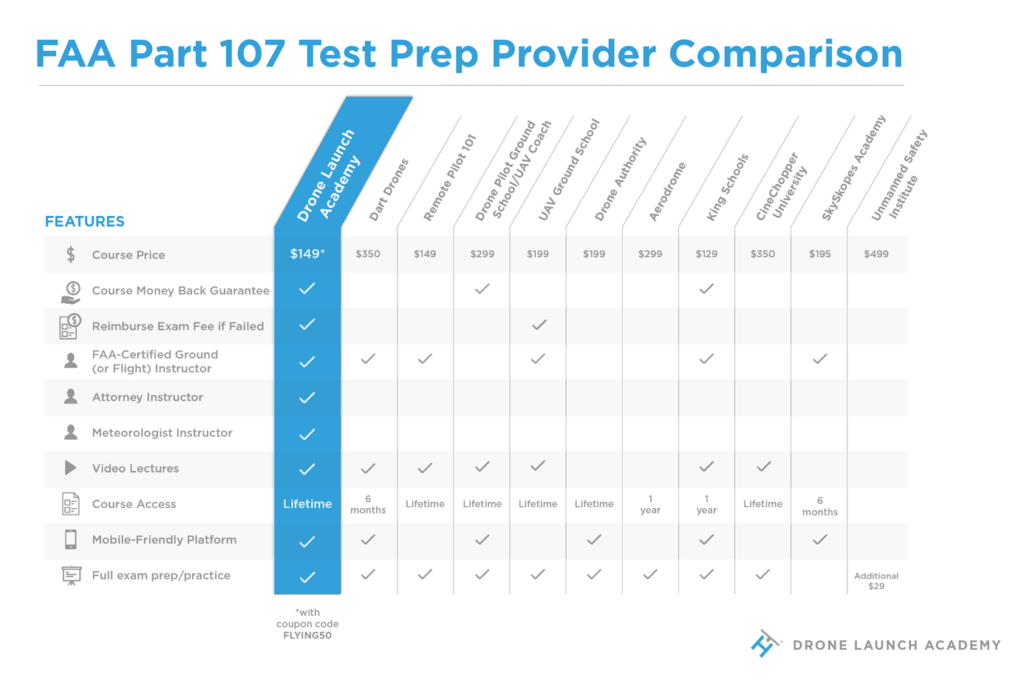
Here’s what the major providers charge:
- Drone Launch Academy — $199
- UAV Coach / Drone Pilot Ground School — $299 (individuals); $249/person for groups of 2–4
- Pilot Institute — $249 list price (shown on sale for $159 when we checked in September 2026)
All three offer a pass guarantee, but the terms differ. Drone Launch Academy refunds your course fee. Pilot Institute and Drone Pilot Ground School refund the course fee and also cover the $175 exam fee if you don’t pass. Each one has its own conditions (finishing the course, practice-test scores, and so on), so read the fine print.
Quick math: failing once costs another $175 and a 14-day wait before you can retest. That’s why a lot of people decide a $199–$299 course is cheaper than a second attempt. Take a look at what’s inside ours → Want to see where you stand first? Try our free 21-question Part 107 practice test.
Drone Equipment — $449–$759+ (Required to Work)
You don’t need a drone to get certified, but you do need one to actually fly and earn. Entry-level commercial drones suitable for most beginner missions cost around $449-$759+. Budget an additional $150–$250 for accessories like extra batteries, memory cards, propeller guards, and a carrying case. Heads up: since the FCC added foreign-made drones to its Covered List on December 22, 2025, new foreign-made models can’t get FCC authorization. Models that were already approved can still be sold, but prices and stock are shifting, so check current prices before you budget.
Drone Insurance — $500–$750/year (Strongly Recommended)
Liability insurance isn’t legally required, but when running a drone business, most commercial clients will ask for a certificate of insurance before they hire you. Without it, you’re locked out of a large portion of the market regardless of how skilled or certified you are. Annual policies typically run $500–$750.
How Much Does Drone Training Cost Compared to What You’ll Earn?
Here’s the question that actually matters: Is the investment worth it?
The short answer is yes, for most pilots, the startup costs pay for themselves quickly. Rates vary a lot by niche and market (our drone pilot salary guide breaks it down), but even at a modest $50 an hour for mapping missions, a pilot who invested $1,000 in certification and training would earn it back in about 20 hours of paid flying.
Beyond gig-style work, drone certification opens doors to full-time jobs. Job-site averages for drone pilots in 2026 land around $82,000–$89,000 a year (Indeed and Salary.com, July 2026 data), and specialties like surveying and mapping are some of the most in demand.
Specialized training courses like drone mapping fundamentals or advanced mapping and modeling certifications add to your upfront drone certification cost, but they also dramatically increase what you can charge clients.
The bottom line on drone license cost: plan to spend at least $180 (exam + registration, studying with free FAA materials), about $380 if you add an online prep course, and $1,000–$2,000 for a well-rounded setup that includes a quality drone, prep course, and basic insurance. For most pilots, that investment pays off within the first few months of flying commercially.
Ready to knock out the only required step? Here’s how we can help.
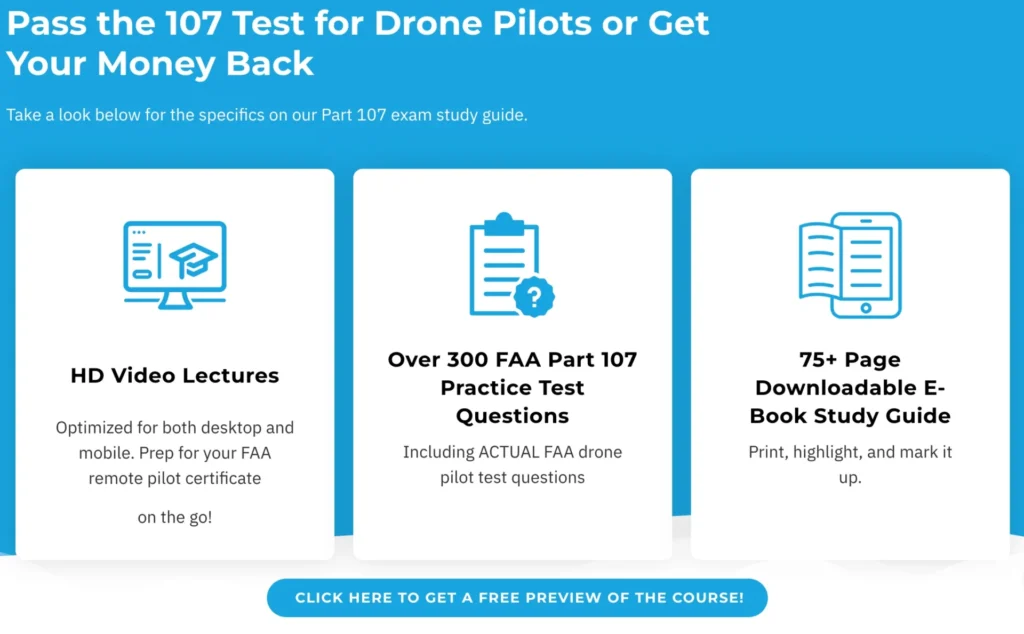
Need your Part 107 before you start earning with your drone?
If you plan to fly drones for paid work or in support of a business, your next step is earning your FAA Part 107 Remote Pilot Certificate. Drone Launch Academy’s FAA Part 107 Exam Prep Course is built to help you pass the exam on your first try with structured lessons, practice questions, and lifetime access.
Download the Part 107 Study Checklist
Use this checklist to make sure you know what to study before scheduling your FAA exam. It covers airspace, weather, regulations, loading, operations, and practice-test readiness so you can see what still needs work before test day.
Want to turn drone skills into paying clients?
Getting certified is only the first step. If you want a clear roadmap for pricing, outreach, client acquisition, and building a profitable drone business, Drone to $1K walks you through the business-building process step by step.
The rules, costs, and registration steps can feel complicated at first, but they all point toward the same outcome: becoming a legal, confident commercial drone pilot. Once you understand the basics, your next move is to prepare for the exam with a structured study system. Start with Drone Launch Academy’s FAA Part 107 Exam Prep Course, then use your certificate to pursue the drone work that fits your goals.
Related Resources
- Part 107 exam cost
- How to schedule the Part 107 exam
- Part 107 test: 21 free practice questions
- Part 107 study guide
- How many questions are on the Part 107 test
- FAA DroneZone guide
- How to start a drone business